

Human rights violations often transpire in remote regions that are far away from the headquarters of any major enterprise. For example, fishing boats on the Thai cost, Malaysian palm oil forests, or cotton fields of Uzbekistan. Enterprises have traditionally operated in these regions without any proper visibility or information of worker conditions. They are now expected to assume responsibility for the business dealings of the suppliers and contractors at the terminus of their supply chains.
Challenges
Companies require more visibility into worker conditions in the end-to-end supply chain to satisfy regulatory compliance requirements. They should also try to curb reputational and financial risks that come from exposure of human rights violations in the manufacturing or distribution of their products. As of now, these enterprises rely only on “see and review” auditing techniques to monitor worker conditions at supplier websites. But it is difficult to scale or to capture conditions between audits. Even the data collected in these audits is subjected to human error which may lead to inconsistent or misclassified offenses.
Solutions
Wearable or other IoT monitoring technologies can help enterprises develop more reliable and consistent means of capturing real-time data about the most vulnerable workers in the extended supply chain and provide evidence to support the company’s responsible sourcing claims. These technologies can also help overcome challenges related to worker self-reporting, such as the fear of retribution or underestimating the actual number of hours worked.
Wearable technology companies currently have their focus on consumer markets, but there is a sizeable opportunity to create products for business use. IoT products for factories enable automation and control, but could be designed to address other worker protection needs. Effective products should consider the following needs:
- The design should be done for utility and not fashion. Attention to the ergonomics and form factor of wearables for this market will be imperative for adoption and worker safety. For example, a loose-fitting bracelet can easily be caught in machinery and can create a potential hazard. Cultural norms may also affect worker response to a particular form factor.
- Exploitation takes the form of excessive recruiter or employment broker fees many times, which ultimately results in the worker turning over their paychecks for interminable amounts of time. Wearables can enable payment or banking services could support the dismantling of this practice.
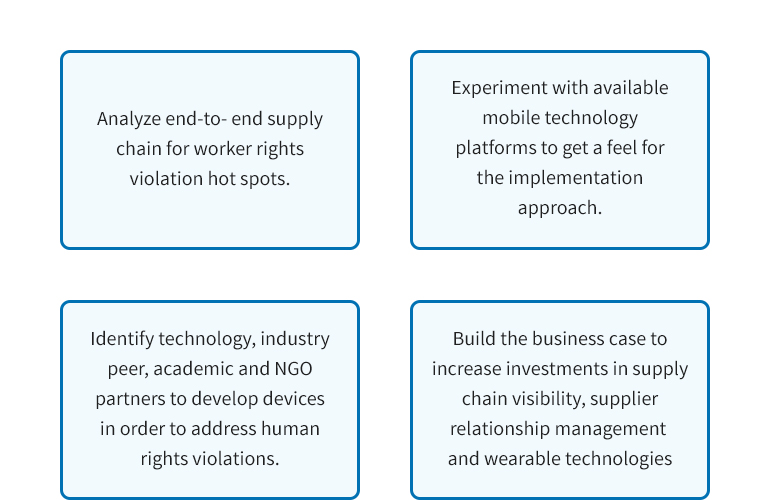
Recommendations for corporate and supply chain strategists
Human rights violations in remote areas are much more prevalent than we can imagine. Enterprises should keep a check on their supply chain and suppliers so that they can eradicate this problem wherever they can.