

The primary way ‘IoT’ devices function is through internet connectivity. Network connectivity is straightforward under controlled conditions, but it is much different and difficult in real-life. Also, IoT devices transfer sensitive information amongst each other. This makes them an easy target for hackers. Hackers can steal private information, severely compromising the integrity of organizations. Thus, IoT devices are faced with challenges in balancing seamless network connectivity with security. Let’s first have a look at the major challenges faced by IoT networks.
IoT networks: the challenges
IoT devices face the following networking challenges:
Connectivity
It doesn’t take much to decipher that the Internet of Things functions with an internet connection. As the number of devices in organizations multiply, the workload on the network increases too to handle requests from all devices. Organizations need to ensure that the data is transferred from point A to point B in the shortest time possible. The connectivity options available to enterprises are; ethernet, wifi, or cellular networks. Most organizations rely on wireless technology, and it is very well known that wired connections are superior to wireless networks
Security
Ensuring cybersecurity is a major task for individuals, enterprises, and governments utilizing IoT devices. The dangers of cyber-attacks are very well known. Hackers can steal sensitive information from IoT devices and use them for malicious purposes. The stolen data can also be used as ransomware and cause severe financial losses.
IoT networks: the solutions
Here’s what enterprises can ensure to mitigate the networking challenges of IoT devices:
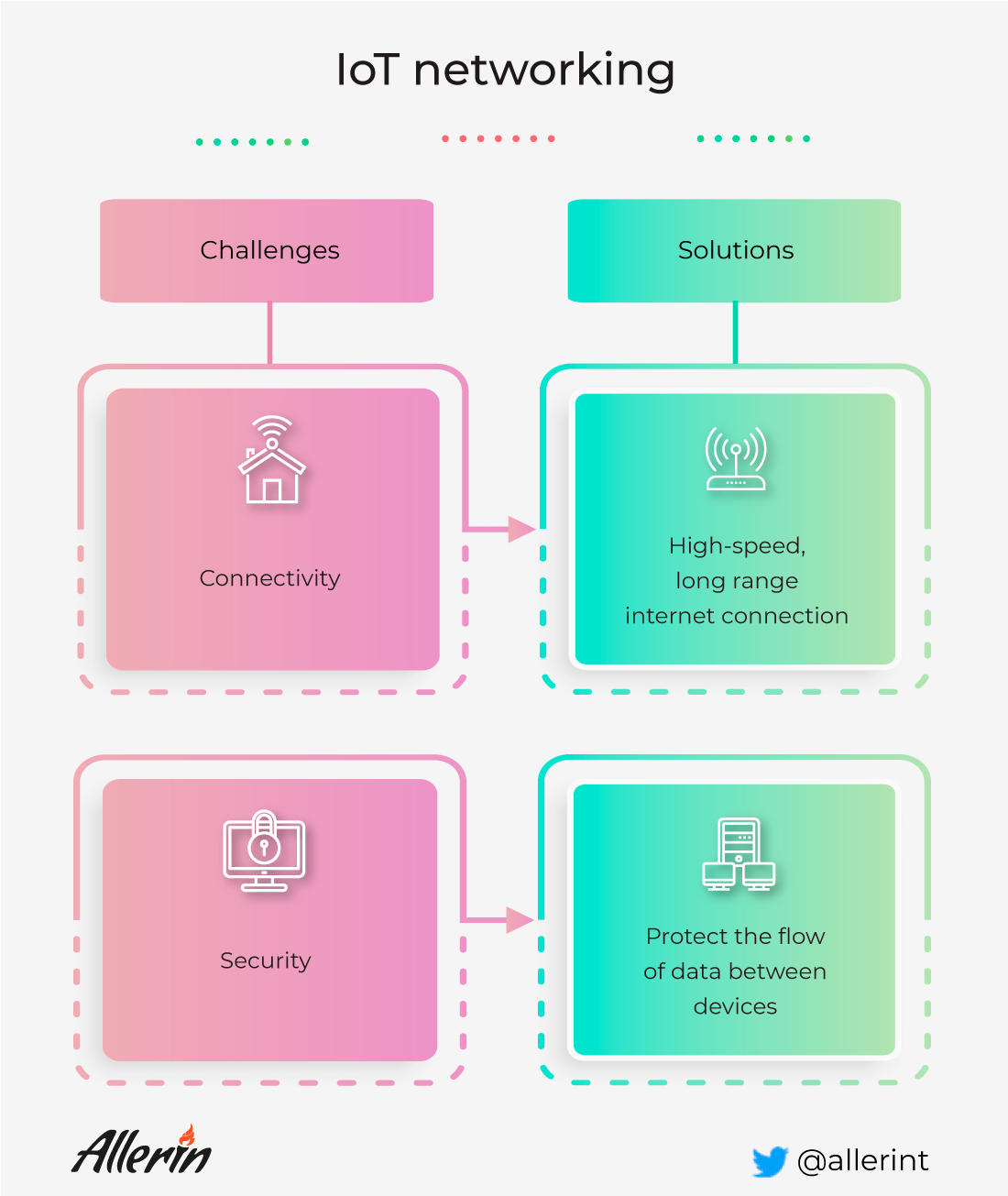
Connectivity
When it comes to connectivity, enterprises can adopt simple measures that can help solve the challenges faced. They should use network protocols such as NB-IoT, LoRa, or Cat-M1 should be adopted if they are using cellular connectivity.
Similarly, if enterprises run on a Wifi connection, they should ensure that the wifi routers work on HEW (802.11ax) and HaLow (802.11ah) protocols, which work for long-range and also consume less power. If the enterprise is using a wired connection, ensure that the internet speeds are capable of handling network traffic. The internet speed should depend on the number of devices and the amount of data being transmitted. They should also restrict access to unknown devices and use the devices only for work purposes.
Security
Here’s a list of certain measures enterprises should adopt to ensure the security of IoT devices:
- Install anti-virus tools
- Have strong passwords for device accounts
- Monitor and restrict the data that leaves the enterprise
- Upgrade the devices periodically, preferably as soon as software updates are available
- Adopt a firewall system
- Ensure data encryption
- Protect command and control centers from DDoS attacks
IoT network challenges are not very difficult to mitigate. When introducing an IoT framework, enterprises should research the various options available. They should choose devices that best suit the organization and adopt security measures to prevent their misuse. Or they can partner with an IoT solutions provider that can provide IoT network solutions specific to their needs and constantly ensure the management of these devices through periodic security updates and maintenance procedures.