

The telecom industry, tasked with connecting people and conducting information between different parts of the world, is no stranger to big data. The internet, which is supported by the telecom industry, is rapidly becoming one of the leading sources of big data that is used for analytics by businesses. Considering this relationship between big data and the telecom industry, there is no doubt that businesses in this sector realize the importance of big data for business success. The telecom industry might also be better equipped to gather the vast amounts of data, as compared to other industries.
Big data and the telecom industry
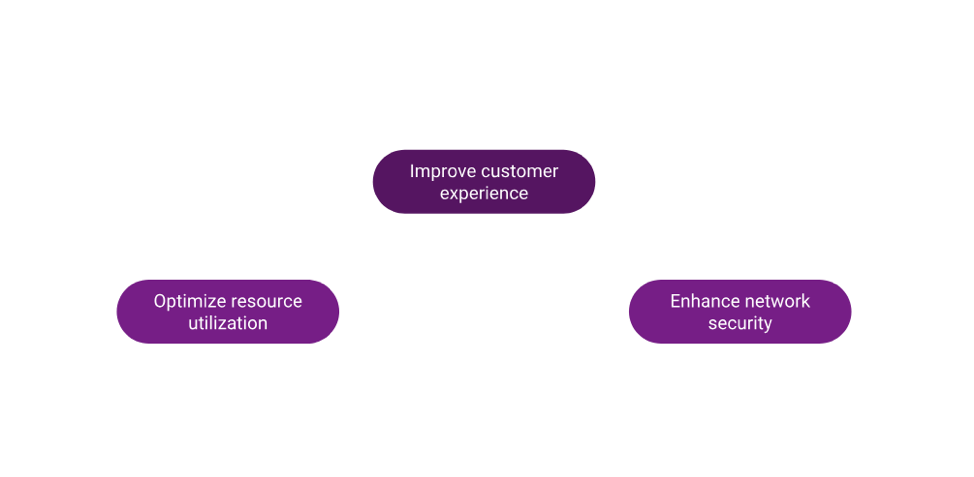
Big data and the telecom industry essentially deal with the same commodity – information. As telecoms find new and improved ways of transmitting different types of information, they can also identify and develop new sources of information that can help them with insights to make better business decisions. Following are a few ways in which big data can impact the telecom industry:
Adaptive marketing
Telecom companies can gather individual customer data to identify their network usage habits. This information can be used to provide the customers with highly targeted ads and offers. Telecom operators can also monetize this information by anonymizing and selling this data to interested businesses. In addition to providing targeted ads, telecom operators can also provide customers with network plans that are most suited to their usage habits, which ensures better customer satisfaction.
Telecom companies can also use web analytics to understand customer needs for improving their services and maintain customer loyalty. Collecting insights from social media chatter can help these businesses understand customer sentiment to make better decisions. Detailed analysis of big data can also help telecom service providers identify unengaged customers who are more likely to cancel their subscription. Identifying such customers can help them take timely remedial action.
Capacity management
Big data can help telecom network operators to maintain their infrastructure in ideal working condition. Constant monitoring of network parameters can help the maintenance staff spot sub-par network elements which can be fixed in time to keep the services working. Analytics can also help network operators to ensure that the services are keeping up with uneven workloads. Big data can optimize network utilization during times of uneven loading, which helps in increasing the overall operational efficiency.
Secure connectivity
Maintaining network security is of paramount importance for network operators to maintain users’ trust in the network. According to a Deloitte survey, the primary reason for not using mobile payments is a concern regarding security. Vast communication networks risk being hacked into and misused as they are hard to manually monitor. This problem is solved with the use of big data and machine learning, which can continuously look out for security threats and prompt timely responses. Machine learning algorithms can also be used to detect fraudulent use of the services. This can especially be useful in securing private networks used by businesses to secure confidential, internal communications.
Asking the right questions and finding the answers using big data will ensure more effective applications of the technology in this sector. To further power the partnership of big data and the telecom industry, businesses should introduce technologies like IoT and blockchain to achieve greater synergy and loftier results.