

Loading zones play an important role in the transportation system. They help with the loading and unloading of people and baggage in an efficient and safe manner. However, improper use of these zones can lead to traffic congestion and other problems. This can cause huge problems in densely-populated areas as it may block access to emergency vehicles, delivery trucks and buses.
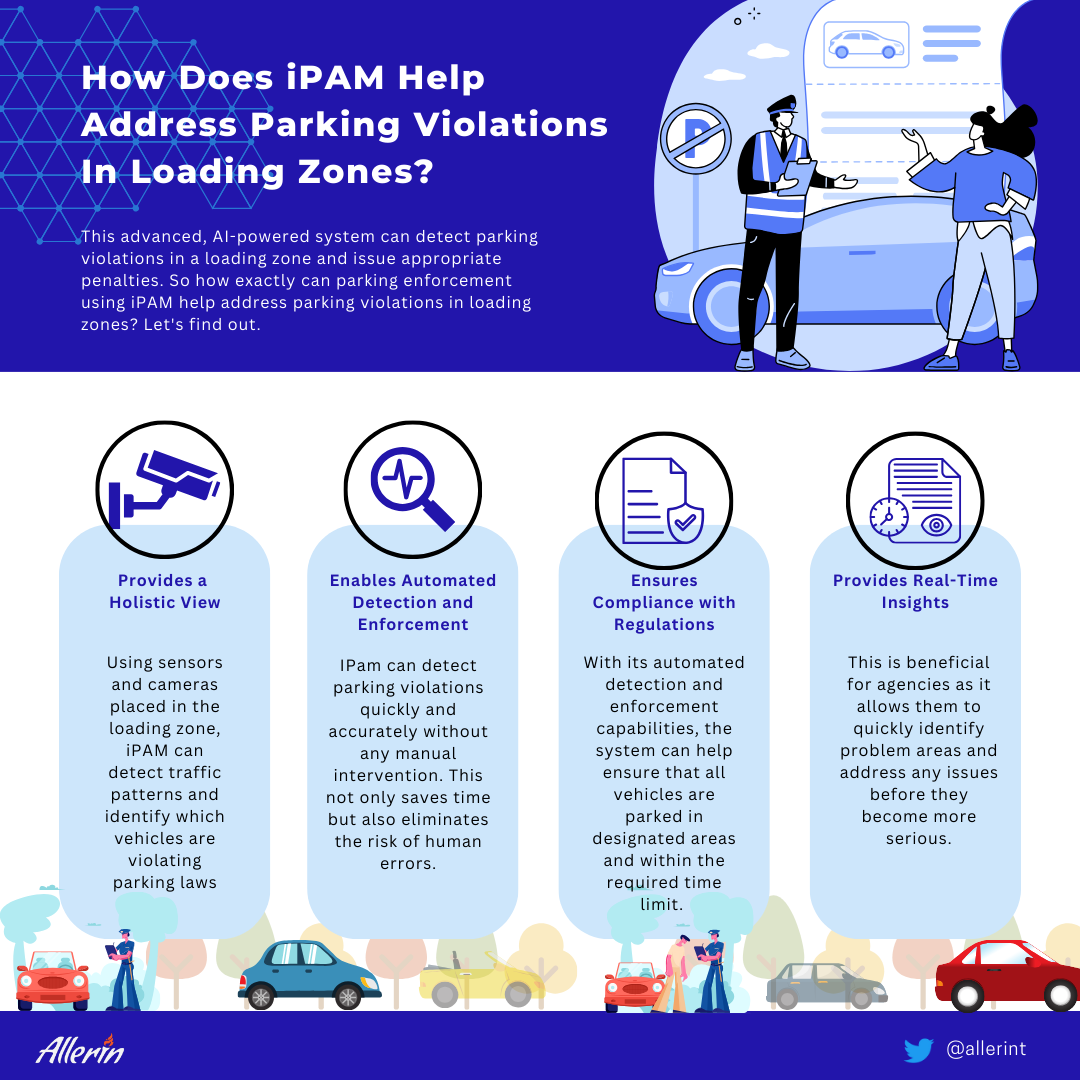
To help ensure the proper and efficient use of loading zones, parking enforcement agencies can consider using iPAM (Intelligent Parking Automation and Management) solutions. This advanced, AI-powered system can detect parking violations in a loading zone and issue appropriate penalties.
So how exactly can parking enforcement using iPAM help address parking violations in loading zones? Let’s find out.
4 Ways Parking Enforcement Using iPAM Helps Address Parking Violations
Ensuring loading zones function smoothly and safely is key to keeping traffic in check. And one way of combatting any parking violations in these zones is by using iPAM. Here’s how parking enforcement can use iPAM to overcome certain parking challenges in these loading zones:
Provides a Holistic View
First, iPAM can provide an overall view of the situation. Using sensors and cameras placed in the loading zone, iPAM can detect traffic patterns and identify which vehicles are violating parking laws. This data can be used to pinpoint where the problem areas are and allow the agency to take immediate action.
For example, iPAM can detect if a vehicle has been parked in the loading zone for longer than the permitted time limit and issue a warning or ticket accordingly. Parking enforcement using iPAM can automate many processes, allowing them to monitor multiple zones simultaneously.
Enables Automated Detection and Enforcement
Second, iPAM can enable automated detection and enforcement. Thanks to its advanced AI algorithms, it can detect parking violations quickly and accurately without any manual intervention. This not only saves time but also eliminates the risk of human errors.
Moreover, the system can be integrated with existing parking enforcement systems such as license plate recognition (LPR) and automated number plate recognition (ANPR) to further automate the process and ensure that all violations are detected in real-time.
Ensures Compliance with Regulations
Parking enforcement using iPAM also helps ensure that all vehicles comply with parking regulations. With its automated detection and enforcement capabilities, the system can help ensure that all vehicles are parked in designated areas and within the required time limit. It can also help ensure all vehicles are equipped with the necessary permits and follow applicable access restrictions.
Provides Real-Time Insights
Finally, iPAM provides real-time insights into the status of parking violations. This is beneficial for agencies as it allows them to quickly identify problem areas and address any issues before they become more serious.
Additionally, iPAM provides data that can be used to identify trends or patterns in parking behavior, allowing the agency to make well-informed decisions on how to best manage its parking resources.
Conclusion
Parking enforcement using iPAM is an effective way for agencies to manage their parking resources more efficiently and ensure compliance with regulations. As we shift towards smart parking solutions, this technology is set to become even more important in the years to come.