 In today’s rapidly evolving digital landscape, manufacturing, transportation and energy industries increasingly rely on digital systems and machinery. With the growth of interconnected devices and the Internet of Things (IoT), accurate and reliable maintenance records have become crucial for regulatory compliance.
Web3, the next generation of the internet built on decentralized blockchain technology, offers a transformative solution by providing immutable and verifiable maintenance records. This blog explores the importance of Web3 in creating such records and its implications for regulatory compliance.
The Challenge of Regulatory Compliance
Maintaining compliance with industry regulations is a critical aspect of any business. Aviation, healthcare, tourism and various other industries require stringent record-keeping practices. These are designed to ensure safety, quality assurance and legal compliance.
Traditional record-keeping methods, often reliant on centralized databases and paper-based documentation, are prone to errors, tampering and data loss. These pose significant challenges for businesses in meeting regulatory requirements. It can eventually lead to harsh financial penalties, reputational damage and compromised safety standards.
The Power of Web3 Technology
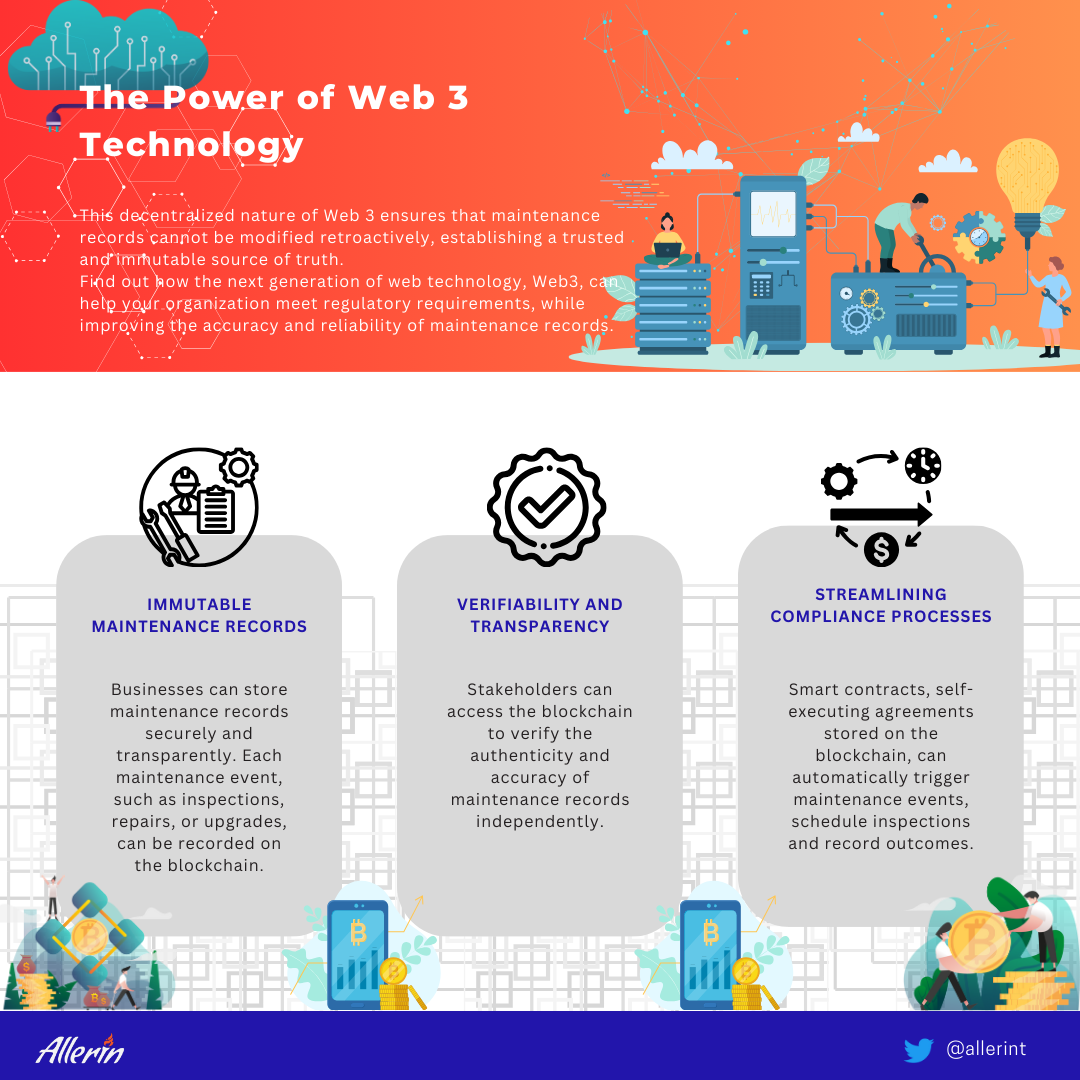
Web3, powered by blockchain technology, offers a paradigm shift in record-keeping by introducing immutability, transparency and verifiability. Unlike traditional centralized databases, blockchain is a distributed ledger where data is stored across a network of computers.
This makes it extremely difficult (virtually impossible) for any single entity to change or tamper with stored records. This decentralized nature of Web3 ensures that maintenance records cannot be modified retroactively, establishing a trusted and immutable source of truth.
Immutable Maintenance Records
By leveraging Web3, businesses can store maintenance records securely and transparently. Each maintenance event, such as inspections, repairs, or upgrades, can be recorded on the blockchain.
The immutability of these records provides auditors, regulators and stakeholders with high confidence in the integrity and accuracy of the data. Immutable records enable thorough investigations and audit trails and facilitate compliance with industry-specific regulations.
Verifiability and Transparency
Web3’s decentralized nature also promotes transparency and verifiability. Stakeholders can access the blockchain to verify the authenticity and accuracy of maintenance records independently.
This transparency creates trust among regulators, auditors and customers, as they can independently validate an organization’s efforts and maintenance activities. The ability to verify records on the blockchain eliminates reliance on third-party intermediaries and allows for more efficient regulatory processes.
Streamlining Compliance Processes
Web3 technology streamlines compliance processes by automating and digitizing record-keeping procedures. Smart contracts, self-executing agreements stored on the blockchain, can automatically trigger maintenance events, schedule inspections and record outcomes.
These contracts can be programmed to enforce compliance rules and regulations, reducing the risk of human error and ensuring that maintenance activities adhere to established standards.
Conclusion
In an increasingly digital as well as regulated world, maintaining accurate and reliable maintenance records is paramount. The advent of Web3 technology brings immense value by providing organizations with immutable and verifiable maintenance records.
By leveraging blockchain’s decentralized and transparent nature, Web3 enables compliance with industry regulations, enhances safety standards and fosters trust among stakeholders. As organizations continue to embrace the potential of Web3, we can expect a paradigm shift in record-keeping practices, ensuring a more secure and compliant future.