

Big Data implementation can help organizations to incorporate additional data sets into their existing data infrastructure, allowing them to question anything from their data sets. This seems very practical given the advancement in technology and commoditization of infrastructure, but there are many errors that organizations need to avoid.
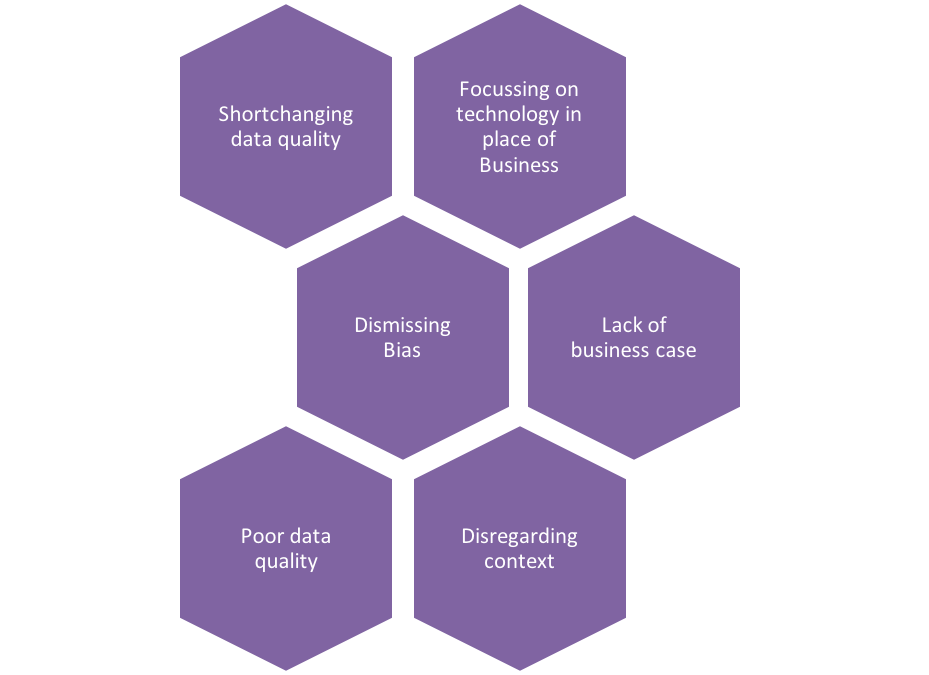
Mistakes in handling Big Data
Absence of a Business case
The complexity of Big Data is widely known and it becomes very difficult to understand when there is no business case associated with the value that organizations can derive when they incorporate it into their decision support platform. There should be clearly developed requirement for gaps in an appropriate business case.
Reducing data relevance
There are various shapes and sizes that Big Data can assume, and it is all around us. The key to succeed in Big Data initiatives for a business is to understand the relevance of these data sets with respects to the needs of the business.
Basically, three types of Big Data exist today:
- unstructured data, which includes text, videos etc.,
- semi-structured data such as email, spreadsheets etc., and
- structured data such as sensor data, machine data actuarial models etc.
The use of all three data sets to the fullest extent is often overlooked. They can provide holistic insights in various areas according to what the enterprise needs.
Underestimating Data Quality
The significance of Data quality is really high. Analytics can be potentially ruined by poor quality of Data. In case of Big Data, the overall quality of data might degrade when unstructured and structured data is integrated into data sets. Although it is important to understand the impact of Big Data quality and take proper steps to resolve issues before processing the data, enterprises also need to know how can they improve data quality for data which may or may not be generated by Big data.
Contextualizing data improperly
The logic behind processing textual data and executing text analysis is in the contextualization of data. Absence of proper contextualization leads to inaccuracy in data and produces skewed analytics. There are several additional steps with text analytics which need to be processed beyond contextualization. These include homographs and categorization of data in order to create accuracy and derive value from processing.
There are many number of risks in implementing a Big Data program. But if enterprises plan and learn carefully, every Big Data program has the potential to reap huge benefits for them.