
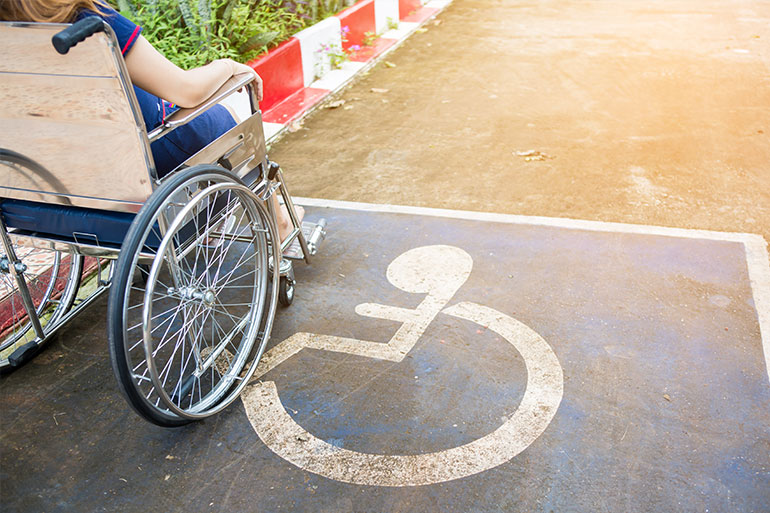

Technology has helped challenged people come at par with their counterparts by completely nullifying their disabilities and empowering them to do whatever it is that they would like to. Meanwhile, there has been a lot of discussion on the importance of IoT for the physically challenged as it is another step in that direction. For instance, it has helped doctors monitor physically challenged patients while they are at home. Furthermore, IoT devices like 3D printed prosthetics have helped understand those who cannot communicate through brain activity.
IoT for the physically challanged will help build smart homes
Amazon Echo and Google Home have been one of the most publicized uses of IoT in people’s homes. In order to use utilities and basic services within a house, people have to no longer depend on switches and conventional physical methods of interaction. For example, IoT devices allow a visually impaired user to change the heat settings without needing to program a controller. These devices work by using a voice recognition system, without any kind of special setup. For people suffering from paralysis or those who are completely bed-ridden, such technologies are no less than a boon as they perform functions like unlocking a door without having to move.
IoT for the physically challenged will help increase mobility
The introduction of self-driving cars will ensure incredible amount of mobility for the challanged; the kind that was previously never possible. When the question of moving from one location to another by a car arises, visually impaired people can literally do nothing about it. However, self-driving cars remove this barrier and allow challenged people to not rely on other people or public transport to move from one place to another.
IoT for the physically challenged will help monitor them
In most of the cases, people with disabilities require constant monitoring which can often be challenging and demanding for them. Michael J Fox Foundation uses IoT devices to monitor hundreds of people with disabilities and long-term illnesses. They gather millions of diverse data points that hold a clue to cure a disease. The data collected is so enormous that it can be used not only for those who are ill and challenged but also to evolve newer models for developing preventive measures for any new kind of disease as well.
IoT will break the accessibility barriers. IoT-enabled smart environments will create an enabling system that embodies inclusiveness, a smart ecosystem that helps challanged people to live their lives freely.