 Ever-increasing and fluctuating public demands and expectations are bringing in numerous alterations in the way businesses are carrying out their activities, right from the production to transportation to the retailing cycle. The transformation, innovation, and revolution happening place the same impact at the distribution network and centers. The warehouses of yesterday showcase drastic changes when compared to today’s smart warehouses in terms of promptness, performance, accuracy, and efficiency. Before the 20th century, warehouses were confined to just storing of goods. Stakeholders manually managed everything. The details about the arrival and dispatch of shipments were written down on paper. The entire process not only ate a lot of time but also was fallible. Little later, the advent of machines and automation brought in a host of new opportunities for organizations. The perfect blend of automation and technologies evolved warehouses to become smart. Automation eliminated the need for employees to manage warehouse activities manually. With the data being accurately and seamlessly integrated into the warehouse management application in real time, stakeholders got an opportunity to view and control every operation and updates almost instantaneously. Improved visibility led to faster response and delivery times, thereby enhancing customer service and experience. The power of automation helped organizations to not only achieve higher profits but also gain a competitive advantage in the market. Indeed, the invasion of automation and other smart technologies evolved warehouses to become smart and prompt. Little later, robots were introduced to substitute human workers and take up labor-intensive tasks. The power of robots in a warehouse was indeed awe-inspiring, which allowed organizations to reduce operational costs and enable on-time deliveries.
However soon, flaws (discussed later) were identified with the automated systems, which is why there was a demand for building a smarter warehouse. Let’s have a closer look at what those challenges were.
Exploring the challenges faced by smart warehouses
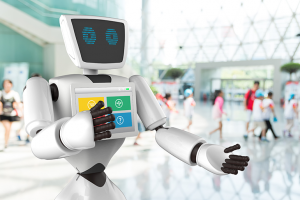
Automated systems like ERP is helping organizations track inventories, improve team collaboration, and enhance cycle counting. An incredible technological application like robots allows companies to execute tasks round the clock with high energy levels and efficiencies. But, there are flaws too.
First, though ERP systems provide increased efficiency, but they lack immensely when no real-time data gets collected about warehouse operations. What if stakeholders forget to update the application about the arrival of goods? What if employees fail to enter the right details on delivery dates? What if workers fail to input accurate information on fluctuating or revised demands? It is of utmost importance that every single detail should be known to stakeholders for solving all accuracy-related problems. So, that drills down to the fact that ERP systems can only be useful if they are updated in real-time.
Second, we have already mentioned that robots are entering the warehouses, making the distribution centers smart and automated. But what if these automated machines cause fatalities due to a software glitch or mechanical failures? Robots benefit warehouses but the fact that it can cause life-threatening harm to people around is indeed depressing.
Building a smarter warehouse with IoT
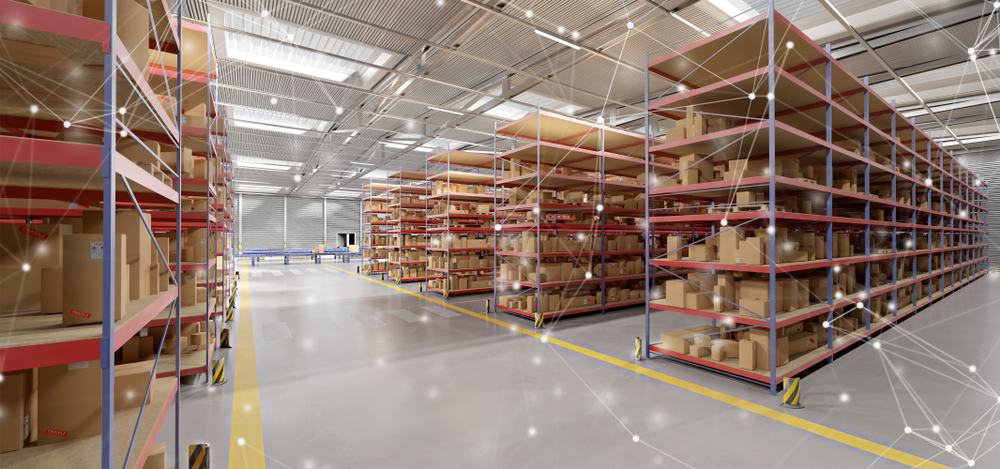
Warehouse automation has made radical alterations, benefiting organizations with inbound, storage, and outbound optimization, no doubt. But as the current technological application has certain challenges and concerns, it clarifies that warehouses cannot be just smart with automated processes. Considering the issues that are mentioned earlier, a common problem that can be plucked out is data availability. And the data issue can be easily fixed by consolidating the current automated machines or systems into an intelligent and connected ecosystem. The aim of building connected warehouses is collecting massive voluminous data points on inventories. Now that the concern is around data availability and collection, the best possible technological solution is introducing IoT.
The incredible technology, IoT, presents revolutionary and disrupting possibilities and opportunities for organizations in building a smarter warehouse. Let’s understand how.
Asset tracking
The use of smart devices, sensors, and the cameras present organizations the best opportunity to keep track of asset movement within a warehouse. Using IoT for asset tracking will not only help organizations to get complete information on where it is, but also offer them health details of the valuable assets. The introduction of IoT will eliminate human involvement for manually noting the details of assets and later entering it to the centralized warehouse management systems. By combining the ERP and IoT data, organizations will gain superior oversight and control of every event that occurs within the warehouse. The concerned authorities can easily get real-time updates, which will help them remotely manage warehouse operations seamlessly.
Wearables
Another IoT trend that has the potential to transform and modernize warehouses is wearables. Traditionally, employees had to run down to the distribution center or open their computers to glean details on assets. But fortunately, these are things of the past. With smartwatches, employees can get instant notifications of operations, which will help them make informed decisions almost instantaneously. Besides, the introduction of wearables will be a crucial enabler for productivity gains.
Another wearable that has brought in groundbreaking changes in the warehouse front is smart glasses. Smart glasses will eliminate the old barcode scanning method and the associated paperwork, of course. The smart glasses, powered with IoT and augmented reality, easily recognize the displayed codes on the packages. Workers will get complete information about the package they see through the glasses, streamlining and optimizing the older filling processes. DHL, the global market leader in the logistics industry, carried out a pilot program by integrating wearables with AR in a distribution center. The program conducted showcased an increase of 25 percent in the efficiency levels of the filling technique when compared to the traditional process. “Vision picking enables hands-free order picking and greatly increases productivity,” says the Business Unit Director Technology of the company.
Cobots
Cobots, autonomous machines specially designed with advanced technological capabilities, work and interact with human workers. Powered with IoT, cobots can update warehouse managers and inspectors on a technical glitch, if any. The managers can accurately and continuously monitor the working of cobots with the help of real-time updates. Details about any problem will help managers to take proactive measures to avoid catastrophic consequences later.
While issues like poor team collaboration, manual warehouse operations, and productivity goals failure have always daunted warehouses, automation and other sophisticated technologies like robotics and IoT have fixed the issues to significant levels, thereby building a smarter warehouse. Given the advancements in technologies, we are pretty sure that warehouses will witness new waves of innovation, revolution, and disruption in operations, ranging from receiving to staging to put away to inventory control to picking and packing to finally shipping. No doubt, warehouse in the future will be more smarter and intelligent than it is today.