
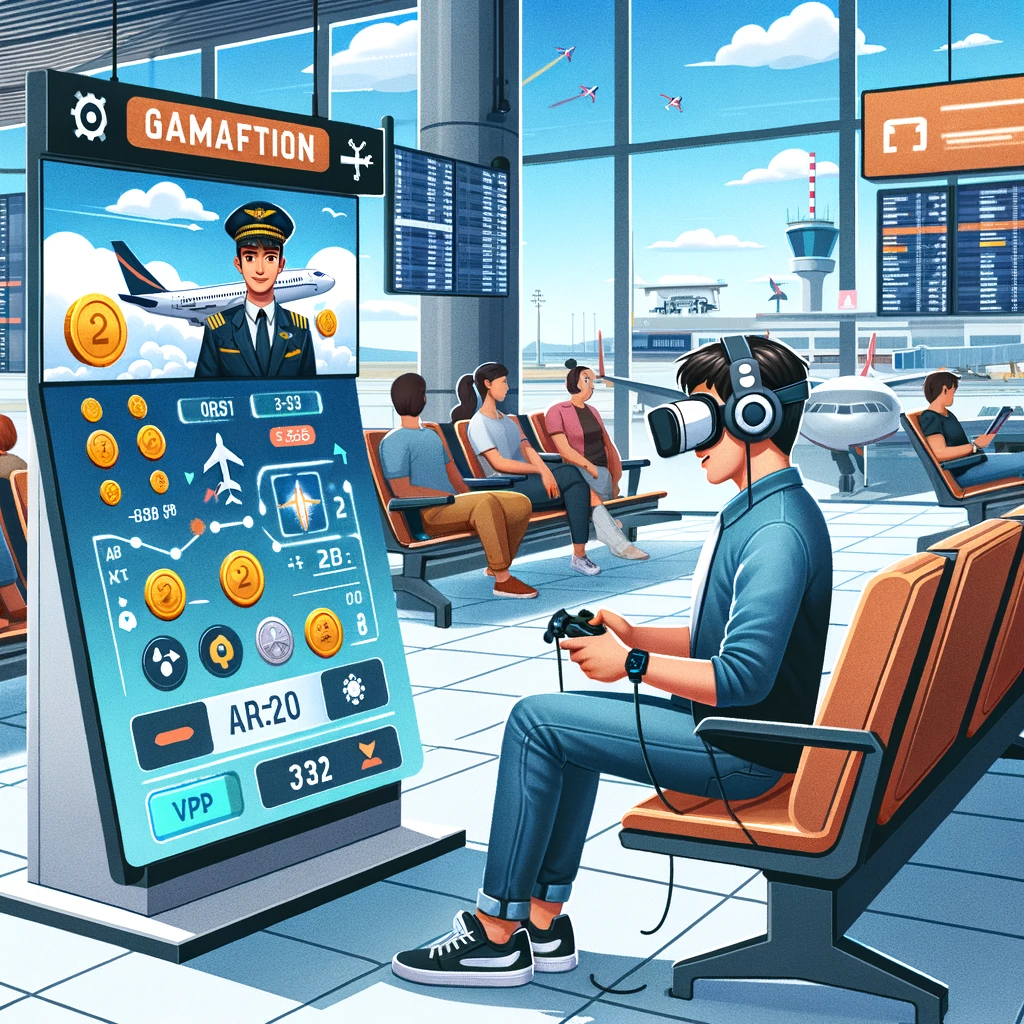
The field of aviation has constantly relied on new approaches and technologies as the driving force behind its transformation. Among the array of technological applications, gamification stands out as a potent force with the capability to transform how airlines, airports and various players within the aviation sector connect with their customers, workforce and collaborators. The integration of gamification in the aviation industry brings forth a range of possibilities that can revolutionize overall operations.
Further, let us explore the world of gamification, its impact and the intriguing prospects it introduces.
Advantages of Gamification in the Aviation Industry
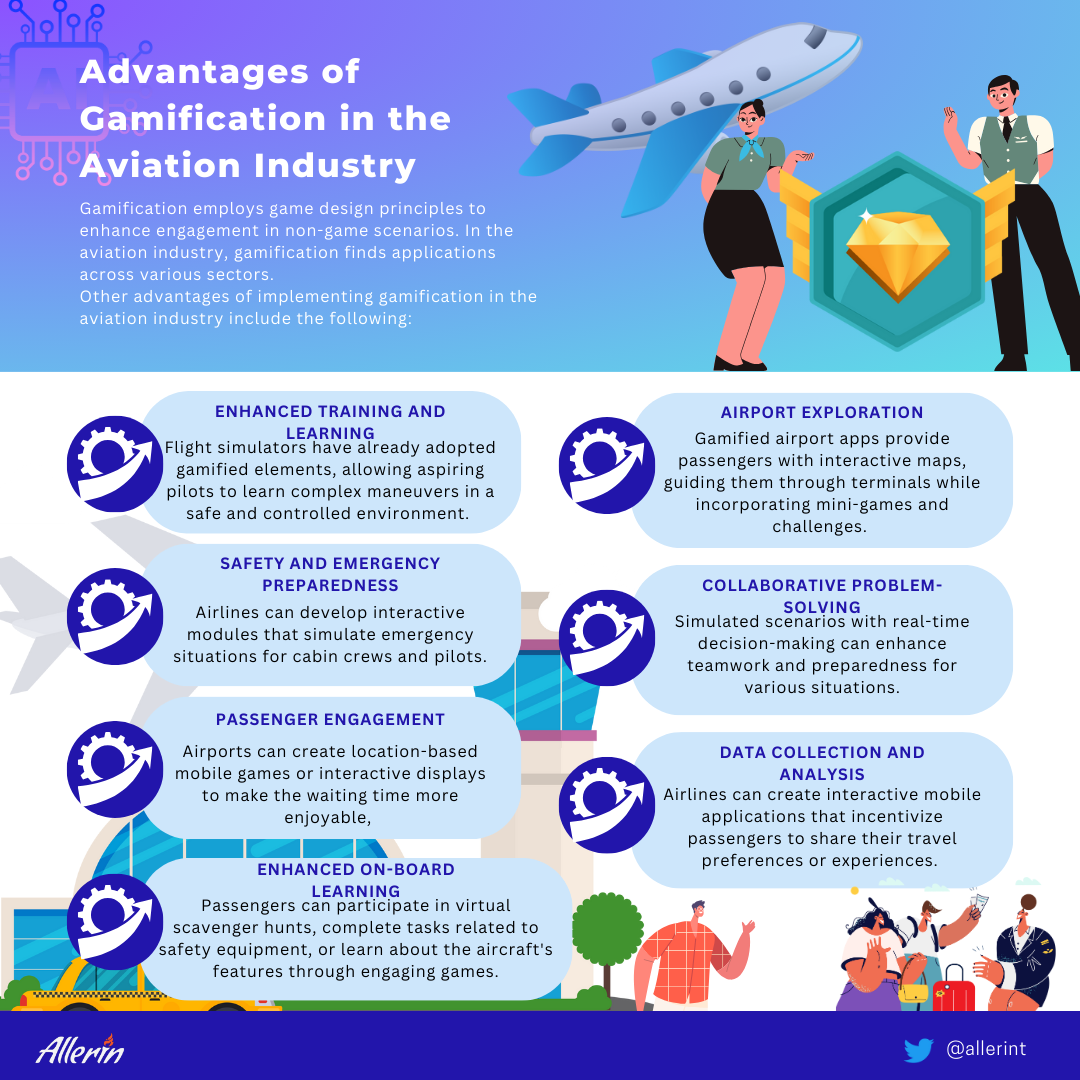
Gamification employs game design principles to enhance engagement in non-game scenarios. Infusing elements like competition and achievement transforms mundane tasks into enjoyable experiences. In the aviation industry, gamification finds applications across various sectors. For instance, airlines utilize it for passenger incentives and loyalty programs, as seen with United Airlines’ MileagePlus X.
Other advantages of implementing gamification in the aviation industry include the following.
1. Enhanced Training and Learning
Flight training is an integral part of the aviation industry. Gamification can introduce an element of fun and interactivity into the training process. Flight simulators have already adopted gamified elements, allowing aspiring pilots to learn complex maneuvers in a safe and controlled environment. Pilots can acquire skills more efficiently and enjoyably by integrating game mechanics such as rewards, leaderboards and scenario-based challenges.
2. Safety and Emergency Preparedness
Gamification can be employed to enhance safety measures and emergency preparedness. Airlines can develop interactive modules that simulate emergency situations for cabin crews and pilots. These simulations can improve decision-making under pressure and ensure all staff members are well-equipped to handle unforeseen events.
3. Passenger Engagement
Keeping passengers engaged is key to ensuring a positive travel experience for airlines. Gamification can transform the mundane aspects of flying, such as waiting at the gate or enduring long flights, into enjoyable and entertaining activities. Airports can create location-based mobile games or interactive displays to make the waiting time more enjoyable, while airlines can offer in-flight games and challenges to keep passengers entertained during the journey.
4. Enhanced On-Board Learning
Safety demonstrations and information about the aircraft are crucial but can sometimes be mundane. Gamification transforms these essential messages into interactive experiences. Passengers can participate in virtual scavenger hunts, complete tasks related to safety equipment, or learn about the aircraft’s features through engaging games.
5. Airport Exploration
Large airports can be overwhelming to navigate. Gamified airport apps provide passengers with interactive maps, guiding them through terminals while incorporating mini-games and challenges. This not only makes navigation easier but also adds an element of fun to the often stressful airport experience.
6. Collaborative Problem-Solving
Air traffic control involves intricate coordination between various stakeholders. Gamification can help improve communication and collaboration among air traffic controllers, pilots, and ground crews. Simulated scenarios with real-time decision-making can enhance teamwork and preparedness for various situations.
7. Data Collection and Analysis
Gamification can also be harnessed to gather valuable data. Airlines can create interactive mobile applications that incentivize passengers to share their travel preferences or experiences. This data can help airlines tailor their services to meet customer needs better.
Incorporating gamification in the aviation industry can lead to significant transformations and enhance the sustainability efforts of airlines, airports and industry stakeholders to create a more engaging and effective ecosystem. As technology develops in the future, we can expect to see more innovative uses of gamification that reshape how we perceive and interact with the aviation world.