

Unlike newer technologies, such as blockchain and the Internet of Things(IoT), big data has been around for a while and is proving its worth in a number of industries, right from healthcare to manufacturing. An example of big data’s contribution is the American IRS’s implementation of big data to increase tax compliance and minimize fraud, which has resulted in the recovery of over $2 billion for the government. Results like this are becoming increasingly commonplace, making the implementation of this technology imperative for the sustained relevance of organizations. This has increased the worldwide adoption of big data analytics in the recent years. Choosing to implement the technology is a step in the right direction for any business. However, leaders should be mindful of the best practices for implementing big data.
Best practices for implementing big data
The five best practices listed below will ensure your big data implementation achieves improved business outcomes by keeping risks away:
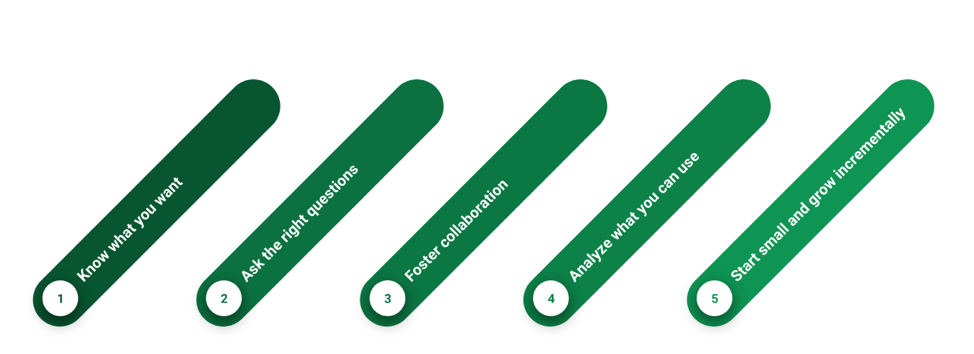
1. Know what you want with big data
The biggest mistake made by businesses eager to adopt new technologies is that they fail to focus on relevant business outcomes and just look for areas where the new technology would fit. This is potentially a recipe for disaster as such applications may not necessarily be able to justify your investment in the technology. Businesses should begin Implementing big data with a fixed problem or some problems in mind. Starting with a business problem to solve will enable you to find big data applications that can add value to your business process. For instance, you can use big data to track customer preferences and provide them with highly customized recommendations from your product or service range. This will ensure more sales with lesser expenditure on advertising.
2. Ask the right questions
When you know what you want from your big data initiative, you will be more clear on the kind of data you want to collect and analyze. Asking questions that do not get to the core of your problems will end up wasting your time and resources on futile endeavors that do not achieve the desired business outcomes. Collecting the right data will require asking the right questions, and then translating those questions into variables for which data needs to be collected. Determining the right type of data will help create algorithms that will deliver the most relevant insights for you to improve your business.
3. Foster collaboration between business and technology teams
Big data projects are generally viewed as IT projects that require little or no involvement from other functions. Instead, implementing big data should be considered an organization-wide initiative to enhance overall business performance. CIOs should communicate this to other C-suite executives in order to ensure their support. A CIO is also responsible for bringing together cross-functional teams to ensure a more successful big data project. This ensures that the employees who will eventually use insights from the analytics can contribute to the project, making the applications more effective and usable.
4. Analyze only what you can use
The ultimate objective of big data is to generate actionable insights for the business. The key word here is ‘actionable’ – meaning only the data that can enable you to take the right actions should be valued. Collecting data that you cannot act on is wasteful and does not justify your investment in the technology. Hence, while deciding on what kind of data to collect, you should consider if that data will allow you to take action or help make better decisions. If the answer is no, then you should try asking better questions.
5. Start small and grow incrementally
Another mistake that businesses tend to make while implementing new technology is expecting immediate transformation. Approaching big data with this mindset can set your project up for failure. Initial applications should be small projects that are sure to provide a high pay-off for minimal risk. A series of small projects should be followed by increasingly larger projects. This incremental growth will ensure that you build a steady momentum and become increasingly confident and competent in handling progressively bigger changes. Aiming for sudden disruption without proper experience or expertise is highly risky and may worsen business performance instead of enhancing it.
Big data is a technology that can potentially make or break your organizational culture. It is up to you to decide how you want it to impact your business.