
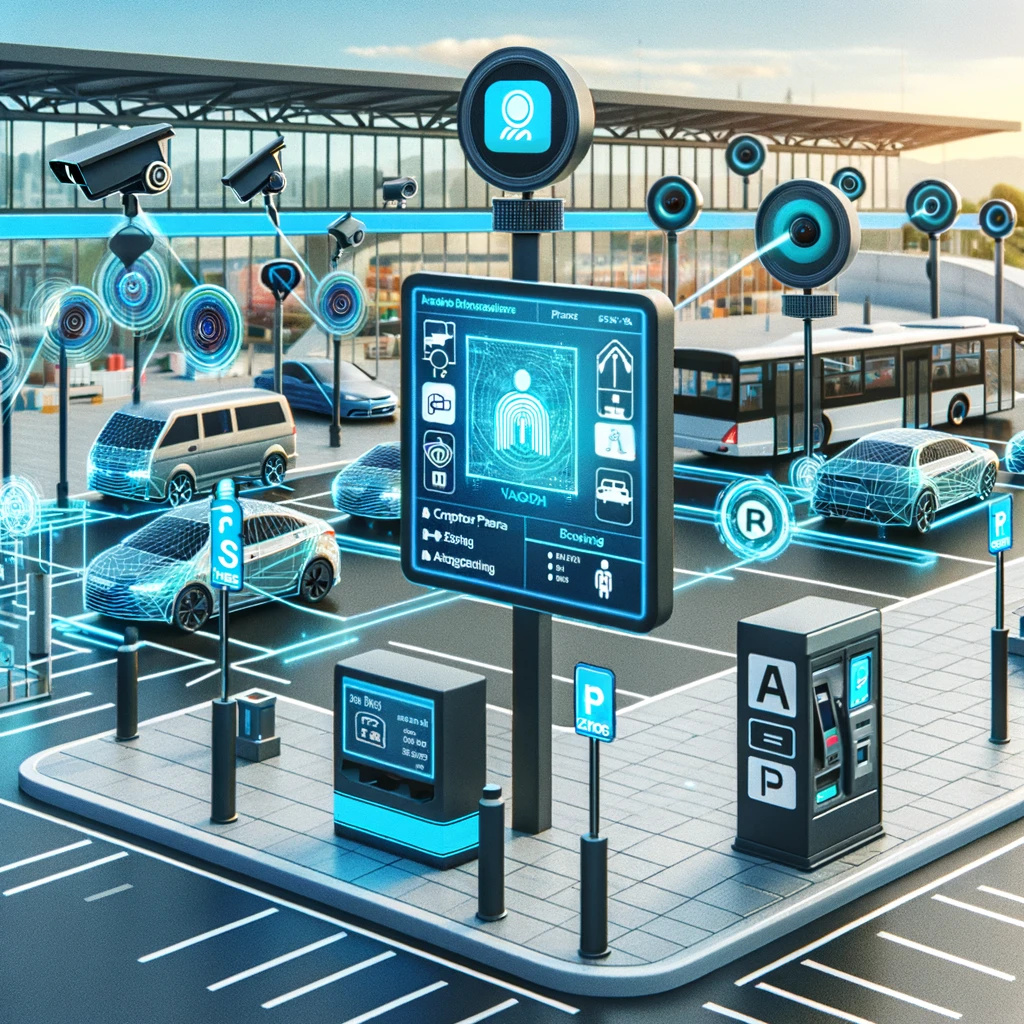
Did you know America has between 700 million to 2 billion parking spaces? Despite that, it is common to see congested roads and overflowing parking areas. Finding a decent parking space requires great effort, especially in overpopulated urban areas. Problems like a confusing parking structure, parking restrictions, and lack of information lead to aimless searches and, ultimately, a waste of time.
Vehicle owners are not the only ones affected by parking problems. Managing parking spots can be challenging for parking space owners since numerous factors come into play, such as workforce management, traffic congestion, and regulatory compliance, to name a few. Fortunately, incorporating cutting-edge technology like artificial intelligence in parking management systems can produce positive results.
Using branches of AI like computer vision can assist parking spot owners in automating many redundant tasks. From monitoring parking violations to creating gateless communities, computer vision can drastically reduce human efforts. Moreover, it can also provide new benefits like a streamlined payment system, spot booking, and much more. Parking space owners can also collect and utilize data to implement strategies like dynamic pricing.
Modules of Parking Management System
An efficient parking management system comprises several modules like vacant space detection, vehicle recognition, allocation and booking, and a digitized payment system. These modules can help vehicle owners to avoid long queues and waste their time. It also helps the parking space owners to keep track of the empty parking spaces in the lot, automate payment systems, report parking violations, and much more.
Here are some of the modules of a parking management system

1. Real-Time Vacant Space Detection
One of the major issues parking spot owners face is the underutilization of existing parking spaces. Some spaces may be occupied for a brief period, while others might be hard to find. When unoccupied, these spaces do not contribute to the owner’s revenue. It is crucial to find and use these parking spaces efficiently to avoid congestion on the roads and overcrowded parking lots.
An important module of an efficient parking management system is vacant space detection. There are multiple ways to detect these spaces without needing a large workforce. Modern technologies have allowed businesses to use convenient ways to manage their resources. Owners can use hardware like sensors to keep track of empty spaces in their parking facility. These sensors use ultrasonic and 3D vision technology to detect any empty parking space in the lot. This information is monitored by the system administrator and showcased to the vehicle owners. They can use this information to book the empty spaces beforehand. However, this system requires an individual sensor at each parking space and regular maintenance, which can be quite costly.
Compared to individual sensors, a single camera can cover a large area in the parking space. Modern solutions like iPAM integrate computer vision into the parking lot cameras. These high-definition cameras can detect motion and the availability of empty parking spaces in real time. This information is relayed to the system administrator, which is then showcased on the vehicle owner’s app. As soon as the vehicle leaves, it updates the status of this parking spot. So others can book that spot again right away. This will help drivers find available spaces with ease. Moreover, it can also detect certain violations like crossing the boundaries of parking spaces and illegal use of handicapped parking.
2. Vehicle Recognition
Another problem faced by parking lot owners is illegal parking. There are many parking space violations that people choose to overlook. For instance, a car is parked while occupying two parking spaces or Illegally occupying handicapped spaces. Even parking on the sidewalk without a zoning permit or occupying a parking space for more than 24 hours are some examples of parking space violations.
Keeping track of such violations requires constant management and a lot of manpower. Many of these violations go unnoticed since the enforcers cannot be omnipresent. This causes inconvenience to vehicle owners who abide by the rules. Moreover, it chips away a part of the parking space owner’s revenue. To tackle such problems, parking space owners can use modern parking management systems. Such solutions integrate surveillance cameras with AI applications like computer vision and optical character recognition (OCR).
Computer vision allows computers to derive meaningful information from visual aids. In the case of parking systems, computer vision can distinguish between cars, buses, cycles, and more to report parking violations. Then, with the help of OCR, the cameras can track the number plates of the vehicles causing the violations. This information can be relayed to vehicle owners and enforcers. The surveillance cameras can be utilized both inside and outside the parking space to avoid congested roads. With the help of this technology, owners can keep track of regular violators. Then, the number plates can be tracked to appropriately penalize the vehicle owner for the violations.
Moreover, it can be used to identify the Be-On-Look-Out cars (BOLOs) or ambulances. These vehicles can be allowed to pass on without any restrictions or billings.
3. Allocation and Booking
According to research, an average American driver spends 17 hours a year looking for a parking spot. People living in urban areas may already know how difficult it is to find an empty parking space near their destination. This can lead to severe frustration and road rage, especially if there is a chance of running late for your appointment. Besides that, searching for parking spaces burns extra fuel, leading to air pollution. The amount may seem small, but the collective pollution by numerous cars can result in substantial quantities.
Moreover, if a parking space is constantly congested, vehicle owners may opt for other options. By using an AI-powered parking management system, owners can avoid losing business in such a way. They can solve the drivers’ problems by introducing space allocation and pre-booking. Vehicle owners can book a parking space even before stepping out of their houses. The vehicle registration system provides drivers the option to purchase monthly passes. Smart parking systems can use AI applications like machine learning to predict behavior patterns. Parking managers can use this data to provide personalized experiences to users and make the booking process much more convenient. By enhancing customer satisfaction, parking managers can boost their revenue.
4. Digitized Payment System
Parking lots generate enormous amounts of revenue for their owners. However, many parking spaces still use traditional methods of payment. For instance, when a vehicle reaches the parking space, they are stopped by barriers. To gain access to the parking space, the owner of the vehicle must get a ticket. At the time of departure, the driver must submit this ticket. They must pay an amount based on the length of their stay.
This system has several disadvantages, such as requiring motorists to wait in long queues to get their tickets. And during peak hours, such queues can lead to congested roads, which can inconvenience others using that road. In fact, if the vehicle owner loses their ticket, it can lead to further verifying the status of the owner, or the owner can even get away by paying only a small amount. To say this system is highly susceptible to fraud and is soon to become obsolete would be an understatement.
Traditional parking spaces also require loads of maintenance. The ticket counters at every entrance must be maintained and restocked with tickets. Similarly, one must ensure the gates work properly at every entrance. If not, they can lead to long queues and frustrated drivers. Moreover, many exits still require manpower to handle cash and open the gates.
Digitized payment systems allow motorists to pay their dues online. Parking owners can integrate various automated payment methods like mobile apps, payment kiosks, and electronic toll collection systems. With this, motorists get several options like online payment, credit/debit cards, and more. This is much more convenient since it negates the need to wait in queues. Motorists can pay for the parking spaces according to their convenience before leaving the parking space. The analytics gathered from these transactions can be used to implement dynamic pricing strategies. The parking managers can increase or decrease the price of the parking spaces according to peak hours. A digitized payment system also eliminates the need for gates at entries and exits. The manpower required to manage the exit booths can be utilized elsewhere.
Conclusion
Artificial intelligence has revolutionized multiple businesses, and the parking business is no different. With the integration of smart parking management systems, parking lot owners can tackle multiple problems simultaneously. The efficiency of modern parking spaces can incentivize vehicle owners to convert into regular customers. Integrating modern technology in parking spaces can lead to a world where searching for empty parking spaces is no longer stressful.