

Big data analytics have revolutionized the way marketers and sales personnel work by differentiating pricing strategies and giving greater customer insights. Now the same idea is being applied by hiring managers. HR professionals always face difficulty in searching for the right talent and implementing growth strategies. Big data for recruitment is helping HR professionals manage a pipeline of qualified candidates with the right set of information for a proactive hiring strategy.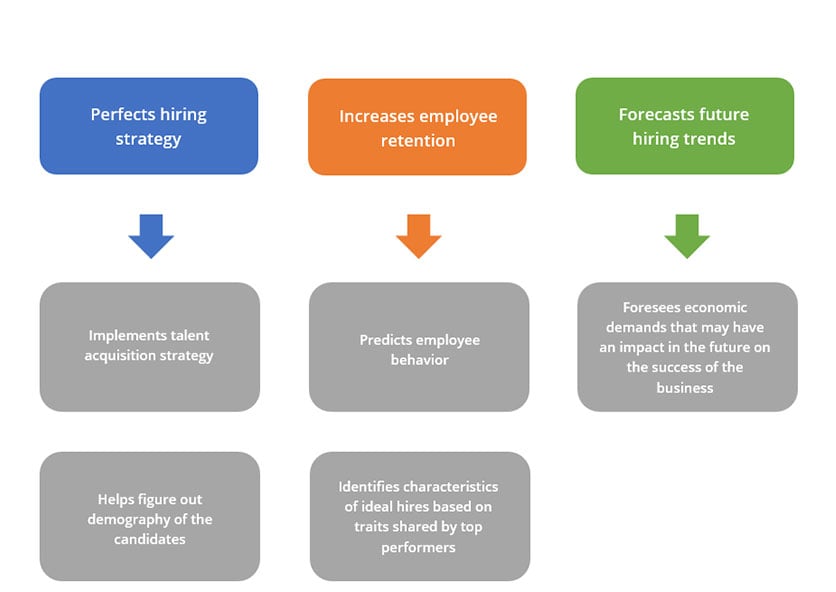
Big data for recruitment helps a perfect hiring strategy
A bad hire can cost around 30 percent of the employee’s potential first year earnings, according to the U.S Department of Labor. Based on targeted traits, HR professionals can use data analytics to implement talent acquisition strategies. For instance, HRs can use big data to figure out how candidates found entry into a talented community – via job boards or a career site. They can also know about the geography of the candidates to hone in on vital areas that bring in candidates. Moreover, big data indicates job categories that candidates identify themselves with, which helps companies prepare better to find more such employees.
Big data for recruitment increases employee retention
Regardless of the size of a business, employee turnover is a costly expense. Prediction of employee behavior is one of the biggest advantages of big data, as it can help keep employees motivated, engaged, and more loyal to the company. Tools such as employee engagement surveys and exit and stay interviews are used to better understand behaviors and predict factors that may cause employee dissatisfaction. To gain an insight on how a group or a team is performing as a whole, team assessments to measure team dynamics can be implemented. Moreover, with big data analytics, businesses can also identify characteristics of ideal hires, based on traits shared by top performers.
Big data for recruitment forecasts future hiring needs
Big data helps prepare a company for growth by combining a company’s knowledge of its workforce. For instance, the demographic trends affecting the business, the economic demands that may in the future have an impact on the success of the business, to name a few. For foreseeing future patterns and trends, big data analytics provides the required skill set to your HRs.
Big data greatly reduces the dependency of HR professionals on repetitive resumes and gut feeling. Online resume databases, records of employment, and challenge-based contests such as Google’s Code Jam, provide a wealth of data. It helps hiring managers recognize great talent and better retain them.