

Today, apart from traditional data sources, there are numerous digital data sources like Google trends, social media, data coming from satellites etc. Such huge amounts of data have made it difficult to aggregate, visualize and analyse information efficiently. That’s why it is very important to counter data deluge by retrieving the exact amount of data that not only saves money but also gives required, valued insights.
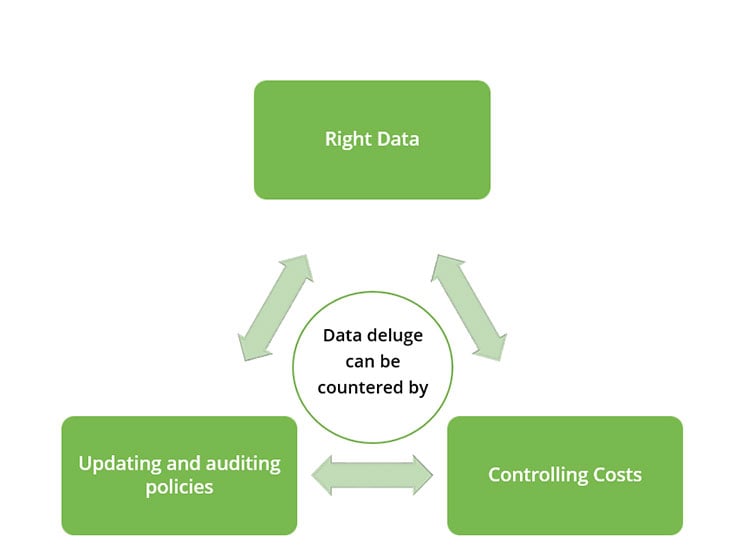
1. Countering data deluge by using the right data
The primary challenge for any company is to select the right information that serves its customers. Data is growing rapidly and it’s difficult for marketing analysts to collect and analyse data on the go. Additionally, it’s important to make sure that the data collected by you really reflects the purchase decisions taken by your customer base. Data deluge is going to increase in the coming time, but it is manageable if companies learn to select the right amount of data as it will help them build better and reliable customer relationships in the long run.
2. Countering data deluge by controlling costs
Traditionally, companies have always been convinced by the theory of throwing money for technology solutions. This, however, can no longer be called a sensible strategy because of the exponential growth in data that calls for sensible analysis and handpicking only “useful” data. Companies can train its data scientists to reject duplicate data and cull useful information that can save a lot of money in the long run.
3. Countering data deluge by updating and auditing policies
According to the 2011 McKinsey Global Institute report, many large U.S companies have more data stored as compared to the U.S Library of Congress and that has become a cause of concern for data managers. The only way to counter this is by having effective data retention and data destruction policies. Companies can have such policies that allow auto-deletion of inessential data after a specific period of time. Also, there must be policies which allow retrieval of data such as important emails, files, and documents in times of litigation. Companies must also diligently follow both internal as well as government compliances in the process. Moreover, while data should be transparent and available to all employees, they should be given the right to access it only for a limited time.
Yes, data deluge is on the rise and will continue to do so. Companies can adapt by following the above stated measures, which will not only help them save costs but also allow them to handpick data essential to make insightful decisions.