
Self-driving vehicles, which once appeared in the sci-fi movies only, are now becoming an everyday reality. We see a sudden hype in the concept of autonomous cars, as industry leaders are on their way to redefining transportation. The market size for autonomous vehicles is projected to grow to 6 billion U.S. dollars by 2025. Now that’s a huge number, right? As a result of tremendous growth and innovation in the transportation sector, we’re awaiting a future where we never face road congestions, drastically containing the cost of transportation. It’s true that the autonomous vehicles are poised to replace the existing vehicles in a few years from now. However, have we thought about this – in a future of driverless cars, where you will possess a vehicle that needs no driver, how will you make payments for the service availed? Blockchain helps to overcome this dilemma. Read further to understand how blockchain and the autonomous vehicles are faring together.
What are the limitations of driverless vehicles?
Following limitations suffered by autonomous or driverless vehicles have led to the need for blockchain to be introduced in this area:
- How to pay such vehicles for their service?
- What if cybercriminals hack the database of a driverless car?
Imagine a future where everything is delivered via driverless cars with no humans involved in the delivery. But this also poses a question on how the payments will be facilitated, as no humans are involved.
Another burning issue with the autonomous vehicle is that of cybersecurity threat, as we have mentioned earlier. The driverless cars are embedded with high-quality cameras and sensors that gather tons and tons of data. Such data needs to be saved securely so that hackers do not corrupt the database. Not having the right technology will have a negative impact on the safety of both, the vehicle and the passengers.
How is blockchain relevant to autonomous vehicles?
Taking into account the volume of digital data that gathers, it is obvious that there is a need for right policies that take care of the safety of such data. One of the best solutions for such a requirement is blockchain. Blockchain, with its distributed ledger, first validates and then stores the data that comes in from various sources. Due to this feature of blockchain, the probability of hackers hacking the database becomes negligible.
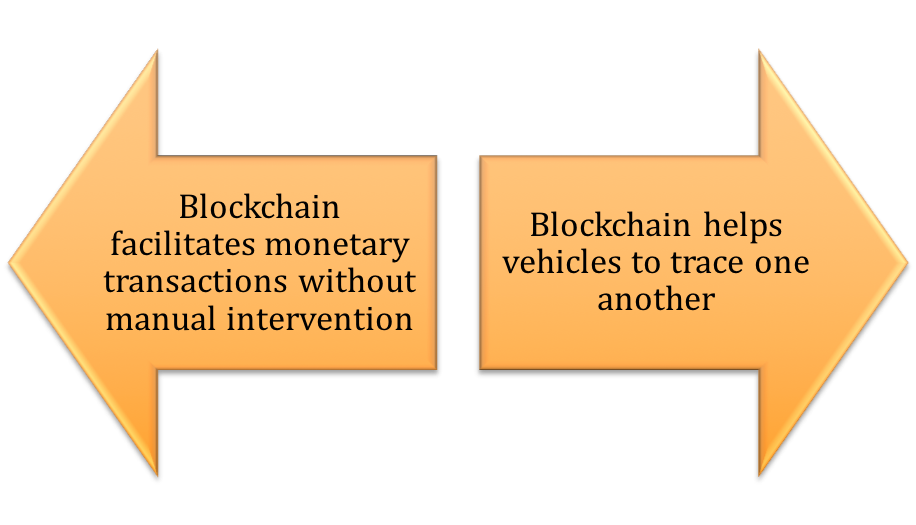
Besides, blockchain also facilitates monetary transactions by allowing users to activate smart contracts to make payments automatically. For example, let’s say you want to charge your vehicle. By using smart contracts on blockchain, you can directly make the payment to the charging station. Furthermore, as autonomous vehicles travel to different places, blockchain records data such as the traffic conditions, climatic conditions, and so on and so forth. Such data is accessible to other vehicles who are on the blockchain network, helping autonomous vehicle systems to become more reliable and faster. Toyota already uses blockchain for their driverless cars with the aim to enhance the safety and convenience that usually comes with autonomous vehicles.