
People are now assigning the highest priority to their health, thus, they are expecting highest levels of care and service regardless of cost and are more emotional about this industry than any other. The focus of healthcare industry is on improving the health of populations, lowering the cost of care and improving the patient experience. Machine learning is used in the medical imaging field and facilitates several services like computer-aided diagnosis, image segmentation, image registration, image annotation, and image-guided therapy. Deep Learning methods are a set of algorithms in machine learning. These algorithms are designed in such a manner that they automatically learn multiple levels of representation and abstraction, which helps in making sense of data. Experts are focusing on evaluating Deep Learning methods in the medical domain.
Three applications of Deep Learning in healthcare
1. Faster Diagnosis
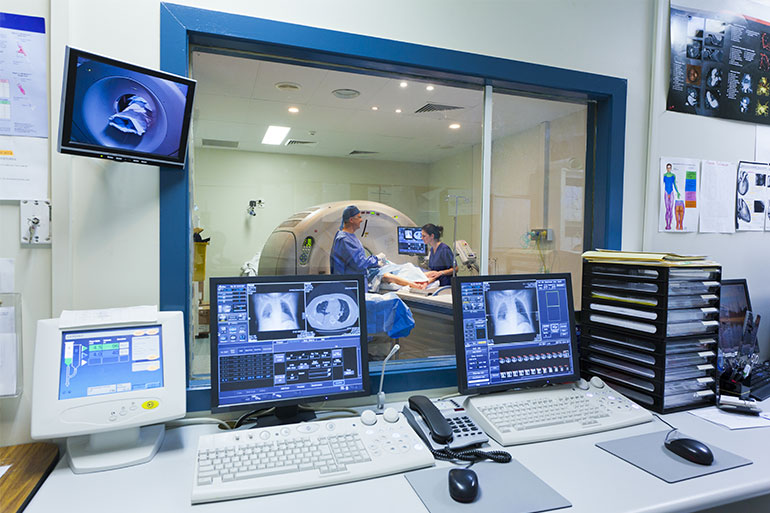
Medical images such as CT scans, MRIs, and X-rays are among the most important tools doctors are utilizing in diagnosing conditions ranging from cancer to spine injuries to heart disease. But, analyzing medical images can often be a difficult task and time-consuming process. Researchers and medical experts are using GPU-accelerated Deep Learning to automate analysis and increase the accuracy of diagnosticians.
2. Genomics for Personalized Medicine
Genomics analysis consists of accumulating unprecedented quantities of patient data, giving scientists the ability to study how genetic factors like mutations lead to disease. Deep Learning can help in tailoring personalized or “precision” medicine, with treatments that are customized according to a patient’s genomic makeup. Deep Learning can also help in:
- Interpreting genetic variation
- Genome-based therapeutic development
- Molecular diagnostics and carrier determination
- Risk assessment for complex diseases
3. Computer-Aided Diagnosis (CADx)
This process consists of a computerized procedure that provides a second objective opinion for the assistance of medical image interpretation and diagnosis. One of the major CADx applications is the differentiation of malignancy/benignancy for tumors. The introduction of Deep Learning techniques in the CADx domain has generated promising results on various medical applications, like the computerized diagnosis and treatment for Alzheimer’s disease, organ segmentations, and mild cognitive impairment. Deep Learning techniques can potentially change the design paradigm of the CADx framework. It can also directly uncover features from the training data. As a result, the effort of explicit elaboration on feature extraction is significantly reduced. With Deep Learning methods, the accuracy of CADx and its performance can be tuned more easily in a systematic fashion.
AI and Deep Learning are transforming the world of medicine. Deep Learning systems can allow physicians and other healthcare providers in faster diagnoses and can help in reducing uncertainty in their decisions thereby avoiding costs and hazards and saving time.