

We are already experiencing a gap between companies that understand and exploit big data and companies that are aware of it but do not know what to do with it. Facebook and Google are leading the charge when it comes to big data, but other industries such as finance, retail, telecom etc. are not far behind and are trying to follow new trends. 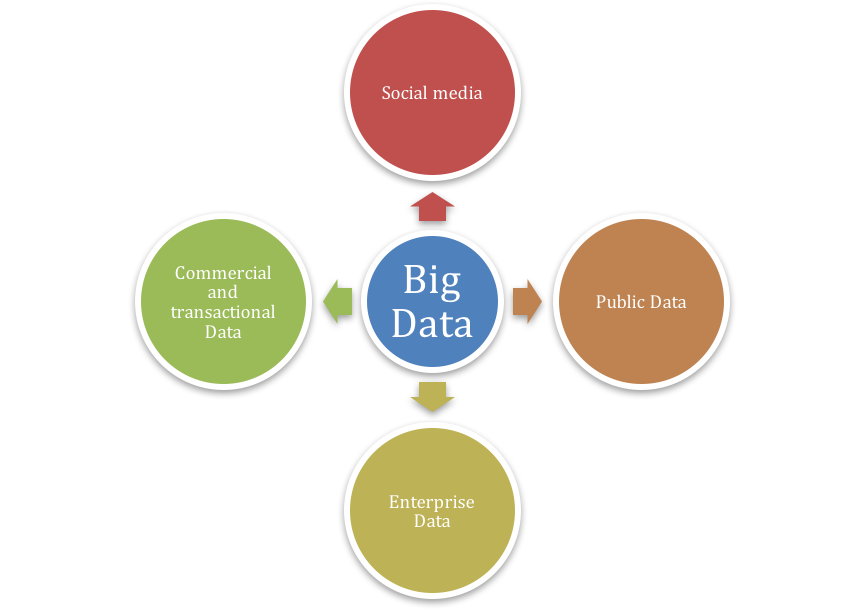
The Semantic Data Model in Big Data
The key to taking unstructured data, including audio, video, images, unstructured text, events, tweets, wikis, forums and blogs, and extracting useful data from them is to create a semantic data model as a layer that is on the top of data stores. This is necessary to help in making sense of all the data.
The semantic data model is a relatively new approach, based on semantic principles that result in a data set with inherently specified data structures. Mostly, singular data or a word does not convey any meaning to humans, but paired with a context, this word inherits more meaning. The context of data is often defined mainly by its structure in a database environment, for example, its properties and relationships with other objects. Therefore, the vertical structure of the data is defined by explicit referential constraints in a relational approach. However, in semantic modeling, this structure is defined in an inherent way, which means that a property of the data itself may coincide with a reference to another object.
A semantic data model can be illustrated graphically through an abstraction hierarchy diagram. It shows data types as boxes and their relationships as lines, represented hierarchically. Therefore, types that reference other types are always listed above the types that they are referencing. Yeah, read that sentence a few times for it to really sink in. This hierarchical representation makes the model easier to read and understand.
Securing Big Data
The collection and accessibility of so much data also means that businesses implementing it must become vigilant about the security of the data. Think about security architecture from the very beginning.
Companies that collect and leverage big data often find some “toxic data” on their hands. For example, take a company which collects machine data that can be used to provide insights to user behavior. They might also have data which is not of any direct use to them, such as credit card numbers, patterns of usage information etc. Although the capability to correlate that data and draw inferences might prove to be valuable, it can also be toxic. If this data goes outside the company and ends up in hands of someone with ulterior motives, it can be devastating for customers as well as the company. Companies would have to develop a solid and impenetrable security structure before employing any big data solutions.
Big data is a technology that can be applied to every field and every industry. But enterprises need to prepare properly for it as it may not be easy for them to handle so much data with so many security concerns. You have to be fully aware of the risks involved with big data before you dive into it.