
One of the biggest problems in the aviation industry today is customer churn. Airline companies find it extremely difficult to retain customers, and the costs of acquiring new ones are often exorbitant. To combat this issue, airlines must focus their efforts on churn prediction and prevention.
Churn prediction and prevention in aviation is a complex process that involves analyzing customer data to identify those most likely to leave the airline. Based on these insights, airlines can then develop effective campaigns that target customers at risk of churning.
This blog explores how airlines can develop targeted campaigns using churn prediction and prevention techniques to maintain a strong customer base.
Understanding Churn Prediction and Prevention in Aviation
While being interlinked, churn prediction and prevention are two distinct tasks. Churn prediction is the process of predicting which customers are at risk of leaving the airline. This involves analyzing customer data from different sources and identifying patterns that indicate potential churn.
For example, if a customer has been making fewer bookings with the airline over time, this could be indicative of them potentially switching to another carrier. Similarly, other indicators of churn can include low engagement with the airline, fewer redemption of loyalty points and delayed payments.
On the other hand, churn prevention is the process of developing targeted strategies to retain customers who are at risk of churning. This involves understanding why a customer is at risk of leaving and then developing campaigns that can retain them. Airlines can use a variety of strategies, such as loyalty program incentives, personalized rewards and targeted discounts.
Technologies Involved in Churn Prediction and Prevention in Aviation
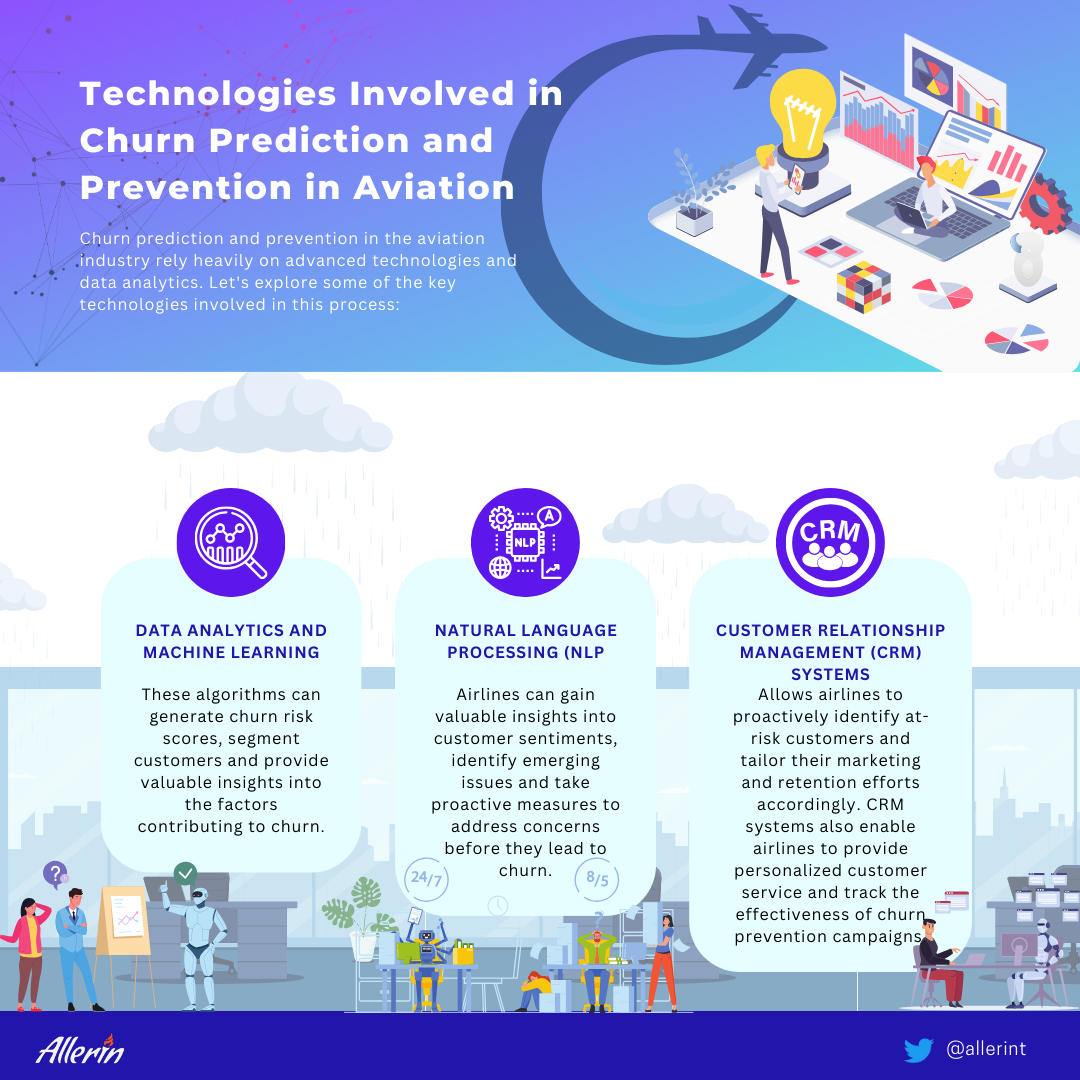
Churn prediction and prevention in the aviation industry rely heavily on advanced technologies and data analytics. Let’s explore some of the key technologies involved in this process:
Data Analytics and Machine Learning
Data analytics lies at the core of churn prediction and prevention in aviation. Airlines collect and analyze large volumes of customer data, including transaction history, flight preferences, demographics and customer interactions.
Machine learning algorithms, such as logistic regression, decision trees and neural networks, are employed to identify patterns and correlations within this data. These algorithms can generate churn risk scores, segment customers and provide valuable insights into the factors contributing to churn.
Natural Language Processing (NLP)
Natural Language Processing techniques play a significant role in understanding and analyzing customer feedback, reviews and social media interactions. NLP algorithms can extract sentiment, identify key themes and detect customer dissatisfaction from unstructured textual data. Using this information, airlines can gain valuable insights into customer sentiments, identify emerging issues and take proactive measures to address concerns before they lead to churn.
Customer Relationship Management (CRM) Systems
CRM systems are instrumental in managing customer interactions and maintaining a comprehensive database of customer information. These systems help airlines track customer behavior, preferences and feedback.
Integrating CRM systems with churn prediction models allows airlines to proactively identify at-risk customers and tailor their marketing and retention efforts accordingly. CRM systems also enable airlines to provide personalized customer service and track the effectiveness of churn prevention campaigns.
These are just a few of the technologies used by airlines to develop effective churn prevention campaigns. The key is to leverage available data and customer insights to create targeted, personalized initiatives that meet customer needs and reduce churn.
How To Develop Effective Campaigns to Target Customers at Risk of Churning
The process of developing effective campaigns for churn prediction and prevention in aviation is simple and can be broken down into easy steps. They are:
Understand the Warning Signs
Understanding the warning signs of customer churn is crucial for airlines. By closely monitoring key indicators such as declining bookings, reduced loyalty program engagement and negative feedback, airlines can proactively identify customers at risk of churning.
Utilizing churn prediction models based on historical data and patterns further enhances their ability to pinpoint potential churn. This understanding allows airlines to take timely action and implement targeted strategies to retain at-risk customers before they decide to switch to a competitor.
Segment Your Customer Base
The next step in churn prediction and prevention in aviation is to segment your customer base into groups based on their behavior, preferences and other attributes. This allows airlines to tailor their marketing campaigns according to the needs of each customer segment.
For example, airlines can create campaigns specifically for high-value customers who are at risk of churning due to service issues or delays. They can also create loyalty programs specifically for frequent flyers who are looking for more incentives to stay loyal.
Personalize your campaign messages
Personalization is key to any successful marketing campaign for churn prediction and prevention in aviation. Airlines need to create personalized messages for each customer segment in order to engage with them effectively. This can include special offers or discounts based on their past bookings, loyalty program status and other factors.
Airlines can use email marketing, social media and other marketing channels to communicate directly with customers. This allows them to deliver targeted messages while respecting the privacy of each individual customer.
In addition to personalized messages, airlines should also consider providing personalized customer service. This could involve having dedicated customer service representatives or providing more flexible policies for customers who are at risk of churning.
Implement campaign testing and optimization
Implementing campaign testing and optimization is a crucial step in developing effective airline marketing campaigns. By conducting A/B testing and measuring campaign performance, airlines can gain valuable insights into what resonates with their customers.
This process involves creating different variations of the campaign elements, such as messaging, offers and visuals, and testing them on a subset of the target audience. Through rigorous analysis of the results, airlines can identify the most successful elements and make data-driven decisions to optimize their campaigns.
Leverage Artificial Intelligence and Data Analytics
Artificial intelligence and data analytics are already being used in various aspects of the aviation industry. Airlines can use these technologies to predict customer churn and develop more effective campaigns.
For example, airlines can leverage AI-driven predictive analytics to understand customer behavior and forecast churn. This helps them identify customers who are at risk of switching and target them with personalized campaigns. Additionally, they can use data analytics to track customer engagement and provide feedback on which campaigns are working best.
Monitor Real-Time Customer Feedback
It is vital to monitor customer feedback in real-time to identify any potential issues that could lead to churn. Airlines can use online reviews and surveys to get an idea of how customers feel about their flights, service and loyalty programs. This feedback can be used to make adjustments to campaigns or services in order to improve customer experience.
Airlines should also monitor customer interactions with their websites, apps and social media platforms to identify any areas where customers are having difficulty. This insight can be used to make improvements and prevent customer churn.
Foster a Positive Customer Experience
Lastly, for churn prediction and prevention in aviation, it is important to foster a positive customer experience by providing personalized services and rewards. Airlines can use loyalty programs to reward customers for their continued patronage and offer exclusive discounts and offers.
By offering tailored services, airlines can make customers feel valued and increase the likelihood of retention. Additionally, they should strive to build relationships with customers and create a sense of community. This can help create trust and loyalty, which is essential for preventing customer churn.
Things to Avoid in Campaigns Targeting Customers at Risk of Churning
While implementing campaigns to target customers at risk of churning, it is important to be aware of potential pitfalls. Avoiding these common mistakes can help ensure the effectiveness and success of your campaigns. Here are some things to avoid:
Generic Messaging and Offers
Generic messaging and offers can be easily overlooked by customers, making them ineffective in churn prediction and prevention in aviation. Airlines should strive to personalize their campaign messages and offers to target customers at risk of churning.
Overwhelming Customers with Too Many Messages
It is also important to avoid overwhelming customers with too many messages, as this can lead to customer fatigue and an overall negative effect on the customer experience. Airlines should strive to balance the number of messages while ensuring that the content is relevant and engaging.
Inconsistent Branding and Messaging
Lastly, airlines should be sure to maintain consistent branding and messaging in their campaigns. Inconsistent or poorly designed content can lead to confusion among customers, which can result in decreased effectiveness of campaigns and ultimately, customer churn.
Conclusion
Churn prediction and prevention in aviation is an important issue that requires careful consideration and strategic planning. By leveraging customer data and advanced technologies, airlines can effectively identify customers at risk of churning, and develop targeted campaigns to retain them.
By avoiding the common mistakes mentioned above, airlines can ensure that their campaigns are effective and successful in retaining customers. Ultimately, this will result in increased customer loyalty and satisfaction, as well as improved performance for the airline.