
IT leaders for procurement and sourcing applications are turning towards cloud service delivery for evaluating new solutions.
Cloud solutions have seen a steady growth as enterprises today require scalability, agility, and innovation in their procurement and sourcing tools.
Gartner says that client inquiries received over the past year show that cloud solutions accounted for almost all new domain implementations in both the public and private sectors.
That is why, many procurement and sourcing domain application vendors are only offering cloud solutions with different delivery options. Many others have also alerted clients that support for on-premise solutions would end by 2020.
In this blog post, we will discuss the seven reasons why you should move your vendor management to cloud.
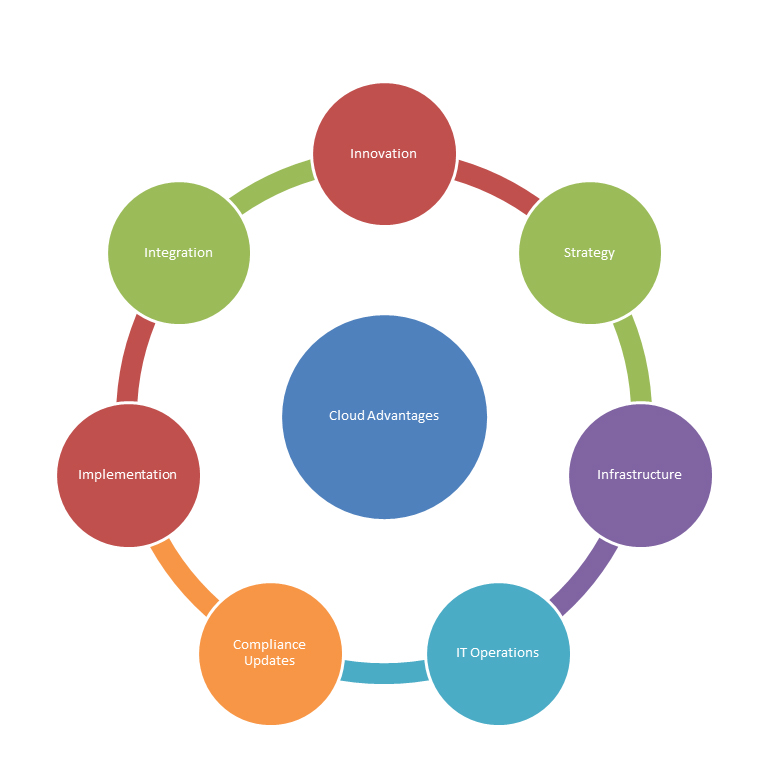
1. Innovation
Application vendors are now innovating new methodologies more rapidly through cloud solutions. To provide an enhanced user experience, they are deploying advanced machine-learning and predictive analytics capabilities. Vendors are focusing on developing procurement and sourcing tools that include and support collaborative, social and marketplace environments.
2. Strategy
Organizations are now embracing cloud-first strategies in which vendor solutions are robust enough to meet their business requirements. Also, procurement and sourcing groups are ready to adopt new technologies and tools to improve their capabilities as they have recognized the value and efficiency vendor solutions bring to the organization.
3. Infrastructure
Implementing cloud solutions minimizes or eliminates the need for new hardware and infrastructure as it provides with cloud-based Software as a Service (SaaS) applications and application suites.
4. IT Operations
The vendor is responsible for availability, reliability and scalability of the application, enabling IT to focus on more strategic areas and use fewer resources to support procurement and sourcing solutions.
5. Compliance Updates
Regular compliance updates are easier and more seamlessly deployed via cloud than via on-premises solutions.
6. Implementation
Cloud solutions are generally less complex and require fewer IT resources to implement than on-premise solutions.
7. Integration
Cloud solution vendors often provide prebuilt integrations or connectors to existing traditional ERP applications.
Before moving your vendor management to cloud, you must first understand the cloud service delivery options and select the model that best meets your business requirements. You must also ensure that the procurement and sourcing teams in your organization are well resourced to take a larger role in supporting applications if moved to cloud. Also, conduct a five-to eight-year total cost of ownership (TCO) analysis to understand the cost trade-offs of moving to the cloud.
With cloud, a vendor can effectively manage communication systems off-site, thus freeing the IT to focus on other high-priority issues. Thus, if you move vendor management to cloud, your organization can proactively and strategically build the framework of a successful and potential long-term relationship.