

Since its emergence as a bitcoin enabler and a versatile technology for distributed ledger, blockchain has rapidly gained popularity among technology enthusiasts and business leaders alike. The technology has made it s]elf synonymous with a revolutionary platform for digital transactions. As per Gartner, despite the slow start, the business value created by blockchain in businesses worldwide will exceed $3 trillion by 2030. However, despite having a noticeable impact on certain aspects of business, successful application of blockchain has had little evidence.
The impact of blockchain has plateaued
The introduction of blockchain in some organizations, especially in the financial services and banking sector, has had an undeniably positive effect on their performance. Multiple financial institutions are effectively using blockchain for various purposes, right from enhancing security to streamlining services. However, almost all the success stories of blockchain involve its use to make transactions efficient and transparent, or to create a new cryptocurrency. These stories emphasize on a very small part of the potentially disruptive impact that lies in fully leveraging blockchain.
Although most CIOs and technology leaders are keenly tracking the development of blockchain, very little is being done regarding its application in business processes. A survey with CIOs found that only 8% of the survey respondents engaged in planning for a blockchain adoption, while only 1% have a blockchain application in place. This skeptical approach by technology leaders, although justified, is not ideal for long-term competitiveness.
Blockchain application is getting increasingly complicated
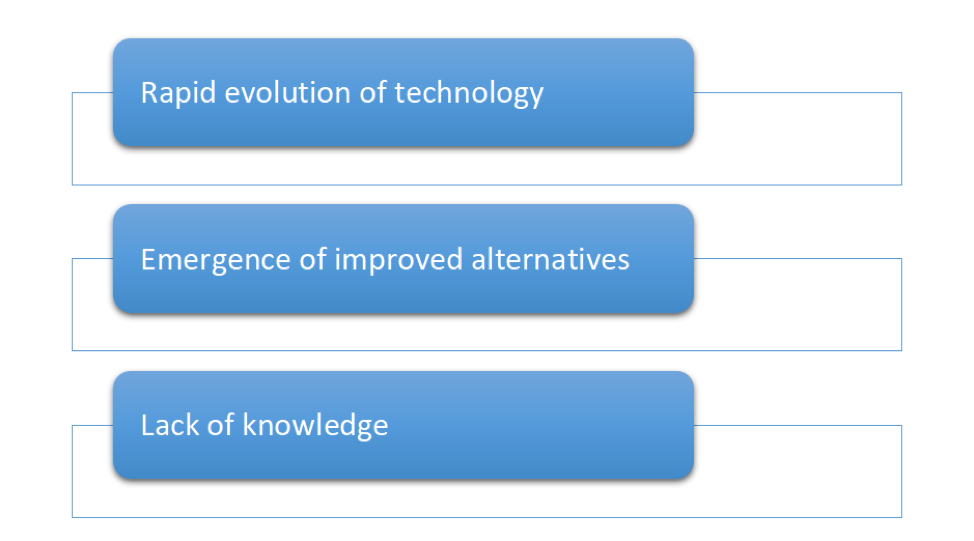
A major reason for the cautious approach of leaders towards blockchain is the rapid rate at which the technology is evolving and the uncertainty that ensues. The technology, though familiar to most, uses terminology that is conflated and unclear, and may lead to misinformation. Trying to apply blockchain, or any technology for that matter, without research and understanding is highly risky and may cost the organization heavily.
The emergence of blockchain alternatives, such as hashgraph,, that claim to provide the benefits of blockchain without some of its limitations may also deter potential investment in the technology. This is a logical decision, as a premature commitment to blockchain technology, which may end up being redundant, may prove to be costly. Such decisions are purely inspired by a fear of missing out and have no specific purpose, which is a formula for failure. However, this does not warrant the lack of planning and action in the implementation of distributed ledger systems, or at the very least, considering it as a future project.
Successful application of blockchain needs innovation
If your purpose is to implement blockchain technology to achieve substantial competitive advantage, then you need to rethink your entire business model and not just its transactional aspect. This means creating a business process that is almost entirely driven by blockchain, to benefit from transparency, decentralization, and security in a way that impacts the desired business outcomes directly.
To achieve such profound transformation, it is strongly recommended to use a design thinking approach to ensure that the right parameters are affected by the change. CIOs must explore the possibilities of implementing enterprise-wide blockchain integration, and experiment to find the right direction.
Despite the slow movement of blockchain expansion in the global market, there is enough evidence to suggest that distributed ledgering will be an integral part of tomorrow’s enterprise. Although it is not advisable to implement this change without due consideration, initiating research and learning projects for the successful application of blockchain when your organization is ready for it, is a step in the right direction.