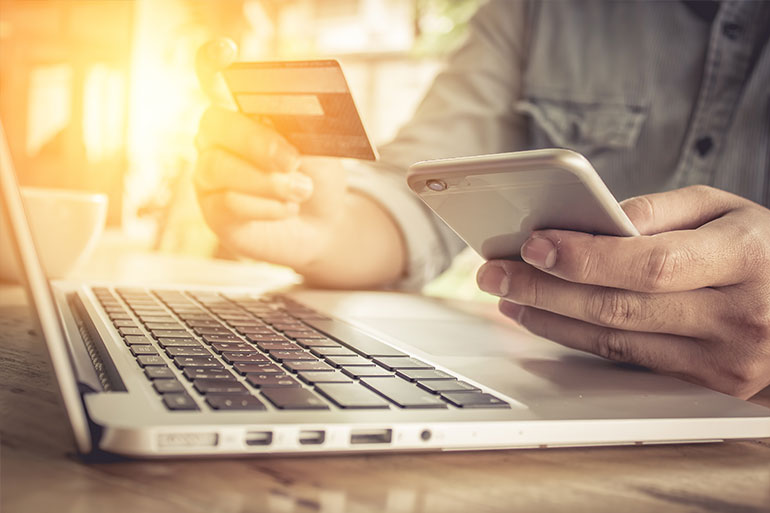
Streamlining user banking experience with mobile carrier data The entire world has now accepted the mobile revolution. Consumers want to pay their bills, buy goods, and take care of their day-to-day activities from any place, at any time. This norm of using mobile devices for performing almost everything, right from shopping to banking, necessitates that security and a great user banking experience need to go hand-in-hand.

Banks are now seeing huge abandonment rates in mobile forms as users do not want to fill forms for banking transactions. Therefore, simplifying that process is extremely important. Abandonment rates…

Fintech
Read more

Enabling blockchain technology with IMC Blockchain technology has driven several applications within the banking and financial services industries. According to market analysts, 80% of top banks have launched experimental blockchain projects. It is also estimated that 15% of these banks will likely launch new blockchain-based services in the market in the next few years. Implementing blockchain technology with IMC is helping businesses reduce barriers in blockchain implementation and change the way data is stored and managed.

The current problem with blockchain implementation is that existing legacy systems do not support secure, instantaneous, and well-integrated decentralized cryptosystems. Thus, building such ecosystems require scalable, distributed, and well-protected computing…

Fintech
Read more

Threat of synthetic identity thefts in finance Synthetic identity theft in finance is referred to that type of fraud which involves the use of a fictitious identity. Identity thieves create new identities by using a combination of real and fabricated information. Fraudsters use this fictitious identity for obtaining credit, opening deposit accounts and obtaining driver’s licenses and passports.

Why Is Synthetic Identity Theft in Finance Important? This type of theft has emerged as a major fraud activity over the last decade. The exponential growth of synthetic identity theft…

FintechTechnology
Read more

3 reasons why blockchain will bring value in Procure-To-Pay process Procure-to-Pay consists of the process of obtaining and managing the raw materials needed for manufacturing a product or providing a service. It includes the transactional flow of data that is sent to the concerned supplier as well as data that surrounds fulfillment of the actual order. Blockchain in Procure-to-Pay processes can bring greater value.

Procure-to-Pay (PTP) is the multi-step process that connects a client with one or more service/product providers. It also allows for the identification and authentication of stakeholders, service provisioning budgeting, invoicing,…

FintechTechnology
Read more

3 things to know about Bitcoin Blockchain As the requirements for escalated speed, agility and other diverse forms of value exchange are increasing in digital business, the current financial, legal and technological infrastructure is needed to be improved. Bitcoin Blockchain is considered the key mechanism for implementing a decentralized and distributed ledger of crypto-currency transactions.

The Bitcoin Blockchain is defined as the globally distributed ledger of transactions. All records of Bitcoin transactions are not stored in, or controlled by, a central server; rather the transaction…

Fintech
Read more

Potential of blockchain technology in payment solutions Blockchain technology in payment solutions have the ability to offer significant advantages in terms of providing enhanced functional capabilities as compared to existing bulk payment systems.

Implementing blockchain technology in payment solutions involves a consensus mechanism, which consists of techniques that ensure participants processing transactions agree on which transactions are valid. Blockchain technology has the ability…

FintechTechnology
Read more