
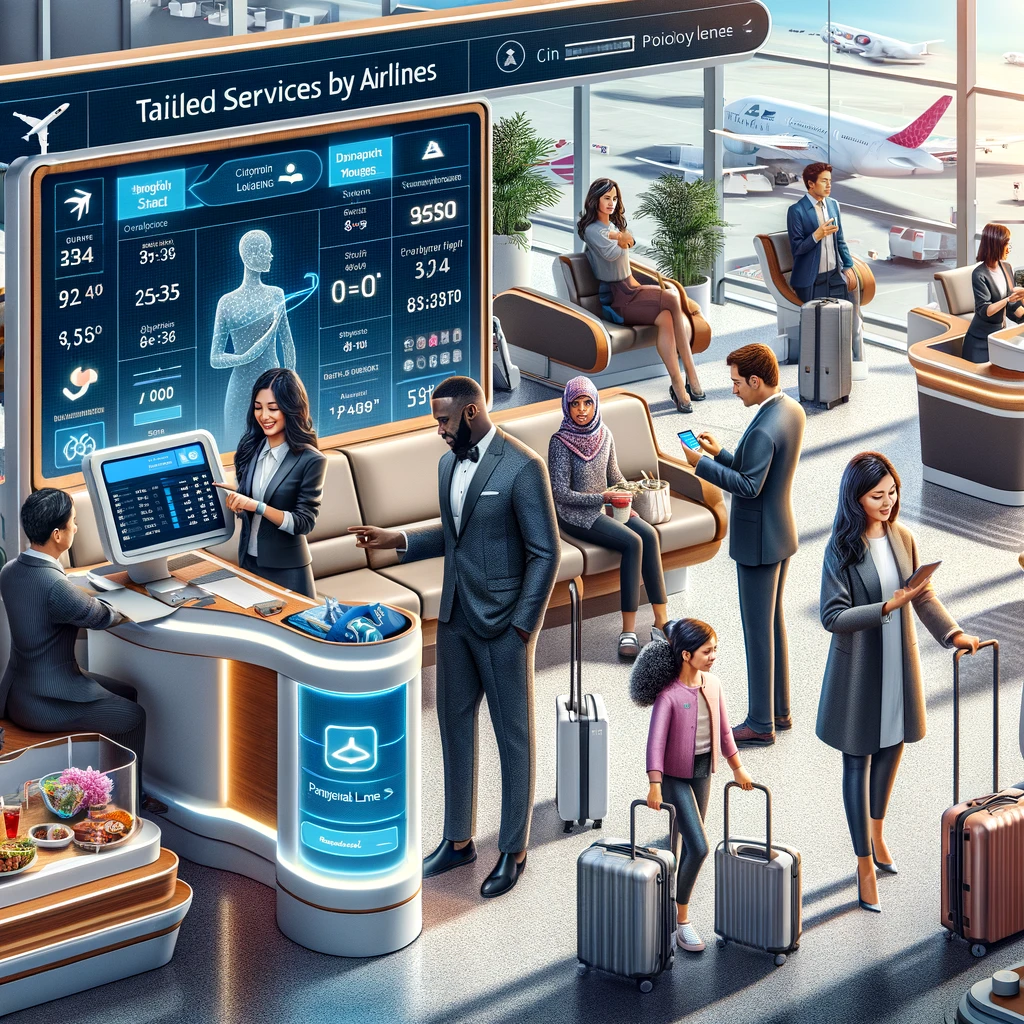
Did you know airline companies collected $102 billion solely from ancillary revenue? Ancillary services are additional tailored services by airlines like priority lane access, checked luggage, seat selection, extra flyer mile points, exclusive lounge access, extra leg space seats, etc., for extra charges. These personalized recommendations help airlines increase ancillary revenue while enhancing customer satisfaction by catering to individual preferences.
Apart from generating revenue, these services act as marketing tools to set an airline apart from its competitors. For instance, airlines with better ancillary services will enjoy a good reputation and brand loyalty. Due to robust competition, many airline industries are turning to modern technologies like artificial intelligence to enhance their ancillary services. Subsets of AI, like data science and machine learning (ML), are employed to cater to customers’ preferences and needs efficiently. Airlines use these technologies to analyze customer data and predict ancillary service preferences.
How Data Science Can Enhance Tailored Services by Airlines
Apart from ticket sales, airline companies generate massive revenue by providing extra services. To further increase revenue and foster brand loyalty, airlines can use data science to provide personalized services in the following ways.
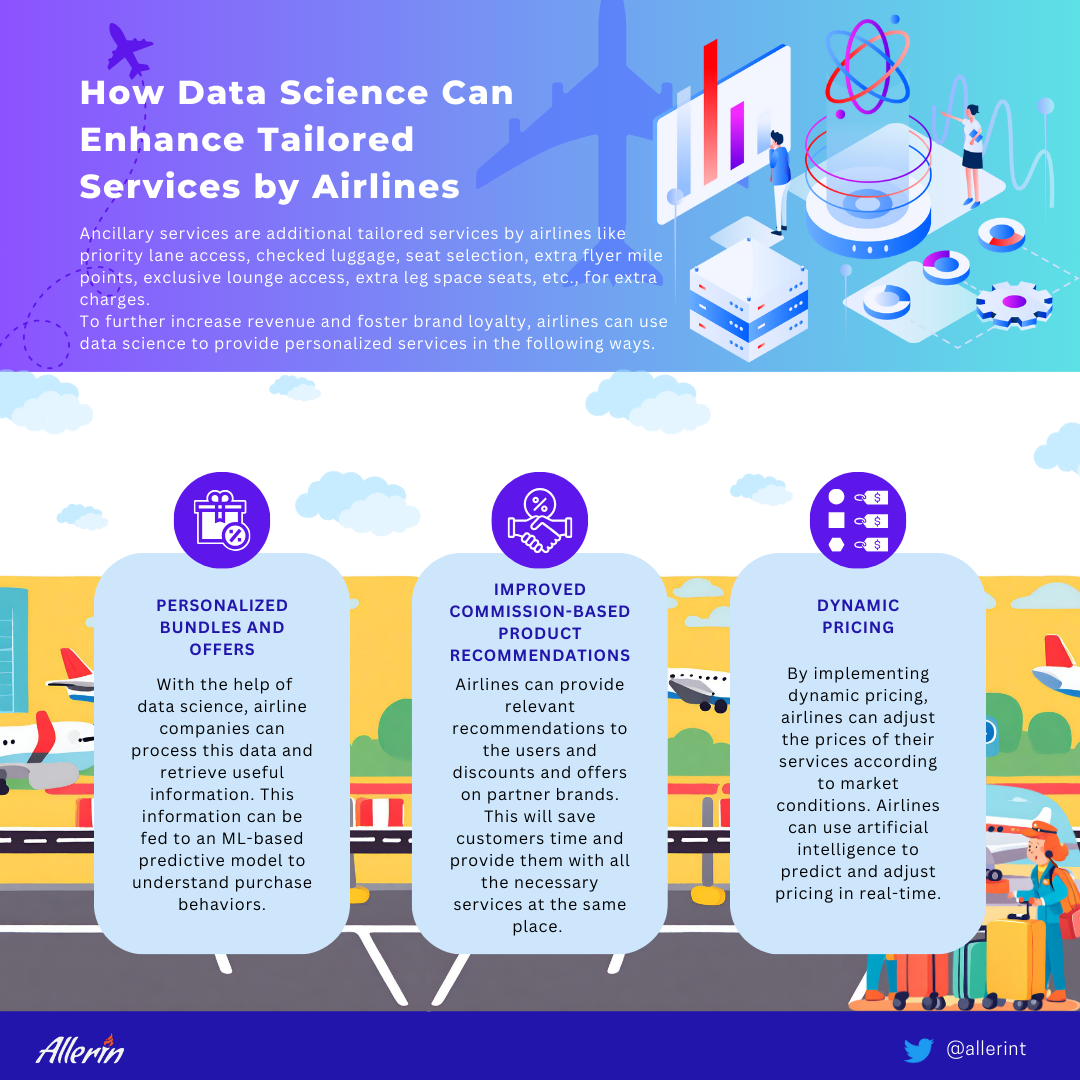
1. Personalized Bundles and Offers
According to research by Accenture, 91% of consumers are more likely to prefer brands that recognize, remember and provide relevant offers and recommendations. Airline industries generate massive data in the form of user information, purchase history, preferred services, travel itineraries, customer demographics etc. With the help of data science, airline companies can process this data and retrieve useful information. This information can be fed to an ML-based predictive model to understand purchase behaviors.
Over time, the predictive model will suggest relevant recommendations to the customers. For instance, some ancillary services like onboard meals are unbundled (or à la carte). Users must search and select these services every time they book a flight. However, a predictive ML-based model can learn the user’s purchasing habits and recommend these services. This will streamline the buying process and save the user’s time.
2. Improved Commission-Based Product Recommendations
A flyer’s journey comprises many things apart from booking, boarding, and disembarking a plane. They still have to handle other things like hotel accommodations and rental car bookings. Airline companies can use data science to analyze buying patterns and look for cross-selling opportunities.
For instance, airlines can partner with hotel chains and car rental companies that most customers use. Then, airlines can provide relevant recommendations to the users and discounts and offers on partner brands. This will save customers time and provide them with all the necessary services at the same place.
3. Dynamic Pricing
Since ancillary services require additional money, monitoring the competitor’s ancillary service prices is essential. If an airline is selling the same ancillary services at a lower price, chances are travelers will opt for that airline. To avoid losing customers in such a way, airlines can use dynamic pricing strategies.
By implementing dynamic pricing, airlines can adjust the prices of their services according to market conditions. Airlines can use artificial intelligence to predict and adjust pricing in real-time. Apart from that, airlines can also predict periods when air travel is in demand to increase the prices of the services.
Conclusion
Data science has many applications in enhancing tailored services by airlines. These applications provide airline companies with data to understand consumer preferences and buying patterns. With this information, airlines can provide enhanced services to customers to generate revenue and boost brand loyalty.