
 The need for data and the process of collecting it is an integral part of businesses of every size, giving it the credibility of one of the world’s greatest assets. Companies globally bank on data analysis and interpret it visually to infer important insights. However, not all companies are able to optimize data accurately because the data structures are complex and challenging to interpret. To go beyond the analytics of just data visualization and display it on a dashboard, companies can now analyze data through storytelling. The aim of data storytelling is to explain and provide context behind the numbers shown on charts using data visualization with a narrative. This will enable anyone, despite their data literacy level, to make sense of the data efficiently and quickly.
Using Analytics Beyond Data Visualizations and Slideshows
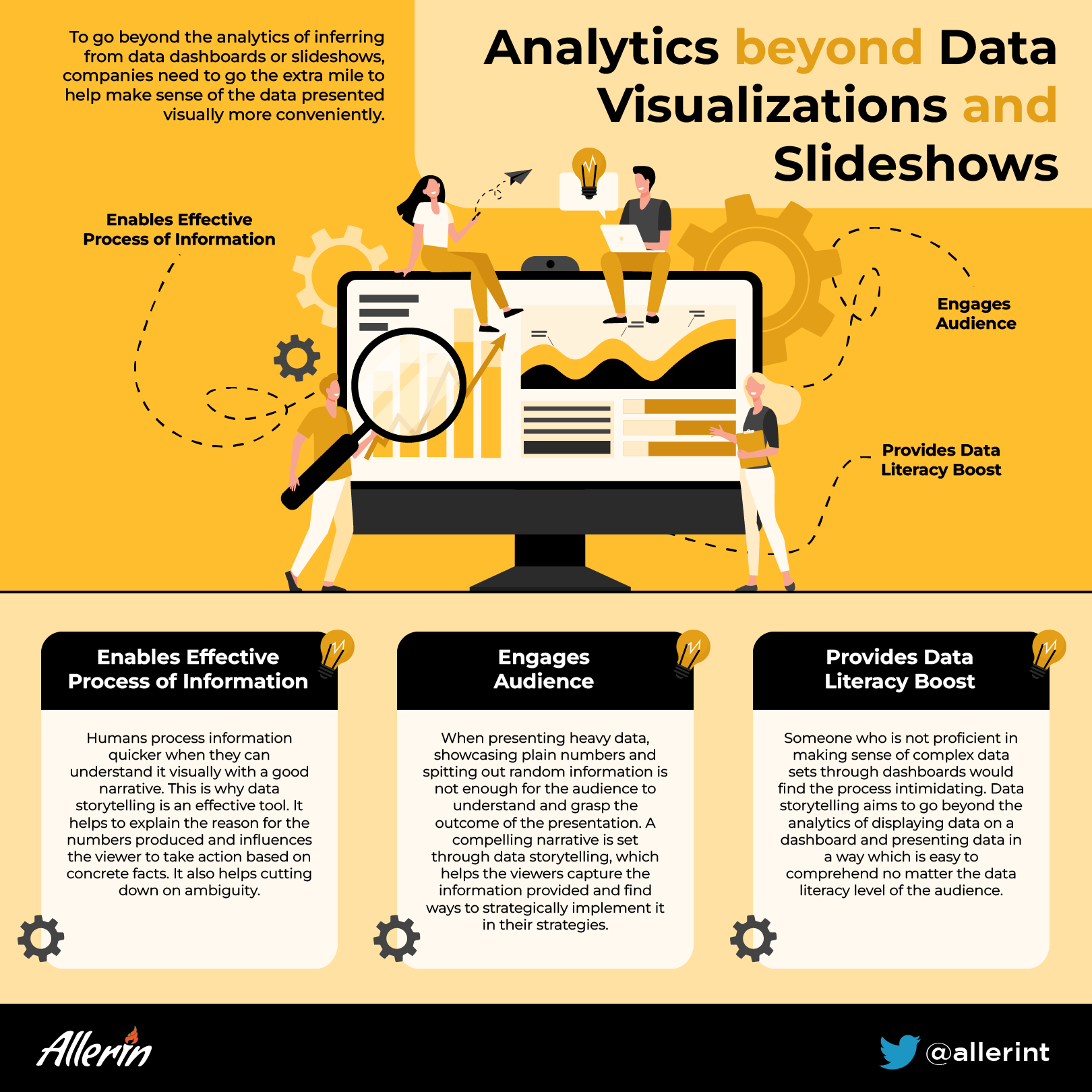
When presenting data, there should be no ambiguity in why these numbers have been produced. To go beyond just data visualization without a reason to answer “why,” companies should use data storytelling. Here are some of the benefits of data storytelling.
1. Enables Effective Process of Information
Humans process information quicker when they can understand it visually with a good narrative. This is why data storytelling is an effective tool. It helps to explain the reason for the numbers produced and influences the viewer to take action based on concrete facts. It also helps reduce data overload by directing the viewer’s attention to a specific but relevant data set, cutting down on ambiguity.
2. Engages Audience
When presenting heavy data, showcasing plain numbers and spitting out random information is not enough for the audience to understand and grasp the outcome of the presentation. A compelling narrative is set through data storytelling, which helps the viewers capture the information provided and find ways to strategically implement it in their strategies.
3. Provides Data Literacy Boost
Someone who is not proficient in making sense of complex data sets through dashboards would find the process intimidating. Data storytelling aims to go beyond the analytics of displaying data on a dashboard and presenting data in a way which is easy to comprehend no matter the data literacy level of the audience.
Data is as valuable as the information extracted from it, and with data structures becoming complex, businesses might find themselves relying on their instincts rather than the data insights provided. Adopting data storytelling will enhance how data is visualized and presented, making it easier to understand and derive insights. It won’t replace the data dashboard but instead add a narrative that helps dissect complex data into more digestible and understandable data reports.