

The newly emerging financial technology is threatening to overtake traditional banking organizations. This is mainly due to the increased level of convenience and transparency that businesses using the technology provide to customers. The scope of services offered by fintechs is constantly evolving to eclipse the services offered by the traditional banks. Right from offering funds transfer to operating mutual funds investment on a mobile platform, banks need to either keep up with fintechs or risk losing customers. Established banking institutions, having vast operational networks, have not been able to implement end-to-end digitization, owing to the massive scale of restructuring required. To ensure sustained relevance and profitability, banks need to formulate a digital business strategy that will allow them to tap into the potential of technology-based financial services. CIOs being the ones equipped with the knowledge of IT-based transformation should guide their CEOs and other C-Suite executives towards a collaborative effort for digitization. Here’s how a CIO can enable an effective digital business strategy:
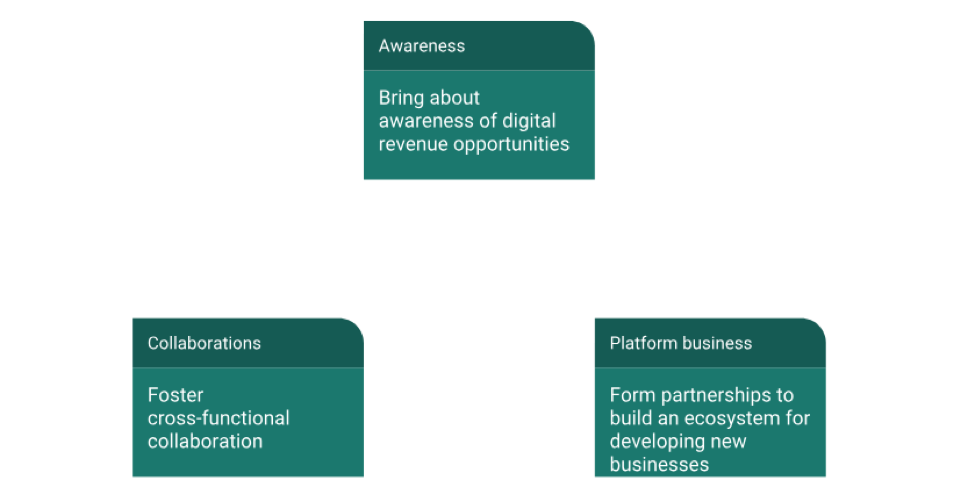
Create awareness of digital value creation
As an organization’s leading expert on IT, a CIO must take responsibility for monitoring trends around new information systems and finding applications within an organization. For this, a CIO needs to be in constant communication with the CEO and CFO to learn about any organizational issues. These issues may otherwise get in the way of implementing a digital business strategy later on. The CIO must then educate the rest of the corporate leadership so that they can identify the digital value creation opportunities. The opportunities may include possibilities for introducing new products, using digitization to improve the delivery of the existing services, and eliminating efficiencies through process modification.
Promote collaborative leadership
Businesses are shifting from functionally separated organizational structures to matrixed structures, where cross-functional teams are commonplace. This is especially true for digitally mature businesses, as illustrated by a Deloitte insight that says around 70% of digitally maturing businesses employ cross-functional teams, compared to only 28% for companies in early stages of digitization. Educating and including functionally different leadership personnel allows maximization of the scope of change, which supports the aim of end-to-end business digitization. CIOs should foster and oversee the formation of cross-functional teams, which will enable the identification of digital revenue opportunities through the improvement of customer experience and the bank performance.
Advocate platform-based digital business strategy
Initiating platform businesses by partnering with newer fintechs can help create a win-win scenario for all parties involved, including the customers. Traditional banks can collaborate with fintechs to enhance service delivery through digitization, invest in or acquire new fintechs, or sell fintech access to their customers. The collaboration will not only be mutually profitable for the partners but also make a host of financial services easily accessible to customers. An example of platform-business adoption by traditional banks is the initiative by Ulster bank to support startups, including fintechs, to help them achieve key business milestones.
Banking CIOs should take the lead in transforming their organizations by adopting an effective digital business strategy that suits the organizations’ long-term vision. In addition to showing the right path to take, CIOs should also ensure frictionless execution, by providing cost optimization strategies.