
The idea behind blockchain wallet platforms is to integrate blockchain into the existing digital platforms and interfaces. In the pursuit of doing so, the blockchain platform aims to include new participants, such as artificial agents and machines, as well as non-monetary aspects of value exchange in its purview.
Challenges with current cryptocurrency wallet
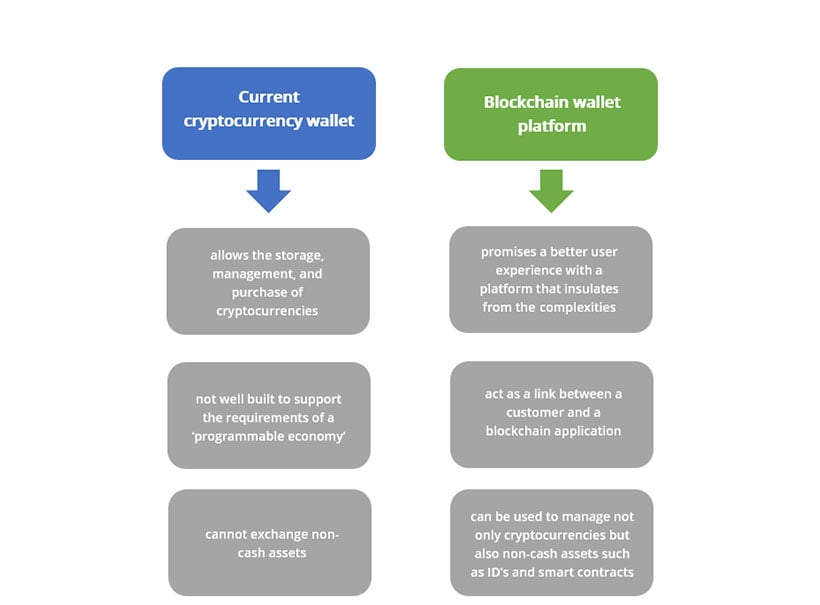
Cryptocurrency wallets allow the storage, management, and purchase of cryptocurrencies, such as bitcoin. A network of connected devices access these wallets using a private key. But most cryptocurrency wallets are not well built to support the requirements of a ‘programmable economy’, due to which they are bound to become dormant in the future.
The wallet faces various challenges. For instance, it does not have the required functionality to retain and exchange values, assets, information, and smart contracts. Additionally, neither can it exchange non-cash assets such as loyalty points nor transfer value from/to cryptocurrencies. Since cryptocurrency wallets only deal with retail-centric wallets, they ignore other businesses that are not comfortable working with bitcoins and ethers.
The blockchain wallet platform
Blockchains transfer everything, from stocks to currencies, without the presence of a middleman. And blockchain wallet platforms want to leverage this immense potential of blockchain technology. The platform will be able to transfer billions of dollars to/from the financial markets in a faster, cheaper, and more secure format. Besides, it promises a better user experience with a platform that insulates from the complexities. It would act as a link between a customer and a blockchain application to create, store, and manage the data held in the base blockchain application better.
A stand-alone blockchain wallet platform can be downloaded and accessed by the user while incorporating the existing cryptocurrency wallet functionality. Customers from existing digital banking channels can also easily manage it. The best part is that the platform can be used to manage not only cryptocurrencies but also non-cash assets such as ID’s and smart contracts.
Bank CIOs cannot ignore the threat of disintermediation. They need to empower their organization to apprehend the flow of data and instructions related to their customers’ use of blockchain wallet platform functionality. Though this transition is tough, it has the potential to speed up the development of blockchain technology by exposing components and uniting them with current commercial value chains.