

A distributed ledger, enabling efficient and reliable transactions, agreements, and contracts, that are typically private, secure, and transparent; that’s what the blockchain technology is at its core. Blockchain technology has the ability to provide a transparent, instantaneous, and indisputable record of transactions. Once a record is added to the blockchain, it is permanent and almost impossible to tamper with. And it is these and other such attributes of this technology that make ‘blockchain technology and government’ an area that’s promising and exciting.
Blockchain technology and government: why
Corruption and transparency remain the biggest hurdles in the way of efficient governance. While at the same time healthcare, foreign policy, taxes, education, and just so many other things in the country need to reform, and reform fast! The blockchain technology displaces the existing intermediaries, helping the government overcome the intrinsic latency in its operations. Along with this, blockchain technology also provides the government with a transaction layer upon which the service functions still performed by the government are executed and recorded. The best part is that the blockchain technology allows agencies to reconcile transactions and budgets faster than ever before, without the need for them to change their traditional service model.
Blockchain technology and government: where
With plenty of room for innovation, your government, county, municipality, town, city, or jurisdiction can broadly apply this revolutionizing technology called blockchain to these four categories of activity.
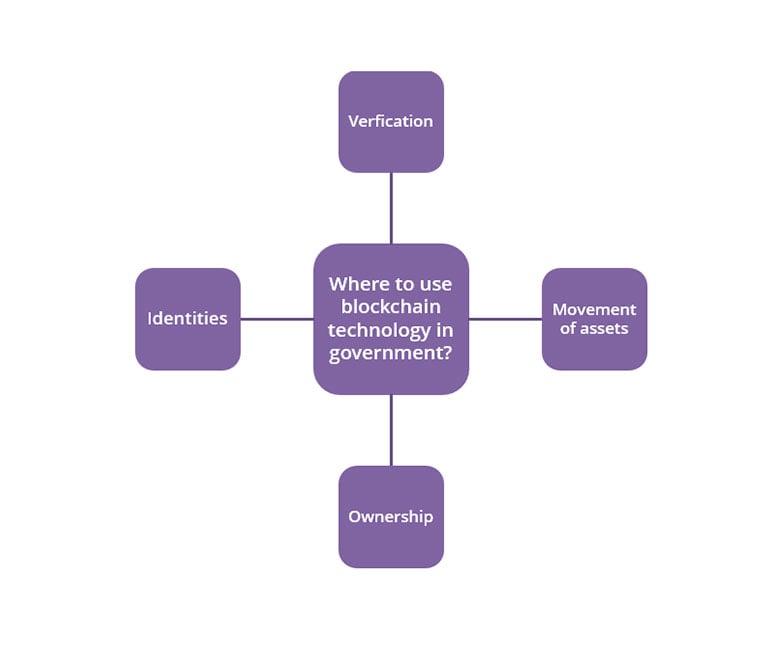
1.Verification: This would include licenses, proofs of records, transactions, processes, or events. You can find answers to questions like did this event take place? Was this service performed on this piece of equipment? Does this person have the right permit?
2.Movement of assets: In simple words, this will be about transferring money from one person/entity to another, enabling direct payments, etc.
3.Ownership: Land registries, property titles, and any type of real estate ownership would fall under this area of application.
4.Identities: This is a hot field of interest for most governments worldwide. Blockchain e-identities to can be issued to citizens, enabling them to securely use services, like voting. Such an e-identity could allow its holder access to a variety of services and rights.
Blockchain technology and government: examples
While we discuss what blockchain technology is about and where can it be applied, several countries have already the taken their first steps towards the adoption of this technology in their governance. Given here are a few leading examples.
Singapore: Driven by the incident where Standard Chartered lost nearly $200 million from a fraud in China’s Qingdao port, the Singapore government has turned to blockchain to prevent traders from defrauding banks.
Delaware: Delaware’s Governor, Jack Markell, announced two blockchain initiatives. While the first one is focused on moving state archival records to an open distributed ledger, the second allows any private company of that state to keep track of equity and shareholder rights on the blockchain.
Georgia: The Republic of Georgia and the bitcoin hardware and software firm Bitfury Group have signed a contract to use the bitcoin network to validate property-related government transactions.
UK: The UK is exploring the use of blockchain technology in managing the distribution of funds. The UK aims to solve, with the help of blockchain technology, the problem of potential fraud or abuse in the use of grants.
Blockchain technology and government present an optimistic picture of change and progress. It’s time public sector around the world starts putting blockchain on their agenda.