
City planning hasn’t kept pace with how people actually live. Decisions about roads, public spaces, and infrastructure still rely on outdated surveys, failing to capture real-time movement patterns and evolving needs. The result? Traffic congestion, underused public spaces, and infrastructure that doesn’t truly serve residents.
AI is changing that. By analyzing real-time data—like foot traffic, transit usage, and movement patterns—it helps cities make smarter, faster decisions. Instead of waiting on slow reports, officials can use AI-driven insights to improve transportation, adjust zoning, and build infrastructure that works for people. And they don’t have to overhaul entire cities overnight—small pilot projects can test AI-driven planning on a local scale before expanding citywide.
The impact is already clear. Cities using AI for urban planning are seeing real improvements—smoother traffic, better public transit, and smarter use of resources. More importantly, AI allows governments to anticipate infrastructure needs instead of constantly playing catch-up. This not only helps them get ahead of potential issues but also ensures that roads, utilities, and transit routes are built where people actually need them.
Why Do Traditional Urban Planning Methods Fall Short?
AI is transforming industries everywhere, yet when it comes to city planning, many governments still stick to traditional methods. And it’s not hard to see why—old-school surveys and reports feel familiar, and adopting new technology can seem daunting. But the reality is, these outdated methods haven’t evolved alongside cities, making it harder for planners to understand and respond to real-world needs. Without real-time insights, city planning remains slow and reactive, reinforcing the need for AI-driven approaches that can adapt as cities change. Some of the major changes they face are,
Lack of Real-Time Feedback Loops
Traditional city planning moves at a frustratingly slow pace. Planners rely on surveys and census data that take months or even years to collect and analyze. By the time decisions are made, the reality on the ground has already changed. Take public transport, for example, a city might add more buses to a route based on ridership numbers from five years ago, only to realize that people’s commuting habits have shifted due to new business hubs or the rise of remote work.
The result? Investments that don’t match real needs, traffic congestion that keeps getting worse, and public spaces that go underused because they weren’t designed with today’s residents in mind. Without real-time feedback, cities are always playing catch-up, fixing problems long after they’ve taken root.
How does AI solve this problem?
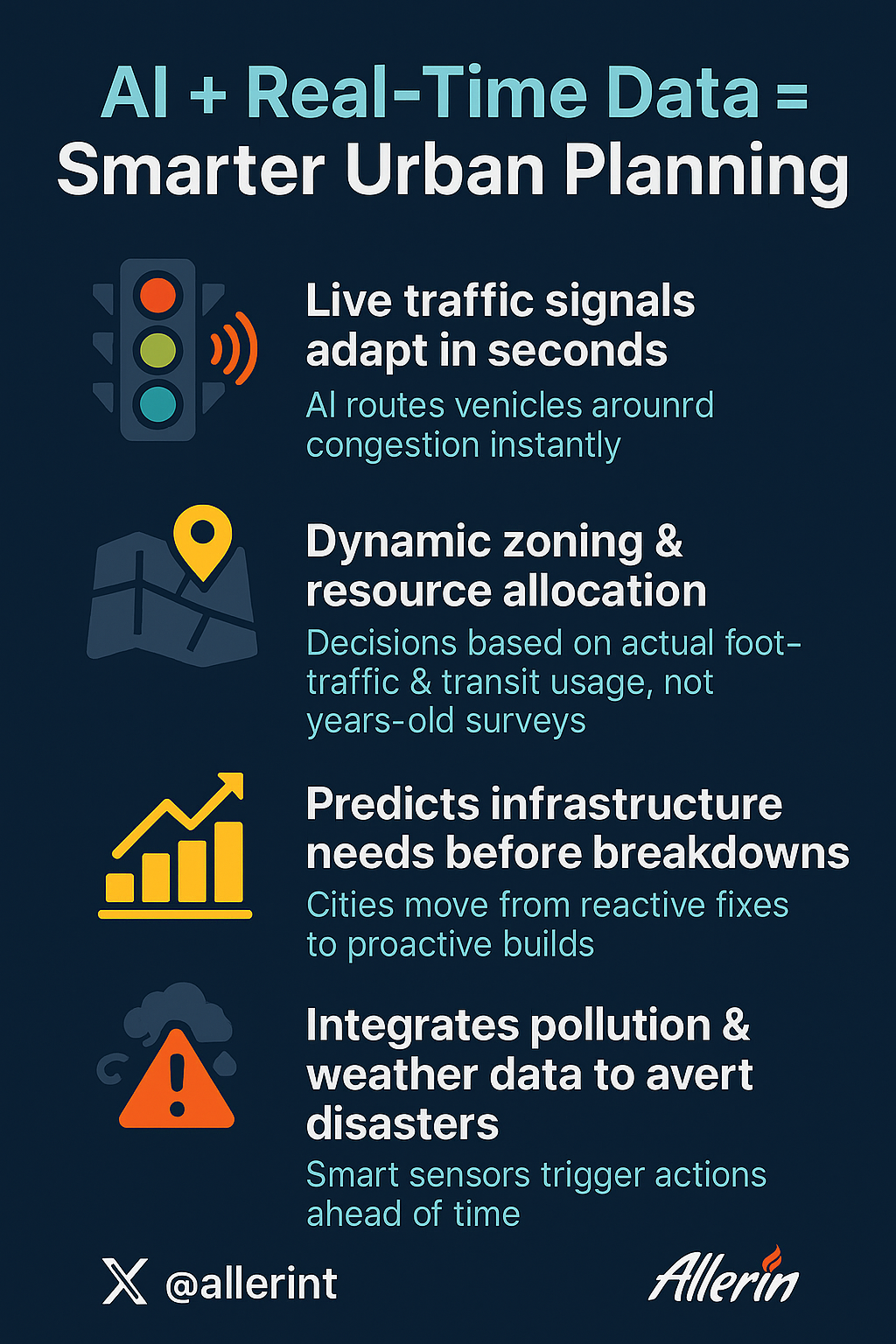
AI is transforming everything here by making city planning more responsive. Instead of relying on outdated reports, it continuously gathers data from mobile GPS signals, smart sensors, and public transit systems to make real-time adjustments. If a road suddenly clogs due to construction or an event, AI-powered traffic systems can tweak signal timings, reroute traffic, or suggest alternate routes instantly. In public spaces, it helps cities allocate resources where they’re needed—whether that means increasing sanitation in high-footfall areas or adjusting park maintenance based on actual usage rather than fixed schedules.
Beyond traffic, AI also improves environmental monitoring and disaster response. Smart sensors can detect rising pollution levels and trigger alerts to reduce traffic in affected areas or encourage greener commuting options. It can also integrate weather forecasts with flood-risk models, helping cities act before disasters strike rather than scrambling to respond. By moving away from slow, outdated planning cycles to real-time decision-making, AI ensures cities evolve alongside the people who live in them—adapting minute by minute instead of years too late.
Neglecting Informal Economy and Unstructured Data
Urban planning often misses a huge part of city life—the informal economy. From street vendors and gig workers to unregistered housing settlements, these everyday activities keep cities running, especially in developing regions. But because they don’t show up in tax records or official reports, traditional planning methods tend to overlook them. This can lead to policies that unintentionally disrupt livelihoods—like pedestrianizing a street without realizing it’s a vital marketplace for local vendors or enforcing zoning laws that push people out of their homes without offering alternatives. Without a clear picture of how cities actually function, well-intended decisions can end up doing more harm than good.
How does AI solve this problem?
AI can help cities see what traditional planning often misses. By analyzing unstructured data—like mobile payments, location tracking, and even social media activity—it paints a fuller picture of urban life beyond official records. Mobile transactions can reveal where informal businesses thrive, while social media chatter can highlight emerging commuter routes or safety concerns that never make it into government reports.
AI-powered satellite imagery can even track the growth of unregistered settlements, helping cities plan infrastructure before these areas become overcrowded. This way, AI makes urban planning more inclusive, shaping policies around how people actually live and work.
Bureaucratic Bottlenecks That Slow City Planning
Urban planning isn’t just about having the right data but more about getting past the red tape that slows everything down. Even when city officials have clear insights, decisions often stall in a maze of approvals, political debates, and outdated systems that weren’t built for quick action. Sometimes, it’s hesitation where leaders worry about public backlash or stepping on the wrong toes. Other times, it’s sheer bureaucracy, where even simple infrastructure upgrades get tangled in multi-agency reviews, public consultations, and budget negotiations.
For example, a busy intersection desperately needs a redesign. The transportation department might flag it as a priority, but by the time the project clears all the necessary approvals, traffic patterns have already shifted, making the original plan obsolete. This sluggish, reactive approach keeps cities stuck in a cycle of playing catch-up, instead of proactively shaping urban spaces to meet evolving needs.
How does AI solve this problem?
AI-driven planning helps cities break free from bureaucratic slowdowns by turning real-time data into clear, actionable insights. Instead of waiting months for new surveys or getting stuck in endless committee reviews, city officials can use AI to monitor traffic congestion, assess infrastructure conditions, and even predict the impact of zoning changes—all in real time.
AI-powered simulations can test different policy options before implementation, giving decision-makers the confidence to act based on evidence rather than political pressure or outdated reports. While AI won’t erase bureaucracy entirely, it cuts through the inefficiencies, reducing guesswork and minimizing delays so cities can respond to challenges faster and plan smarter for the future.
Challenge of Human Mobility Beyond Transit
For decades, city planning has revolved around cars, buses, and trains, with little thought given to how people move in other ways. Cycling, e-scooters, and even pedestrian-friendly infrastructure have often been sidelined, treated as secondary concerns rather than integral parts of urban mobility. The result? Congested streets, limited options for those who don’t drive, and cities that feel built for vehicles rather than people.
For example, think of bike lanes. Many cities either don’t have enough of them or fail to connect them into a safe, usable network. E-scooter riders often have no designated parking, leaving sidewalks cluttered or forcing them onto roads where they compete with cars. Pedestrians, too, struggle with poorly designed crossings or sidewalks that don’t account for foot traffic in high-density areas. This lack of infrastructure doesn’t just create inconvenience but leads to safety risks and discourages more sustainable ways of getting around.
How does AI solve this problem?
AI is helping with this by analyzing GPS data from ride-sharing apps, e-scooter rentals, and pedestrian tracking, where it can pinpoint where cities need better bike lanes, safer crosswalks, or shared mobility hubs. It also factors in real-world conditions—like weather, road congestion, and peak commuting hours—to help officials design infrastructure that adapts to people’s needs, not outdated assumptions. Instead of just widening roads for cars, AI-driven planning helps cities build safer, more inclusive, and sustainable transport networks that support the full range of ways people move.
AI isn’t here to replace city planners—it’s here to make their jobs easier. It cuts through red tape, fills in the gaps outdated surveys leave behind, and helps governments make decisions based on what’s actually happening in their cities, not what was true years ago.
Cities that lean into AI won’t just keep up, they’ll move ahead. Instead of constantly playing catch-up, they’ll predict problems before they happen, invest where it matters, and build spaces that truly work for people. The future of urban planning should now be more about using real-time data to make better, faster decisions for everyone living in cities and for years to come.