
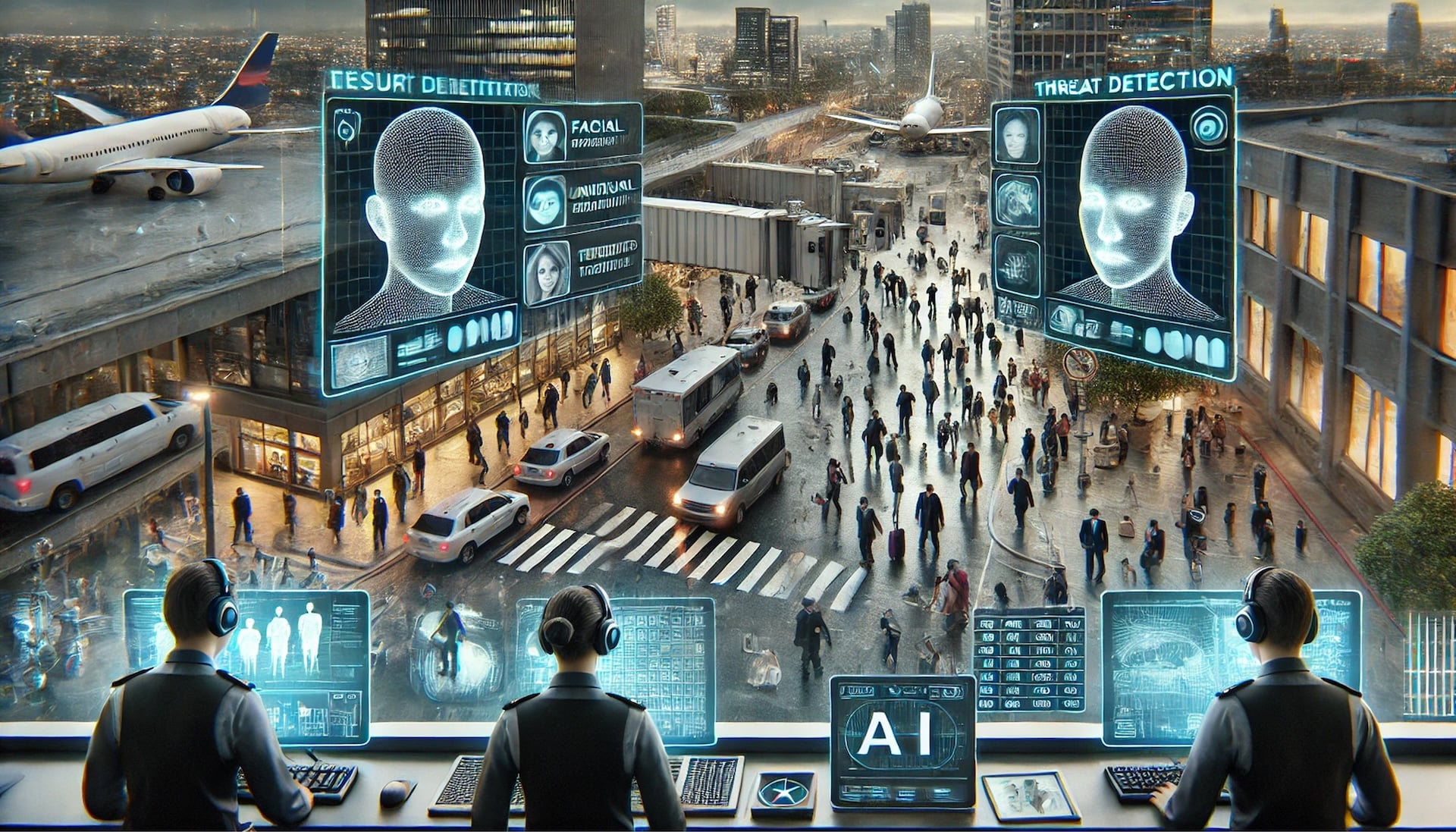
 Compared to the watchtowers that guarded communities, from the Roman Empire to medieval castles, sure, today’s Closed-Circuit Television (CCTV) systems might seem like a significant upgrade. But, despite the widespread use of over 1 billion CCTV cameras globally, public safety continues to remain an issue. So, are we really safer with cameras recording our every move?
To begin with, the sheer volume of footage can be an ordeal for security teams to keep up with. CCTV systems generate an overwhelming amount of footage daily, but security teams can only review a fraction of it, leading to data overload and missed threats. False alarms—triggered by harmless movements like shadows, animals, or weather changes—waste valuable time, making surveillance less efficient. Blind spots and limited visibility also weaken traditional CCTV, as fixed cameras can’t cover every angle, and poor lighting or obstructions reduce its effectiveness. The biggest drawback? Traditional surveillance is passive, providing evidence after an incident rather than preventing it.
This is where computer vision changes the game. Powered by AI, it analyzes video in real time, detects anomalies, recognizes patterns, and even predicts threats before they escalate. Surveillance is no longer just about watching—it’s about acting when it matters most.
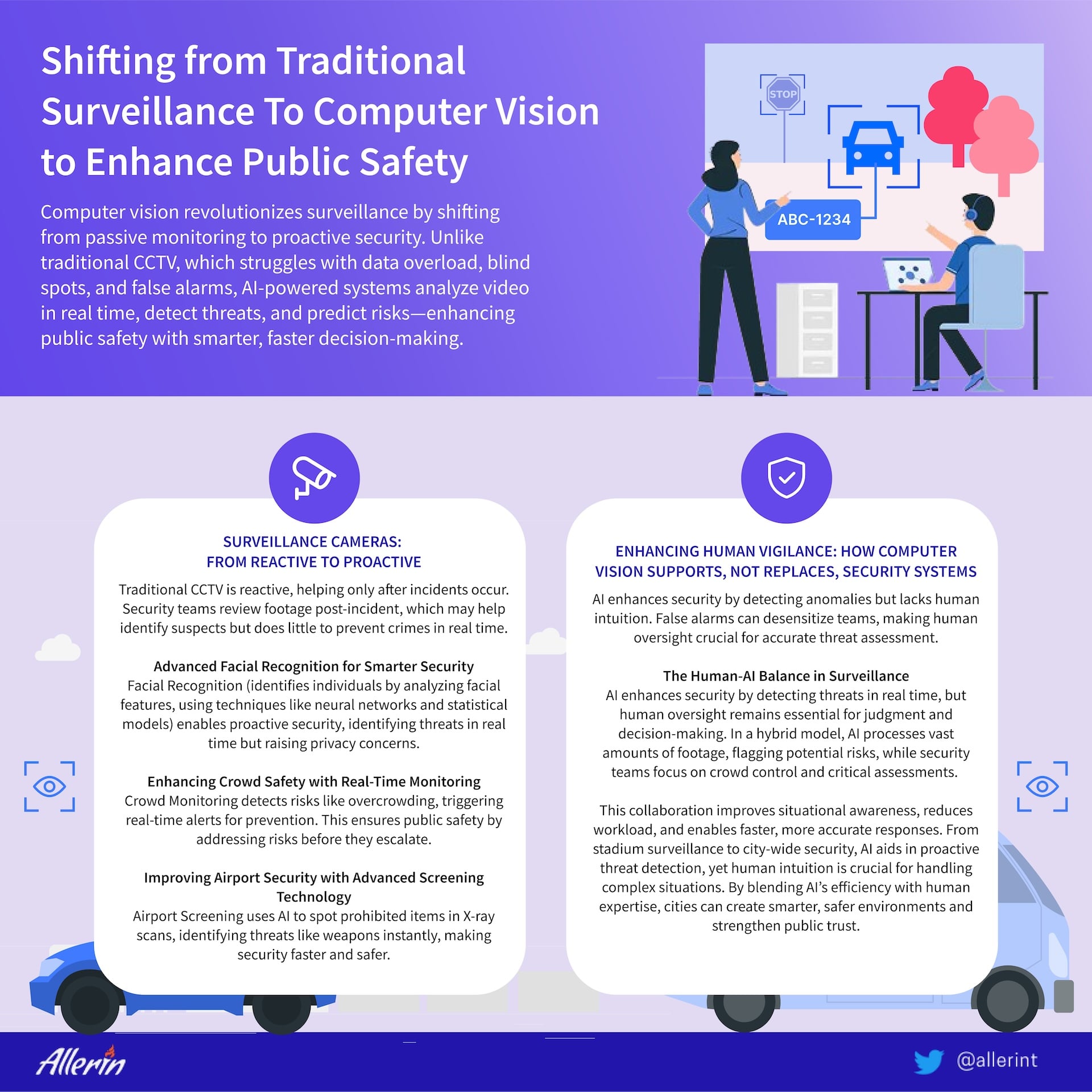
Surveillance Cameras: From Reactive to Proactive
Traditional surveillance, like CCTV, is built on a reactive approach, which means that it responds only after an incident has occurred. Security teams review footage after an incident, trying to understand what happened, but by then, the damage is already done. While the footage may identify suspects, it doesn’t help prevent harm beforehand. This highlights that reactive surveillance can only look at incidents after they happen, instead of preventing crimes in real time.
Advanced Facial Recognition for Smarter Security
Computer vision enables proactive surveillance, shifting the focus from passively observing events to actively detecting and preventing threats. One of its most powerful—and controversial—applications is facial recognition. This technology can identify known suspects or verify individuals against access control lists, enabling targeted security measures.
Facial recognition works by analyzing key features like the eyes, nose, and mouth, which the system learns to recognize through training on extensive image datasets. Techniques such as Eigen face-based methods decompose facial features, while neural networks mimic human brain functions to detect patterns. Other approaches, like Naïve Bayes classifiers and Hidden Markov models, use statistical probabilities to predict patterns over time.
However, despite its technological sophistication, facial recognition raises significant ethical concerns. The prospect of tracking individuals in public spaces can feel intrusive—bordering on draconian—if not carefully managed. Balancing security benefits with privacy rights is essential as this technology continues to evolve, ensuring it is used responsibly and transparently. These include implementing strong data anonymization techniques to mask identifiable information when it’s not necessary and adopting clear, transparent usage policies that define when and how facial recognition can be deployed. Ensuring robust audit mechanisms for accountability can further reinforce the responsible use of this technology, balancing security with civil rights.
Enhancing Crowd Safety with Real-Time Monitoring
Computer vision plays a vital role in crowd monitoring, providing real-time insights into crowd density and movement patterns. As crowd density increases, so does the risk of incidents like stampedes or bottlenecks. By analyzing live footage, computer vision systems can detect early warning signs, such as sudden crowd buildup or erratic movement indicative of panic.
When potential risks are identified, the system can trigger real-time alerts, enabling security teams to take preventive action—whether it’s redirecting foot traffic, opening additional exits, or deploying personnel to manage the situation. This proactive approach not only helps prevent dangerous overcrowding but also enhances public safety by addressing issues before they escalate.
Improving Airport Security with Advanced Screening Technology
Most people are familiar with airport security screening, but what they might not realize is how much computer vision technology is transforming the process. One of its key applications is object detection, which helps identify potential threats in items scanned by X-ray machines. These systems can automatically detect dangerous objects like guns, knives, and scissors, making screenings faster, more accurate, and ultimately safer.
Advancements in vision models have made this integration much smoother. Today, airports are using the latest screening machines that rely on CV to help catch prohibited items in real time, improving security and ensuring a safer travel experience for everyone.
Enhancing Human Vigilance: How Computer Vision Supports, Not Replaces, Security Systems
Computer vision systems excel at processing massive amounts of visual data, detecting patterns, and identifying anomalies in real-time. Yet, they lack the deeper understanding and nuanced judgment that humans bring to security operations. Situations involving human emotions, erratic behavior, or cultural context can be challenging for AI to interpret accurately. For example, while AI may detect a sudden movement as a threat, a human might recognize it as a harmless action.
False alarms are another concern. When AI systems frequently trigger alerts for benign events, such as shadows or environmental changes, security teams can become desensitized, diminishing their responsiveness over time. This underscores the need for human intuition and experience to make context-based decisions that AI might overlook.
The Human-AI Balance in Surveillance
Integrating computer vision doesn’t mean replacing human oversight—it means transforming the role of security teams. In this hybrid model, AI becomes the eyes that never tire, processing thousands of hours of footage and flagging potential issues, while humans act as analysts and decision-makers.
Consider a stadium security scenario: AI can monitor the crowd for unattended bags or unusual movement patterns, providing real-time alerts. Meanwhile, human security personnel focus on crowd control, de-escalating conflicts, and making on-the-spot assessments. This collaboration not only improves situational awareness but also lightens the workload for security teams, enabling faster and more accurate threat responses.
The integration of computer vision into municipal security systems is redefining how city administrators approach public safety. Shifting from reactive surveillance to proactive threat detection, this technology enables real-time monitoring and faster responses to potential risks. From facial recognition at transport hubs to crowd monitoring during public events, AI-powered systems enhance safety by identifying threats before they escalate.
However, the true value of computer vision lies in its collaboration with human expertise—not as a replacement. While AI excels at processing large volumes of data and detecting patterns, human intuition and decision-making remain essential for context-sensitive situations. Together, this hybrid model transforms security teams into agile units that can assess complex scenarios and take appropriate action.
For city administrators, adopting this approach means creating smarter, safer urban environments. By blending AI’s speed and precision with human oversight, cities can improve situational awareness, optimize resource allocation, and foster trust within communities. As technology continues to evolve, this partnership between AI and human expertise will become indispensable in shaping resilient, future-ready cities.