
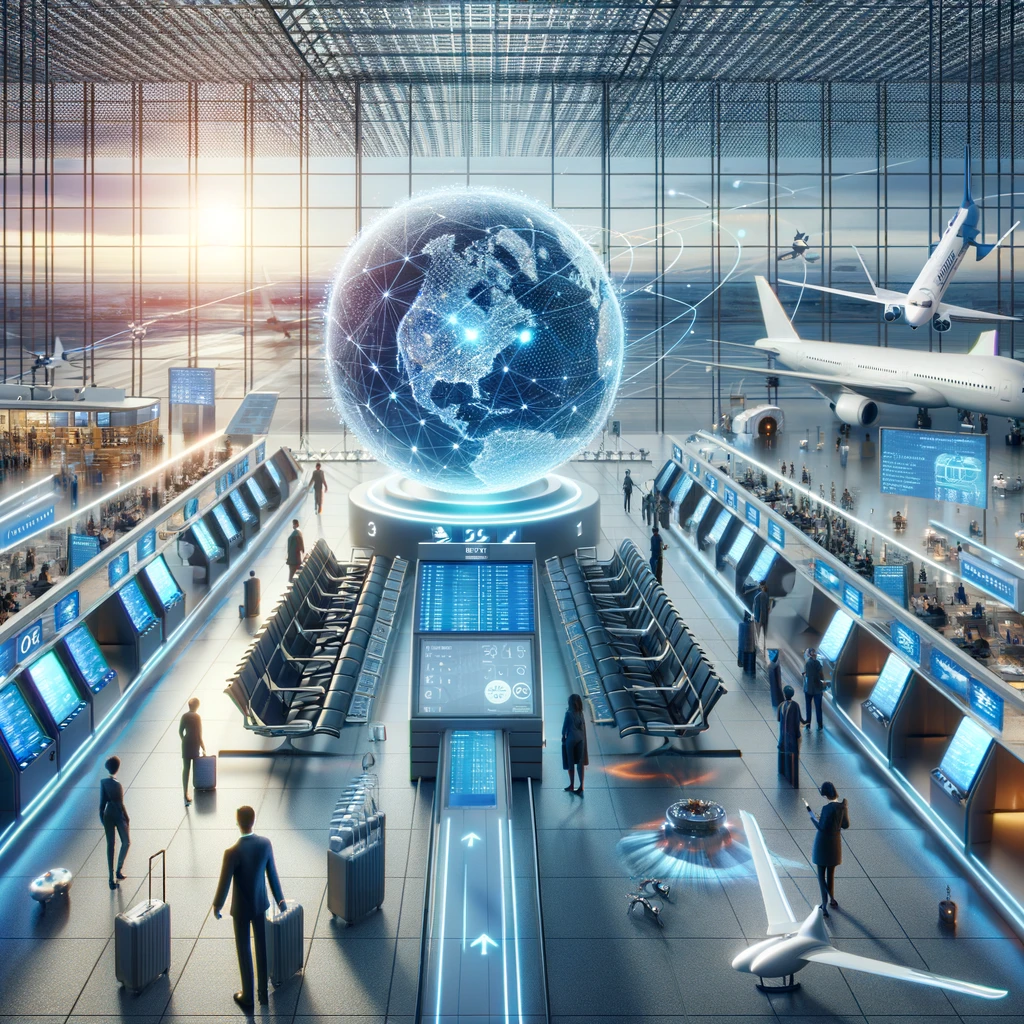
The airline industry has witnessed a rapid transformation with the advent of path-breaking aviation technology. It has resulted in safer, more efficient and increasingly accessible flights for travelers worldwide. Improved GPS systems enable pilots to navigate with precision, reducing flight times and fuel consumption.
Modern aircraft with increased fuel efficiency not only reduce operational costs but also contribute to environmental conservation. Thanks to individual screens and onboard WiFi, passengers can now enjoy a more comfortable and entertaining journey.
Moreover, streamlined operations, from check-in to luggage handling, have significantly enhanced the overall travel experience, accommodating the ever-growing passenger traffic and playing a vital role in global trade delivery.
The airline industry is bound to experience remarkable growth by integrating some revolutionary technologies in the coming years. Some of them are discussed below.
Emerging Aviation Technology Reshaping the Airline Industry
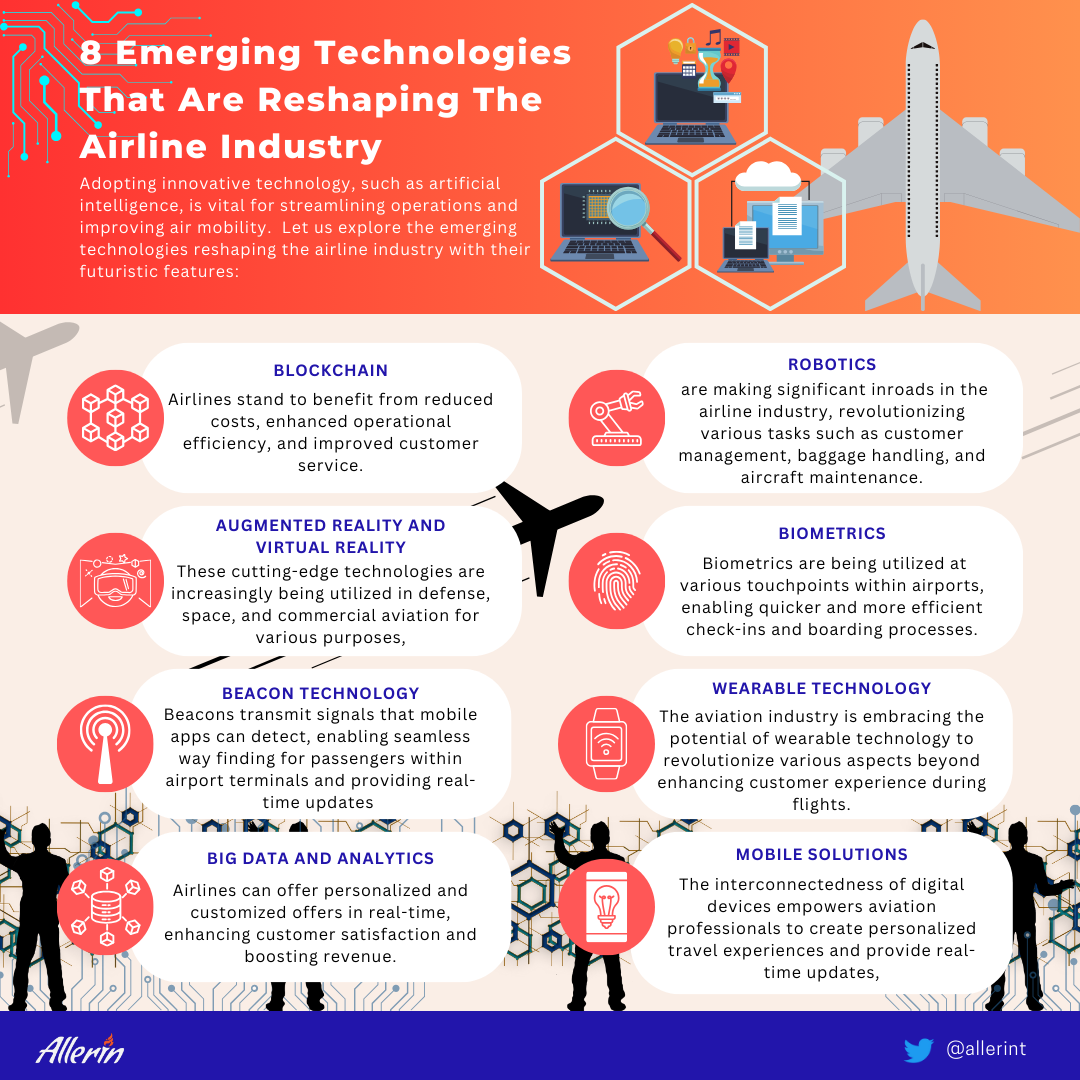
The International Air Transport Association (IATA) estimates that the number of air travelers is expected to reach four billion in 2024, surpassing pre-pandemic levels. Adopting innovative technology, such as artificial intelligence, is vital for streamlining operations and improving air mobility. Airlines are persistently exploring how artificial intelligence can help provide personalized services and improve customer experience.
Besides, let us explore the emerging technologies reshaping the airline industry with their futuristic features.
1. Blockchain
Blockchain technology has emerged as a game-changer in the aviation industry, offering a secure and transparent digital ledger system to revolutionize various aspects of operations. Airlines can leverage blockchain to efficiently track the entire lifecycle of aircraft, from maintenance to flight operations, while also managing passenger data and the supply chain of aircraft parts. By embracing blockchain, airlines stand to benefit from reduced costs, enhanced operational efficiency, and improved customer service.
Additionally, the technology can effectively combat fraud and bolster security measures within the aviation sector. With the financial industry already showcasing the potential of blockchain, airlines are now exploring its diverse applications, such as verifying transactions, managing contracts, and auditing product origins. Forward-thinking carriers like Air France have started integrating blockchain into their business processes, recognizing its potential to streamline workflows and elevate the overall aviation experience for passengers and industry stakeholders.
Furthermore, airlines can utilize the blockchain to eliminate reliance on physical identification proofs by securely storing passengers’ data in a decentralized database, fostering greater convenience and data privacy. Tokenizing flying miles enables airlines to provide customers with valuable benefits and loyalty rewards through a network of partners. Embracing blockchain technology also empowers airlines to build robust security systems, safeguarding sensitive customer information with the utmost integrity and transparency.
2. Augmented Reality and Virtual Reality
Augmented and virtual reality (AR/VR) have emerged as transformative technologies in the airline industry, offering a wide range of advantages. These cutting-edge technologies are increasingly being utilized in defense, space, and commercial aviation for various purposes, such as enhancing safety, conducting simulations, battlefield imaging, training, improving the customer experience, and optimizing commercial aviation operations. AR and VR play critical roles in complex design mechanisms and structures, enabling visualizations of navigating systems, air traffic control, weather, terrain, and airspace information.
The global market for AR, VR, and mixed reality (MR) is projected to exceed USD 250 billion by 2028, with the specific market size for AR/VR in the aviation industry expected to reach $23.6 billion by 2031. AR assists pilots with real-time information about their surroundings, aiding navigation and safety, while VR is widely used for flight training and simulation, providing a realistic and risk-free environment for practicing various scenarios. Additionally, airlines can harness AR/VR for better customer services, aircraft design and manufacturing, pilot training, maintenance assistance, and overall improved operational efficiency, making them indispensable tools in the quest for a more efficient and advanced airline industry.
3. Beacon Technology
Initially popularized by Apple in 2013, Beacon technology has become a transformative tool, particularly in the airline industry, where its potential for enhancing navigation and personalized experiences is increasingly recognized. By utilizing Bluetooth low energy (BLE) technology, beacons transmit signals that mobile apps can detect, enabling seamless wayfinding for passengers within airport terminals and providing real-time updates on gate assignments, flight statuses, and nearby amenities. International airports are already adopting beacon technology to offer personalized journeys through dedicated apps, enhancing passenger engagement and satisfaction.
Integrating beacons in airports allows for valuable data collection on passenger behavior, optimizing retail and non-aeronautical revenue streams. As the aviation industry embraces digital technologies, beacons emerge as a cost-effective and efficient solution to improve the overall airport experience for travelers, vendors, and airlines alike.
4. Big Data and Analytics
Airlines leverage big data analytics to drive valuable insights and create delightful travel experiences. By analyzing vast amounts of data from customer profiles, purchase history, and travel itineraries, airlines can offer personalized and customized offers in real-time, enhancing customer satisfaction and boosting revenue. Additionally, big data enables airlines to increase operational efficiencies through predictive analytics, optimizing aircraft maintenance and fuel consumption.
Collaborating with NASA, Southwest Airlines employs machine-learning algorithms to detect potential safety issues, ensuring safer flights and accident prevention. Big data also empowers airlines to improve marketing efforts by understanding customer behaviors and preferences, leading to better-targeted offers and increased ticket sales. Moreover, the integration of wearable technology and the Internet of Things allows airlines to enhance customer experiences with real-time baggage tracking and smart navigation systems.
5. Robotics
Robotics and artificial intelligence are making significant inroads in the airline industry, revolutionizing various tasks such as customer management, baggage handling, and aircraft maintenance. KLM’s ‘Spencer Robot’ garnered attention for its socially-aware capabilities, adeptly dealing with social situations and interacting with people in a human-friendly manner. In airplane manufacture, robotics has streamlined the process, as demonstrated by Boeing’s Fuselage Build System, where robots work in pairs to replace human labor, placing thousands of rivets on aircraft, improving efficiency and reducing strain on workers.
Additionally, robotics transforms aircraft maintenance, with companies developing robots for inspections, significantly reducing inspection times and allowing maintenance engineers to focus on other essential tasks. Moreover, the advent of autonomous aviation shows Boeing’s endeavor to build jet planes that can fly without pilots, utilizing autopilots to manage flights from take-off to landing safely. Robotics also plays a role in pre-flight checks, with lightweight robots performing rigorous tests on instrument panels, ensuring aircraft readiness for take-off.
6. Biometrics
The airline industry is embracing biometric technology to create seamless and secure passenger air travel experiences. Biometrics, such as facial recognition, are being utilized at various touchpoints within airports, enabling quicker and more efficient check-ins and boarding processes. Air New Zealand has already introduced biometric-enabled bag drop and self-service baggage drop, enhancing customer convenience.
IATA supports the OneID initiative , where passengers can authenticate themselves through mobile devices or airport kiosks, eliminating the need for passports or boarding passes. The protection of biometric data is strictly regulated to ensure passenger privacy. Biometrics is revolutionizing airport services by offering a self-service, end-to-end experience, simplifying passenger flows, and increasing overall satisfaction.
7. Wearable Technology
The aviation industry is embracing the potential of wearable technology to revolutionize various aspects beyond enhancing customer experience during flights. Airlines like Japan Airlines, EasyJet and British Airways are leading the way with innovative applications. Japan Airlines utilizes Microsoft’s HoloLens to provide immersive training for crew members and engineers, simulating real-life engine mechanics experiences. EasyJet and British Airways have developed Apple Watch apps, allowing passengers to store boarding passes and receive real-time updates conveniently. Beyond customer-facing applications, wearable technology has immense potential in maintenance operations.
Wearable devices like Google Glass offer hands-free access to mobile MRO (Maintenance, Repair, and Operations) solutions. Mechanics can efficiently perform tasks like component removal or replacement by scanning QR codes and receiving critical work orders through their smart glasses. This shift towards wearable technology reflects the industry’s commitment to leveraging cutting-edge tools for improved productivity, streamlined maintenance processes, and an enhanced travel experience for all stakeholders involved.
8. Mobile Solutions
In the aviation industry, smartphones have become indispensable tools, facilitating airlines to connect and engage with passengers throughout their journey, from flight booking to deplaning. Airlines like Delta are offering virtual boarding passes via mobile apps, streamlining the check-in process. The interconnectedness of digital devices empowers aviation professionals to create personalized travel experiences and provide real-time updates, including gate changes and traffic delays.
The convergence of mobile technology with big data, business intelligence, cloud computing and the Internet of Things is redefining the airline passenger experience. Mobile apps enable ticket purchases, check-ins, and access to flight details, while SMS texts keep travelers informed about service disruptions.
The constantly evolving aviation technology is ushering in a new era of evolution in the airline industry. It is disrupting the existing system and bringing in much-needed change, which will benefit all the stakeholders involved. Moreover, these emerging technologies will play an important role in making the airline industry more sustainable in he long run.