
 The cannabis industry faces various challenges because of a lack of awareness, regulations, and technologies. For instance, cannabis is illegal in most countries due to its adverse effects on the human body, but it is exported to those countries for the sake of money. As a consequence, cannabis retailers are running short of supply to countries where it is legalized for medicinal uses. But, governments can use blockchain for cannabis tracking from seed to sale and till consumption. And governments do need technologies like blockchain for streamlining cannabis production and consumption. Thus, blockchain can provide a chance to legalize cannabis in all countries.
How businesses can leverage blockchain for cannabis legalization
Cannabis provides many health benefits, but due to some of its adverse effects like increased chances of depression, slower reaction time, and weakened immune system, it is not legalized in most of the countries. The cannabis industry can use blockchain to improve the chances of its legalization across the world as it can make cannabis consumption traceable.
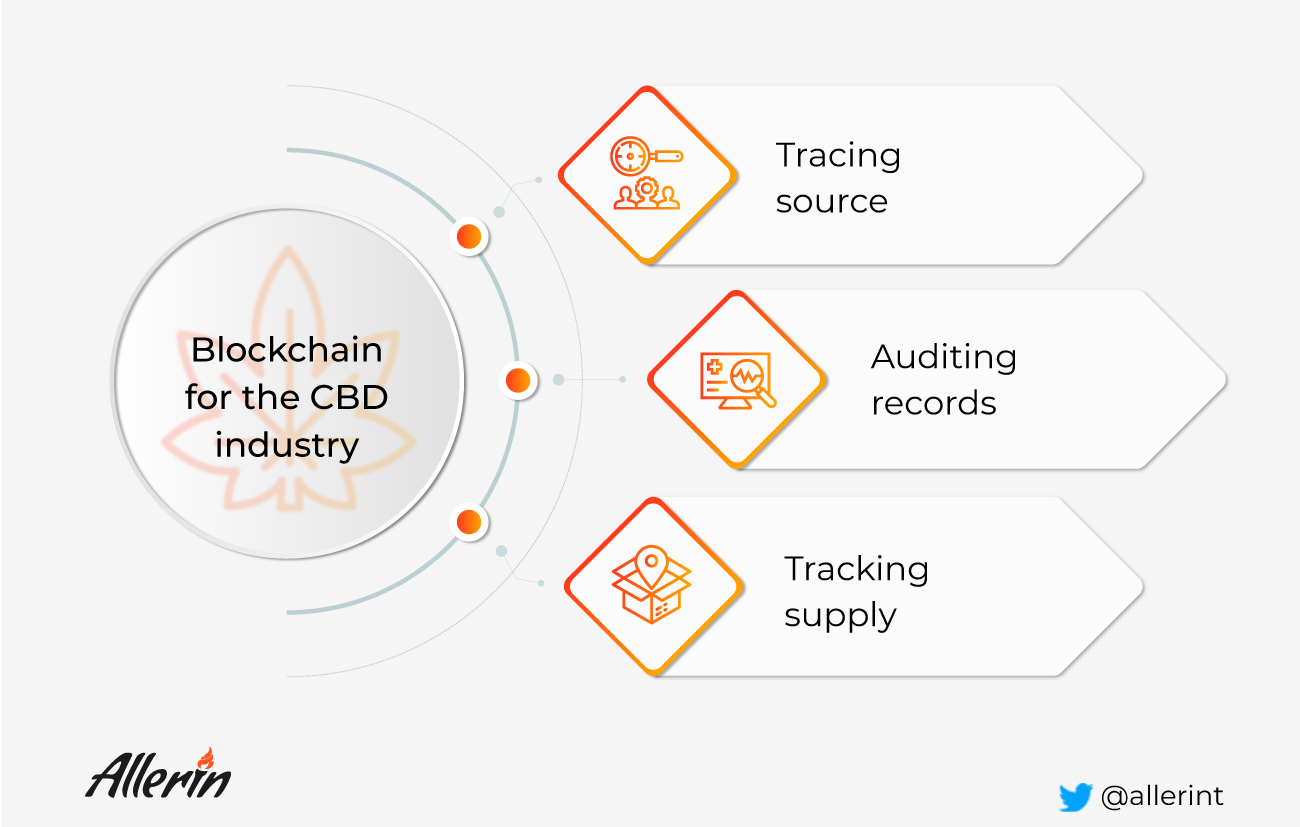
Tracing source information
Big corporations want to find the source of cannabis products to ensure that the seller has legal rights to manufacture them. But several times, companies are not able to find the correct source due to the lack of infrastructure. Also, businesses can be fooled by illegal manufacturers by duplicate certificates. And, if the seller does not have legal rights, then businesses can be held accountable for its use and sale. And this can adversely affect businesses’ credibility and reputation. Blockchain can help businesses to track the provenance of products without the stress of potential tampering. The decentralized ledger can help organizations trace cannabis products from seed.
Auditing medical records
A few countries use cannabis for medicinal purposes as it does provide significant health benefits such as relief from chronic pain, improved lung capacity, and treat depression. But, some people can use duplicate medical records to buy cannabis and sell it in illegal countries for money. This results in a shortage of supply to people who are in need. And, blockchain has the potential to solve the issue of duplicate prescriptions. Doctors can upload patients’ prescriptions on the blockchain platform where pharmacists can verify it before selling cannabis products as medicines.
Monitoring supply chains
Most governments have always strived to stop the illegal usage of cannabis. But, they cannot monitor every transaction involving cannabis products. But, with the help of blockchain, government administrators can track the source and supply of cannabis to stop its illegal sale and consumption. And, by monitoring cannabis consumption through a blockchain network, law enforcers can easily find the people who are involved in its illegal sale. Thus, governments can track the supply chain of raw cannabis and its products to stop their illicit circulation in their countries.
Companies are already using blockchain-based solutions to authenticate a product and confirm its legality. And cannabis-based businesses are already aware of the role of blockchain for cannabis legalization and are using the technology for the same. There are also many startups in the cannabis industry that are using blockchain for exploring its benefits for safer and more efficient production.