
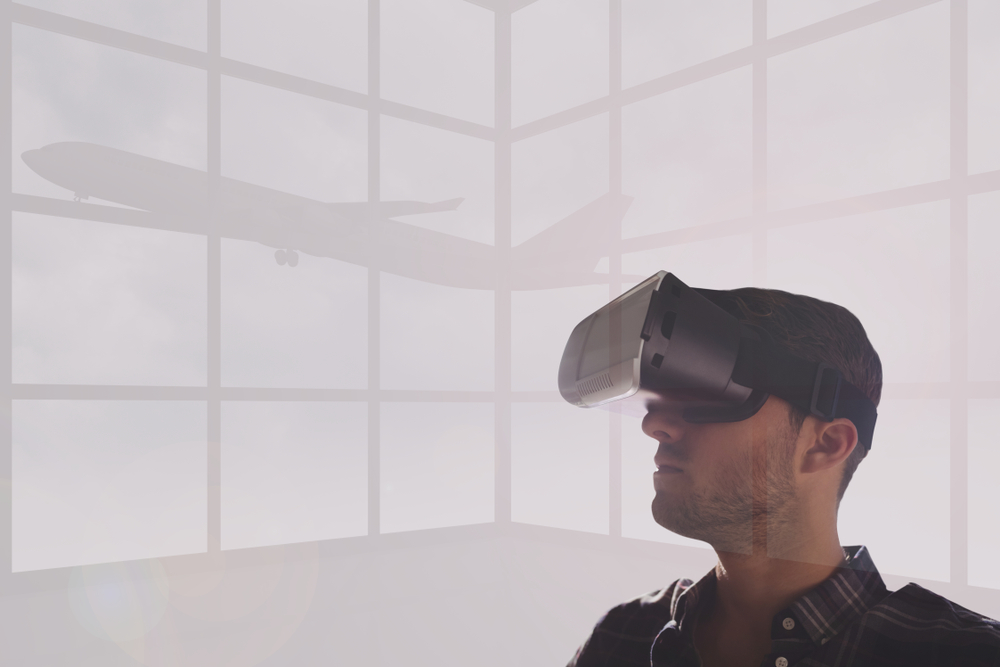
It is impressive to know that VR technology, which was once considered fit for gaming and entertainment only, is now finding its way into the most complex and niche industries, such as aviation. VR in aviation has the power to revamp the industry by immersing the passengers in a virtual space, entertaining them thoroughly, and enhancing their flying experience. With the help of VR, aviation recruits can be trained with 3D models, saving time and resource, and enhancing the understanding.
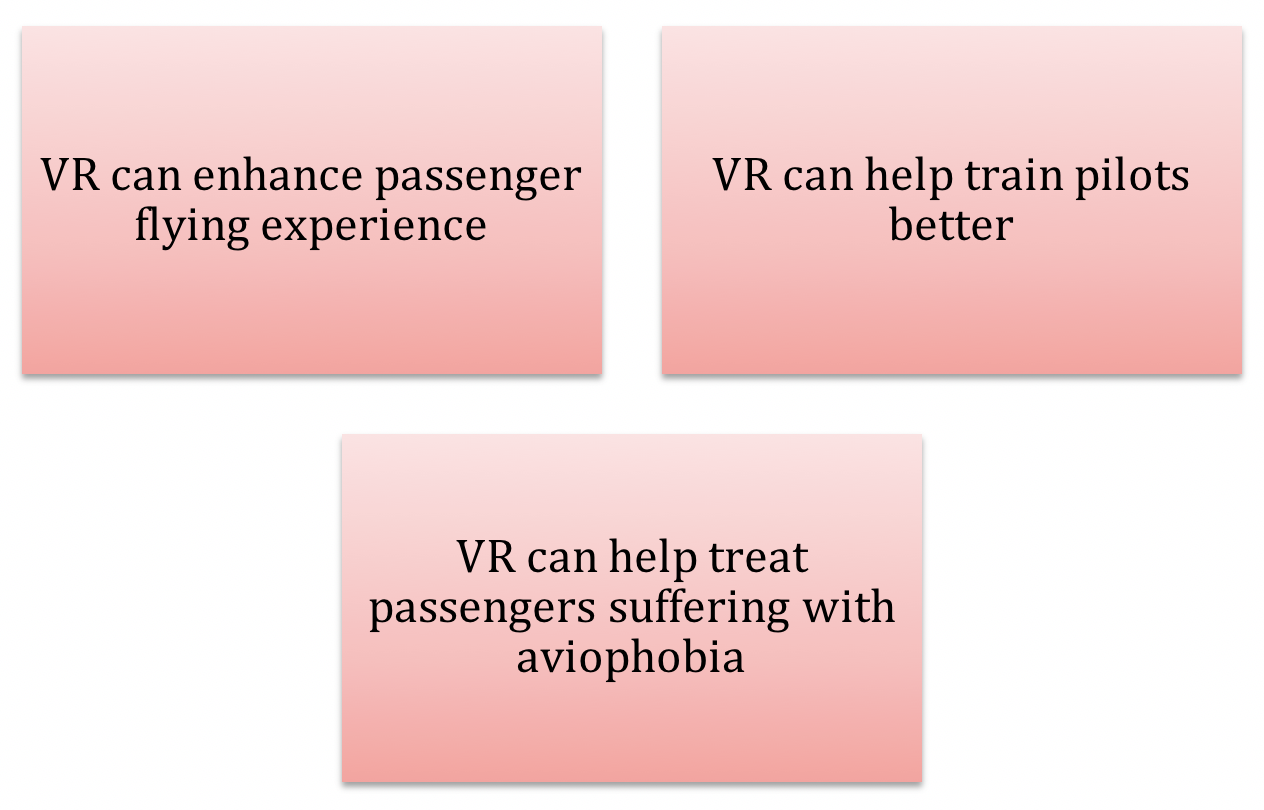
VR in aviation enhances flying experience
Long duration flights can be quite boring, right? The best we can do in times like these is to watch movies or listen to songs. So, the aviation industry has found ways to enhance the flying experience by immersing passengers in a virtual space. How?
- With the help of VR headsets, passengers can immerse themselves in a virtual environment of their choice. For instance, passengers could imagine themselves to be in a calm place, enjoying the beauty of nature or in a stadium watching a cricket match, while they’re flying thousand feet above the ground.
- Nowadays, cameras are mounted on the external body of planes, so that passengers can enjoy the view outside while they are seated on a flight. This leads to a completely different and fantastic flying experience altogether.
The good news is that VR has already made quite a headway in the field of aviation! Airlines have started offering VR headsets to their first-class passengers as a medium for onboard entertainment.
VR in aviation helps in training pilots
It’s been many years since the first flight simulator was built for training the young pilots. But now VR is offering a new way to train pilots. Earlier, the training program included actual cockpits and large screen monitors, whereas now VR provides a synthetic space, which immerses pilots in an incredibly realistic training scenario. The flight simulator requires more space for training as it involves actual cockpits and large displays. VR, on the other hand, involves VR headsets, which are easily portable. Besides, the expenditure incurred on VR flight simulators is much less than that incurred on traditional flight simulators. Hence, with the help of VR, the aviation industry can benefit in numerous ways, including a reduction in the cost and space required for training.
Not just for in-flight entertainment and training, VR can also be used to treat passengers who are phobic to flying. It is difficult to believe, though a fact, that one out of every three Americans is scared of flying. Michael Carthy is one such company that offers VR therapy to reduce people’s anxiety and phobia for flying. So now that you know what this technology can offer an aviation company, leverage VR before your competitors do!