As the global demand for energy rises, the oil and gas industry faces a wide range of challenges and opportunities, across the upstream, midstream, downstream, and oilfield services sector. The need is for an innovation that understands the traditional nuances of this sector well and, at the same, time gears it up for the digital sophistication of present times. With IoT in the picture, this industry can reap considerable value by means of a thorough transformation in the way it operates and serves.
What makes the oil and gas sector so complex?
It’s difficult to think of an industry with greater complexity and demands than the oil and gas industry. Companies in this sector are beginning to operate in remote and environmentally hostile areas; a major reason being the dwindling reserves of oil and gas. The projects in this area involve massive investments and heavy dependence on manual labor for almost all its operations and maintenance activities. This increases risk, associated costs, and makes it quite difficult to deliver projects on time and within the stipulated budget. Failure to detect an issue, say a leakage or corrosion in pipes, leads to downtime of critical processes. What compounds the problem further is that there is no way you can map the health of the pipelines well in advance so as to chart a proactive plan instead of a reactive one. Siloed data from disparate sources causes lack of operational insight.
What IoT solutions do we offer?
Allerin’s Aqua Drone
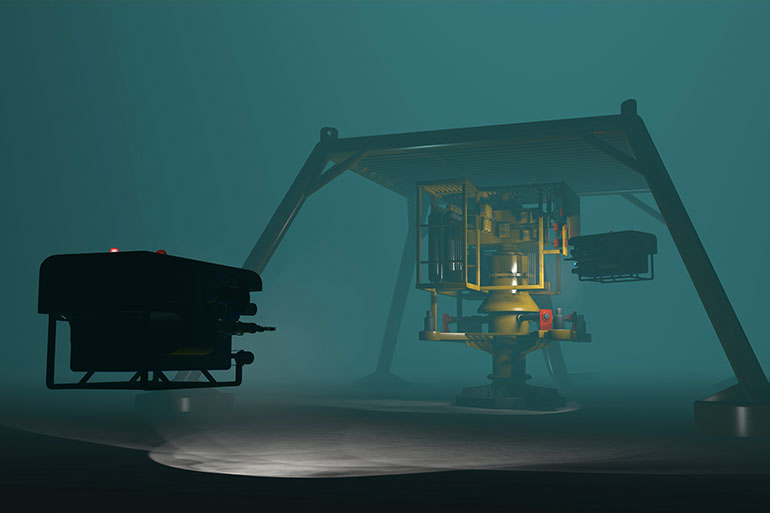
Allerin’s Aqua Drone has been designed to offer features that take care of the exclusive requirements of the oil and gas industry. It comes with an automated engine at heart; the driving force behind the multiple features of this drone. With the Aqua Drone, you can not only monitor downtime but also detect and analyze what caused it and accordingly flag issues in a rig. The drone is fully capable of reporting the minutest of issues with the oil and gas pipelines, and it does so in time for a proactive remedy to be followed. Comparison between the different rigs and the different worker shifts is also made possible. This helps identify issues that may have gone unnoticed and led to the frequent loss of property and revenue. With the introduction of the Aqua Drone, the involvement of manual labor, the inaccuracy of results and the consequent associated risk of life go completely out of the picture. Companies can achieve much more with the Aqua Drone as it allows for a comparison between the performance targets set by a company and the actual monitored data on the progress made. While the features of this drone are advanced, the dashboard offered is user-friendly and employs graphs and charts to help companies make critical decisions smoothly.
Allerin’s Intelligent Weather System
Another path breaking innovation from Allerin in the oil and gas sector is the Intelligent Weather System. It has been developed after an in-depth understanding of the challenges faced on account of incoherent weather data from sensors that are mounted at locations far away from the actual oil fields. With the Intelligent Weather System, not only can you accurately measure on-site values for temperature, wind speed, precipitation, and atmospheric pressure, but also give actionable insights without the need for any manual intervention to do so. Using the data and predictions from this system, you can plan in advance the operations strategy, worker shifts, transportation of cargo and equipment to oil fields via helicopters, and just so much more.
The Aqua Drone and the Intelligent Weather System are shining examples of building proprietary capabilities that are essential for competitive advantage in the oil and gas industry. IoT in the oil and gas sector will create the necessary momentum across the business, gauge future costs and associated complexities, and highlight the security shortcomings in the light of latest developments.