Hyper-converged solutions are all the rage in the present time, but comparing different technologies has always been a sticky proposition. CIOs might feel that they have wandered into a labyrinth while evaluating hyper-convergence infrastructure.
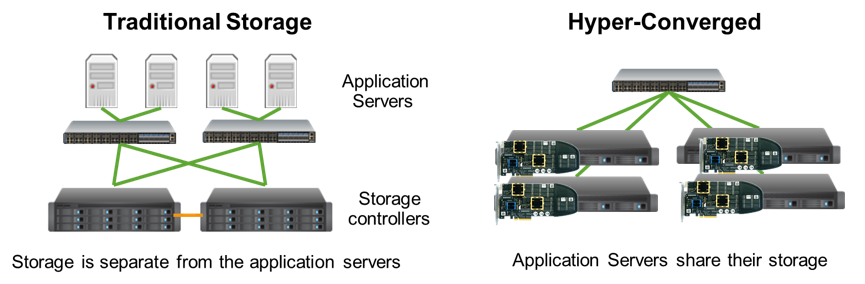 Image source: mellanox.com
In the most basic sense, hyper-converged systems are software-defined systems with tightly integrated storage, network and computing resources. Their suitability varies from one case to another. For some, they might seem to be money saving, and for others this cost-cutting potential may not be as fulfilling. But some interviews with industry executives have suggested that primary benefits may be found in administrative cost reduction and in the technology’s smaller data footprint.
Benefits
The clear benefits of a highly integrated and tested hyper-converged solution are short deployment times and high relative reliability, as each component goes through a series of tests. It is done to assure the working of each component with others. If this process is done in the correct way, you end up with as enterprise class appliance which is almost a data center in a box.
A traditional solution which is based on purchasing the components could potentially take months to configure. A hyper-converged system on the other hand can be implemented in weeks or sometimes even in days. The complexity that typically is present in management of data is eliminated as much work is put into the interoperation of the components. To the enterprises which provide or work with a broad range of relatively generic services, this offers a great advantage.
Issues
Performance is the one big issue. Some types of Hadoop deployment require minimal latency and better performance which a hyper-converged system might not be able to provide. This happens because there is a massive interoperability testing when a hyper-converged solution is created, which takes a lot of time. But this is also the reason why these systems can be deployed so quickly. If you are willing to trade off interoperation for performance and you need the highest grade of performance, then probably hyper-converged systems are not a good idea.
So as you can see, the deployment of hyper-converged systems is only beneficial for your organization if you do not need a really high performance grade but interoperation and reduced physical size of the hardware is absolutely critical.