
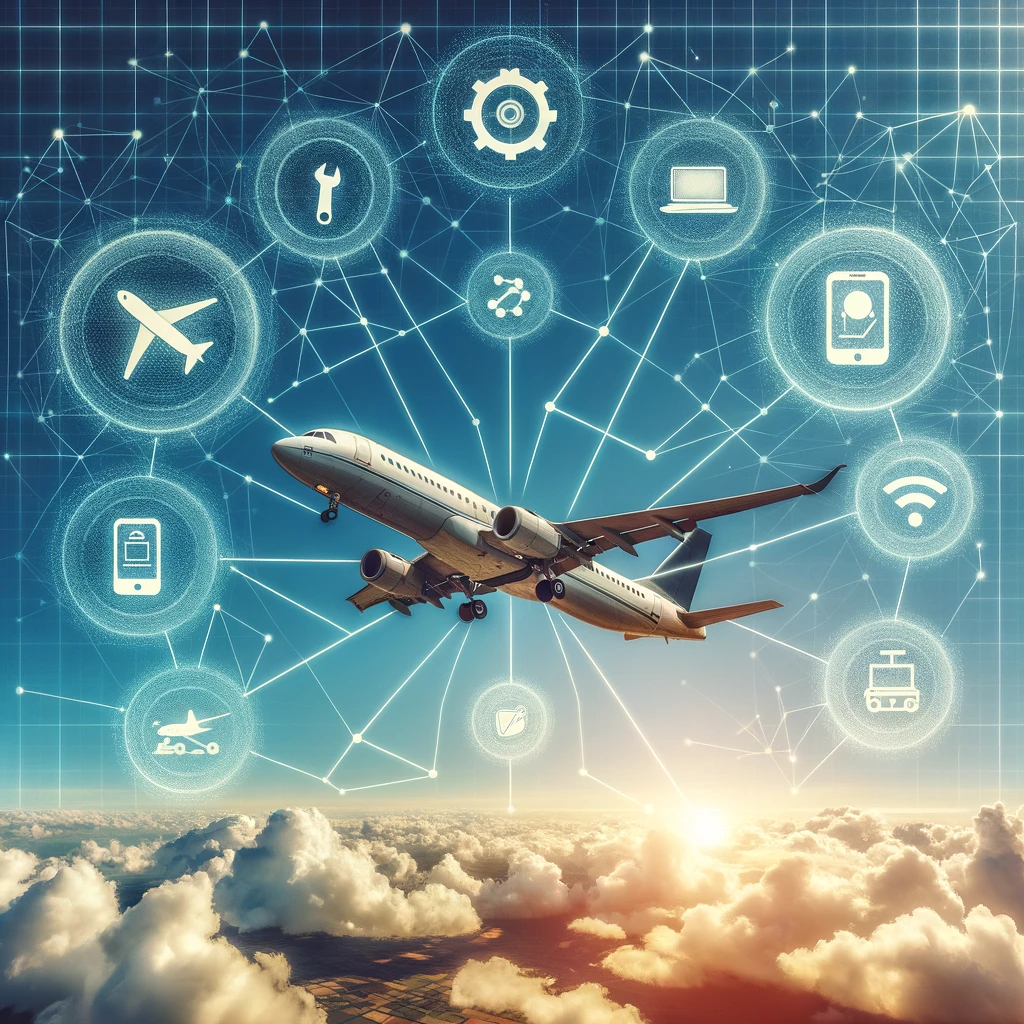
Since the early days of the aviation industry, it has shown a remarkable propensity for embracing new technologies. From turbulence-resistant ashtrays to advanced radar functionality, the sector has consistently been at the forefront of adopting cutting-edge innovations. This inherent drive to embrace progress and stay ahead of the curve has naturally led the aviation industry to fully embrace the Internet of Things (IoT) as the next logical step in enhancing safety, efficiency, and passenger experience.
So how does IoT work? Well, the Internet of Things (IoT) forms an extensive network of smart devices equipped with specialized sensors and software, all interconnected through the Internet. These devices collect and exchange data, from smart home thermostats to aircraft and air control towers, functioning like a digital nervous system within the aviation ecosystem. By interconnecting devices, sensors, and data analytics, IoT enhances safety, optimizes operations, and takes the passenger experience to new levels in the aviation industry.
Now that we know how IoT works, let’s talk about the use of IoT in the aviation industry and its applications.
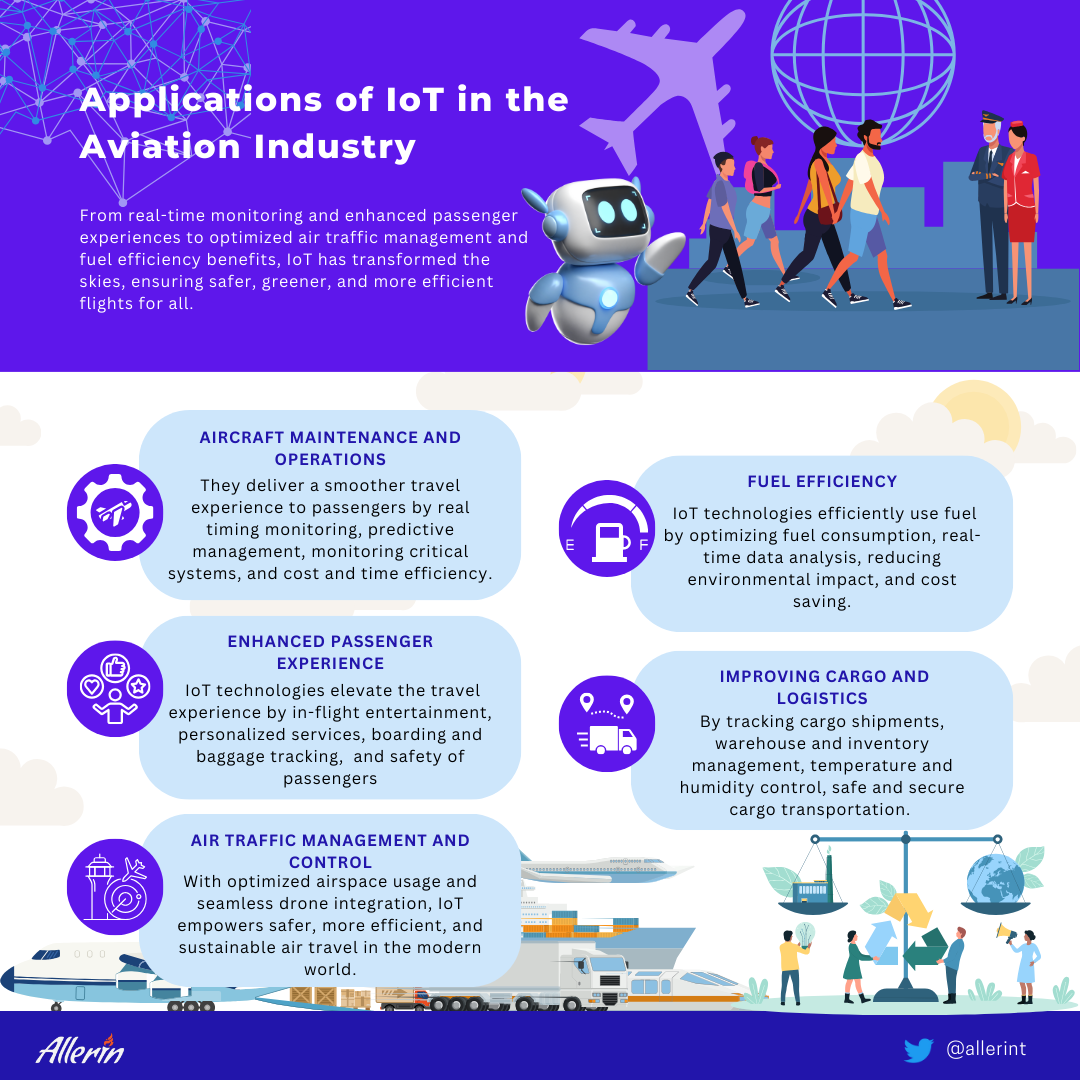
Applications of IoT in the Aviation Industry
From real-time monitoring and enhanced passenger experiences to optimized air traffic management and fuel efficiency benefits, IoT has transformed the skies, ensuring safer, greener, and more efficient flights for all.
1. Aircraft maintenance and operations
In the world of aviation, IoT emerges as a game-changer, revolutionizing aircraft maintenance and operations. Here’s how they deliver a smoother travel experience to passengers.
● Real timing monitoring
IoT-enabled sensors in the aviation industry are strategically positioned throughout aircraft to monitor their health and real-time performance. Continuously collecting data from various components and systems, these sensors provide airlines with crucial insights into the condition of their planes. By analyzing this data, airlines can take proactive measures to address potential issues before they escalate, leading to more efficient scheduling of repairs and maintenance, ultimately reducing unplanned downtime and optimizing aircraft operations.
● Predictive management
By harnessing the power of data analytics, airlines can employ a predictive maintenance approach to optimize their maintenance practices. By analyzing the usage and wear patterns of various components on the aircraft, airlines can accurately predict when these components will require maintenance or replacement. This data-driven strategy allows airlines to schedule maintenance tasks more efficiently, reducing unnecessary maintenance and associated costs while ensuring that the aircraft remains in top-notch condition for safe and reliable operations.
● Monitoring critical systems
In real-time, sensors are utilized to monitor critical systems, such as engines, avionics, and hydraulics. In case of deviations or anomalies, automated alerts are sent to maintenance teams, enabling them to take immediate action, ensuring safe and efficient operations.
● Cost and time efficiency
By integrating IoT-based maintenance strategies, airlines can achieve significant cost savings in their maintenance operations. With real-time monitoring and data-driven insights, potential issues can be detected early, enabling timely and proactive maintenance, which minimizes flight delays and reduces unplanned maintenance downtime. This enhanced efficiency benefits the airlines by improving their operational performance and positively impacts passengers, leading to more reliable and punctual flights and strengthening overall travel experience and customer satisfaction.
2. Enhanced passenger experience
Passenger satisfaction and comfort take center stage in the aviation industry with the transformative impact of IoT. Here’s how IoT technologies elevate the travel experience.
● In-flight entertainment
IoT has revolutionized the in-flight entertainment experience for air travelers. Passengers now enjoy a personalized and engaging entertainment journey thanks to IoT-enabled systems. By connecting their devices to the onboard entertainment network, passengers can access a diverse range of entertainment options, tailoring their experience to their preferences and making air travel a more enjoyable and immersive experience.
● Personalized services
Airlines can gather data on passenger preferences, such as food choices, seat preferences, and travel habits. Airlines can offer personalized services using this data, creating a unique and satisfying experience for each traveler.
● Boarding and baggage tracking
IoT technologies have significantly improved the boarding process, making it more efficient and convenient for passengers. With real-time updates on gate assignments and boarding times, travelers can stay informed and avoid unnecessary stress. Moreover, integrating RFID tags and IoT sensors to track luggage ensures higher security and accountability, reducing the likelihood of lost baggage and providing peace of mind to passengers as they embark on their journey.
● Safety of passengers
IoT enhances safety and security measures by monitoring passenger flow, identifying potential security risks, and providing real-time data to cabin crew and ground staff. This ensures a secure and smooth travel experience for all passengers.
3. Air traffic management and control
IoT provides real-time surveillance, collision avoidance, and weather prediction capabilities. With optimized airspace usage and seamless drone integration, IoT empowers safer, more efficient, and sustainable air travel in the modern world.
● Air traffic surveillance
IoT plays a crucial role in air traffic management by facilitating real-time aircraft surveillance. This enables air traffic controllers to monitor aircraft positions accurately and manage airspace congestion efficiently.
● Collision avoidance
The integration of IoT technology in aircraft has revolutionized air safety by enabling planes to communicate with each other in real time. This communication system allows aircraft to exchange critical data and avoid potential collisions, enhancing overall flight safety. Additionally, IoT plays a vital role in optimizing airspace usage, effectively managing air traffic, and reducing congestion in busy skies, which not only improves the efficiency of flights but also leads to significant fuel savings and a more sustainable approach to air travel.
● Weather prediction
IoT sensors are crucial in gathering real-time weather data for pilots and air traffic controllers. By providing up-to-date weather information, IoT enables better decision-making during flights, helping pilots avoid turbulent weather conditions and make more informed route adjustments to ensure smoother and safer journeys for passengers. This invaluable weather data allows airlines to plan and execute flights more precisely, reducing the risk of weather-related disruptions and enhancing overall flight efficiency and passenger comfort.
● Drone integration
As the use of drones continues to grow, IoT technologies are essential for the safe integration of drones into existing airspace traffic. IoT enables real-time communication between drones and air traffic controllers, mitigating potential risks.
4. Fuel efficiency
● Optimizing fuel consumption
IoT sensors monitor fuel usage in real-time, enabling airlines to optimize fuel consumption and reduce costs. This data-driven approach also contributes to sustainability by reducing greenhouse gas emissions.
● Real-time data analysis
IoT analytics process data from multiple sources, such as weather conditions and flight patterns, to optimize flight routes and reduce fuel consumption. This results in substantial fuel savings for airlines.
● Reducing environmental impact
With the aviation industry’s environmental impact becoming a pressing concern, IoT solutions have emerged as a valuable tool in addressing sustainability challenges. By collecting and analyzing data from various operations, IoT helps airlines identify fuel-wasting practices and areas for improvement. With this knowledge, airlines can implement eco-friendly initiatives, optimize fuel consumption, and reduce their carbon footprint, contributing to a greener and more environmentally conscious aviation sector. This benefits the environment and aligns with the growing demand from travelers for more sustainable and eco-friendly air travel options.
● Cost saving
Enhanced fuel efficiency in aviation benefits the environment by reducing greenhouse gas emissions and carbon footprint, translating into substantial cost savings for airlines. With lower fuel consumption, airlines can reduce operating expenses, allowing them to allocate those savings toward improving passenger services and enhancing various operations. As a result, passengers may experience upgraded amenities, better in-flight services, and overall improvements in their travel experience. At the same time, airlines can maintain a competitive edge and ensure a more sustainable future for the industry.
5. Improving cargo and logistics
Amid growing environmental concerns, IoT emerges as the next best thing in fuel efficiency, optimizing consumption, reducing costs, and mitigating the aviation industry’s environmental impact.
● Tracking cargo shipments
IoT-enabled tracking systems have revolutionized cargo transportation by offering real-time visibility of cargo throughout its entire journey. Airlines and logistics companies can now monitor cargo conditions and location at every stage of the transportation process, ensuring goods’ secure and efficient delivery. This level of tracking and monitoring is especially crucial for perishable goods, as IoT helps maintain optimal conditions during transit, ensuring they remain fresh and undamaged and providing a higher level of reliability and satisfaction for customers.
● Warehouse and inventory management
These solutions streamline warehouse operations by automating inventory management and optimizing storage space. This leads to faster processing times, reduced errors, and improved logistics.
● Temperature and humidity control
Certain types of cargo require specific environmental conditions for safe transport. The sensors monitor temperature and humidity levels, alerting operators of any deviations that could jeopardize cargo quality.
● Safe and secure cargo transportation
In cargo security, IoT is vigilant in safeguarding shipments during transportation. By integrating these technologies, airlines and logistics companies can closely monitor cargo for any signs of tampering or theft throughout its journey. Real-time monitoring and alerts enable quick action in case of any security breaches, ensuring the safe and timely delivery of goods to their intended destinations, instilling confidence in customers, and reinforcing the integrity of the cargo transportation process.
Conclusion
In conclusion, adopting the IoT in the aviation industry yields many advantages, including enhanced safety, efficiency, and passenger contentment. Its transformative potential is undeniable, paving the way for a more connected and sustainable future in aviation. To achieve this, the aviation sector must embrace IoT technologies and work together to adopt these innovations on a broader scale. By doing so, we can meet the demands of today’s travelers while ensuring a safer and more environmentally-friendly aviation industry for the years to come.