

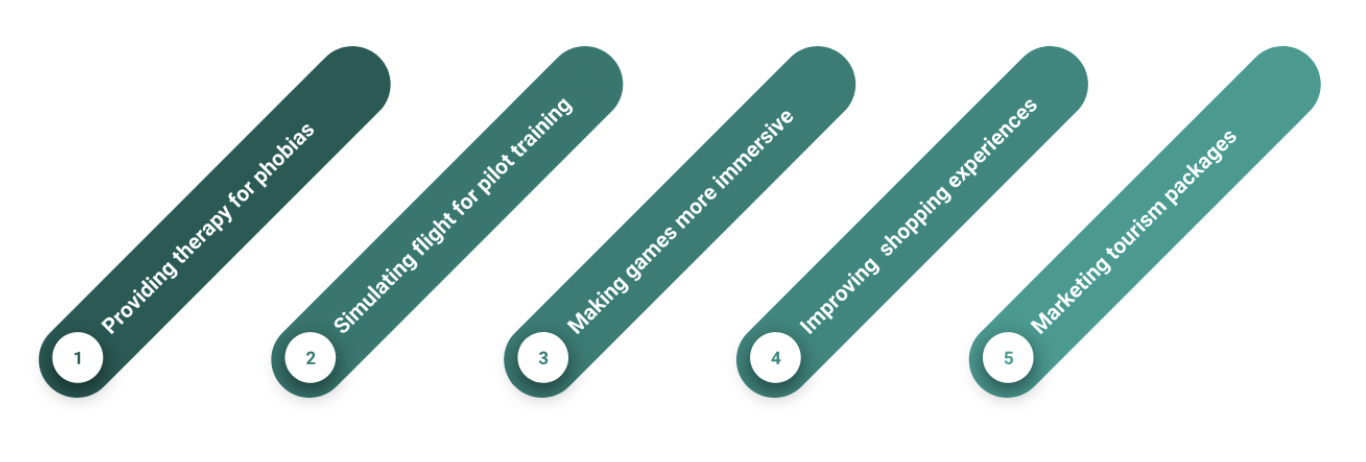
The rising popularity of virtual and augmented reality (VR & AR) is evident from the increasing sales of VR wearables, which is expected to hit 68.9 million in 2022. As more of the general population is preferring virtual reality over traditional television and hand-held entertainment devices, it makes sense for businesses and content creators to create more applications and content for these devices. Businesses and researchers are devising and testing VR use cases to not only improve the way people experience brands, but also to improve people’s lives and well-being. Following are five cool application areas for VR:
5 cool VR use cases and application areas
1. Therapy
If you’ve watched shows or movies on TV, you might have occasionally noticed the feeling of being completely engrossed and sucked into the imagery. Even though we realize it is not real, for a few minutes, the audiovisual stimuli influence our emotional state like real events. This ability of visual content to engage our senses and impact our emotions, albeit temporarily, is now being used for therapeutic purposes with the help of VR. Patients suffering from anxiety or strong phobias can be treated using VR using exposure therapy. Patients are made to experience situations that they fear, in small, controlled doses, using VR, which helps them in overcoming even the most severe cases of phobia.
2. Training
VR can play a key role in revolutionizing education and training by making training experiences more immersive, and hence more effective in imprinting lessons on students’ minds. Immersive learning experiences enabled by VR can help in keeping students’ attentive for longer periods. The educational content delivered to students in a visually immersive way enhances their retention and recall abilities. Researchers have also tested VR use cases for providing flight training to pilots in a safe, cost-effective manner.
3. Gaming
Any comprehensive list of the coolest VR use cases will be incomplete without the mention of VR gaming. Probably one of the earliest application areas of VR, the gaming industry has recognized and quickly adopted the technology, to the delight of gaming fans worldwide. Virtual reality gaming is redefining the way people experience video games, and is projected to be a massive contributor to the revenue in the gaming industry.
4. Shopping
VR is set to transform the shopping experience for consumers, as is being demonstrated by the recently emerging VR use cases in retail. Retail brands are enhancing their ‘customers shoppig experience through innovative applications like 3D fitting-rooms, where people can virtually try on any number of clothes in no time. Using VR to provide customers with the first-hand experience of products and services will enable them to make improved purchase decisions, while maximizing their loyalty for the brand.
5. Tourism
VR can boost tourism, and can even redefine it, by enabling tourists to experience distant, exotic places from within the comfort of their homes. People can make decisions regarding their vacations using VR technology. Tourists planning a vacation can visually experience different places before deciding on the location they would love to visit the most. Tourism companies can use VR tours as a marketing tool for their tour packages, while ensuring customers choose the packages that will ensure their satisfaction.
Due to their popularity among the mainstream public, businesses are exploring different ways to leverage AR and VR technology for enhancing customer experience and increasing the perceived value of their offerings. As the technology becomes more commonplace and functional, businesses will develop more innovative VR use cases to create new, independent revenue streams.