

When you think of loyalty programs for airlines, there’s a good chance that the first thing that pops into your head is the “Frequent Flyer Program (FFP)”. It was created as a simple way to reward customers by Texas International Airlines in 1979, peaked in popularity around the 2000s and now appears to be on the decline. It’s about time the aviation industry takes loyalty programs to new heights with the infusion of technology. One way of achieving this is with the use of tech-driven gamification. To understand how gamification in aviation will reinvigorate airline loyalty programs, it is important to know why existing programs are losing their charm.
The Decline in Airline Customer Engagement and Loyalty
For airlines, cultivating customer engagement and fostering loyalty has always been a challenging endeavor. With an increasingly competitive market and ever-evolving customer expectations, traditional approaches to loyalty programs have struggled to keep pace. Airlines have faced several hurdles in their quest to create lasting connections with passengers. Let’s take a closer look at some of these challenges:
Loyalty Program Fatigue
Over time, customers have become accustomed to generic loyalty programs that offer repetitive rewards and fail to capture their attention. This “one-size-fits-all” approach has led to loyalty program fatigue, where customers lose interest and engagement dwindles.
Lack of Personalization
Airlines often struggle to provide personalized experiences for their customers. With limited data utilization and a lack of targeted offerings, loyalty programs can feel impersonal and fail to establish a genuine connection with passengers.
Complex Point Systems
Loyalty programs have traditionally relied on complex point systems that can confuse customers and make it challenging to understand the value of their loyalty. This lack of transparency can deter passengers from actively participating and engaging with the program.
Limited Engagement Opportunities
Many loyalty programs only offer engagement opportunities during the actual flight or at the time of booking. This limited interaction window hinders airlines’ ability to consistently engage with customers throughout their entire journey, leading to missed opportunities for building lasting loyalty.
Incentive Misalignment
Loyalty programs often struggle to align incentives with customers’ desires and motivations. Generic rewards may not resonate with individual preferences, leading to a disconnection between the program’s offerings and the passengers’ true needs.
To address these challenges and create a thriving loyalty ecosystem, airlines are turning to the exciting realm of gamification. By infusing elements of play, competition, and rewards, gamification has the potential to transform airline loyalty programs into immersive and engaging experiences. In the following sections, we’ll delve into the game-changing benefits that gamification brings to the world of aviation loyalty. So, let’s embark on this high-flying journey and explore the potential of gamification in airline loyalty programs.
The Role of Gamification in Airline Loyalty Programs
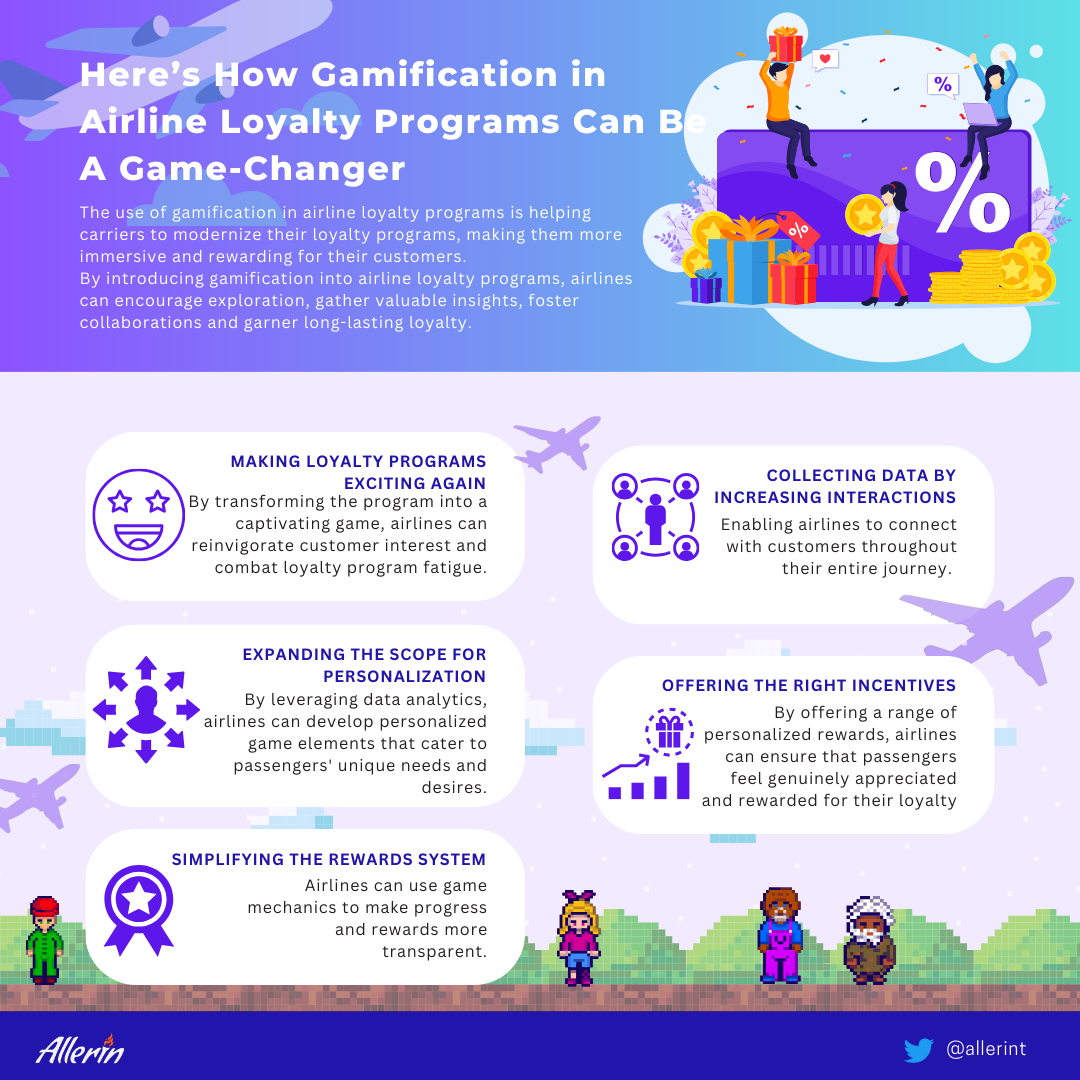
By introducing gamification into airline loyalty programs, airlines can encourage exploration, gather valuable insights, foster collaborations and garner long-lasting loyalty.
Making Loyalty Programs Exciting Again
Gamification injects a much-needed dose of excitement and novelty into airline loyalty programs. By transforming the program into a captivating game, airlines can reinvigorate customer interest and combat loyalty program fatigue. For example, airlines can introduce interactive challenges or quests that reward passengers for completing specific tasks or milestones. British Airways’ Executive Club introduced a gamified campaign called “BA Magic,” where they surprised loyal customers with unexpected acts of kindness, creating a sense of excitement and renewed engagement.
Expanding the Scope for Personalization
Gamification allows airlines to tailor experiences based on individual customer preferences. By leveraging data analytics, airlines can develop personalized game elements that cater to passengers’ unique needs and desires. For instance, Delta Air Lines implemented a gamified loyalty program called “SkyMiles,” which offers exclusive rewards based on individual travel patterns and preferences. By introducing Delta Sync to personalize their SkyMiles membership experiences, the airline aims to broaden the scope for personalization for its frequent flyers. This personalized approach aims to strengthen the bond between the airline and its customers, fostering a sense of loyalty.
Simplifying the Rewards System
Gamification simplifies the loyalty program experience by providing clear and meaningful feedback to customers. Instead of relying solely on point systems, airlines can use game mechanics to make progress and rewards more transparent. For instance, airlines can implement a gamified loyalty program where customers earn badges for completing various activities, providing a straightforward and engaging way to track their loyalty journey.
Collecting Data by Increasing Interactions
Gamification extends engagement opportunities beyond the flight itself, enabling airlines to connect with customers throughout their entire journey. For example, airlines can create mobile apps or online platforms that offer gamified experiences, allowing passengers to earn rewards and engage with the airline even when they are not traveling. This approach keeps customers connected and encourages long-term loyalty. JetBlue Airways’ TrueBlue program offers a gamified mobile app that includes challenges, badges, and leaderboards to keep customers engaged and connected to the airline.
Offering the Right Incentives
Gamification allows airlines to align incentives more closely with customers’ preferences and motivations. By offering a range of personalized rewards, airlines can ensure that passengers feel genuinely appreciated and rewarded for their loyalty. For instance, Singapore Airlines’ KrisFlyer program introduced a gamified campaign called “Spontaneous Escapes,” offering exclusive discounts and rewards
on select flight bookings. This initiative aligns the incentive of discounted travel with customers’ desire for spontaneous adventures, resulting in increased engagement and loyalty.
By leveraging gamification, airlines can overcome the challenges of customer engagement and loyalty, creating immersive and rewarding experiences for passengers. These real-world examples demonstrate how gamification has already made a significant impact in the aviation industry, revolutionizing the way loyalty programs are designed and experienced. So fasten your seatbelts as we dive deeper into the game-changing benefits of gamification in airline loyalty programs.
The Right Solution for Gamification of Airline Loyalty Programs
In the ever-evolving landscape of airline loyalty programs, staying ahead of the game requires innovative solutions that captivate passengers and foster unwavering loyalty. Airlines should look for purpose-built customer loyalty platforms that are specifically designed for airlines to engage with their customers and supercharge their retention strategies.
These customer loyalty platforms for airlines are able to integrate with existing loyalty programs, infusing them with a dynamic and immersive experience. By leveraging advanced artificial intelligence and data analytics, these platforms take airline loyalty to unprecedented heights, addressing the challenges faced by the industry with remarkable efficacy.
An airline customer loyalty platform enables carriers to create personalized gamified journeys for each individual passenger. Through sophisticated algorithms and predictive analytics, the platform can be used to tailor challenges, rewards, and incentives based on customers’ travel history, preferences, and behavior. This personalized approach ensures that every interaction with the loyalty program is engaging, meaningful, and resonates with the passenger on a deep level.
To provide customers with an omnichannel experience, an airline loyalty platform seamlessly integrates with various touchpoints, including mobile apps, websites, and in-flight entertainment systems. Its flexible architecture allows airlines to customize the gamification elements to align with their brand identity, ensuring a consistent and tailored experience for their customers.
Incorporating an AI-based airline loyalty solution like SkyAIde™ unlocks a world of opportunities to enhance customer engagement, increase loyalty, and drive revenue growth. This solution is already garnering attention worldwide for its ability to enable the gamification of loyalty programs and redefine the way passengers interact with their favorite airlines. With customer loyalty becoming harder to earn, implementing a data-driven customer loyalty system like SkyAIde™ would be a step in the right direction for airlines.